Your dining room holds untapped potential. It’s where you gather with family and friends, yet it might not reflect how you actually live.
The right design choices, from selecting a functional table to layering your lighting, can create a space you’ll genuinely enjoy. Let’s explore the practical strategies that work, starting with the foundation pieces that anchor everything else.
Start With a Dining Table That Fits How You Actually Live
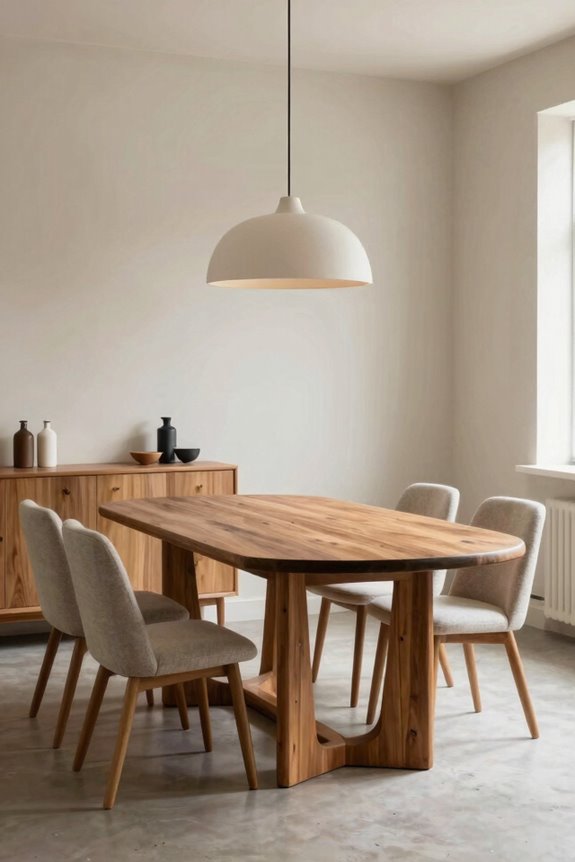
Why settle for a dining table that doesn’t match your real life? I’ve learned that the best dining table prioritizes how you actually live, not just what looks impressive. Consider your dining table size carefully. It should fit your space and daily routines.
In longer rooms, rectangular tables maximize space while maintaining balanced proportions. Tighter layouts benefit from round or oval tables that ease movement and flow. An extendable table offers smart versatility: it stays modest for weekdays but expands when you host gatherings.
Think beyond aesthetics. Your table influences how guests interact and shapes your room’s generosity. Durability and maintenance matter significantly since you’ll use it constantly. Pair your choice with performance fabrics and compatible chairs for comfort and consistency.
Ground the Space With a Well-Sized Rug
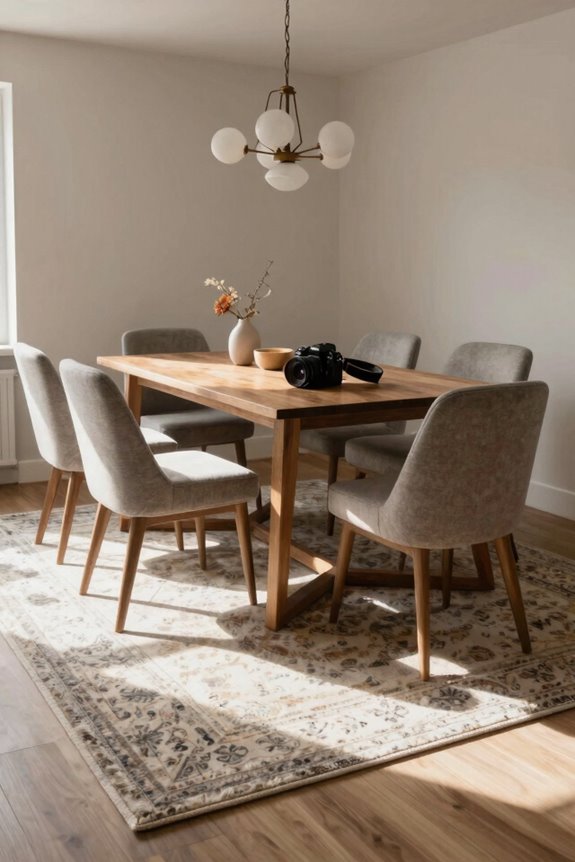
Once you’ve chosen your dining table, a well-sized rug becomes your next anchor. I recommend selecting a rug large enough so all chair legs, even when pulled out, rest on it. This prevents half your seating from floating awkwardly off the edge.
For rug placement, leave approximately 18–24 inches of bare floor around the room’s perimeter. This balanced approach defines your dining area without overwhelming the space, especially in open-plan layouts.
Choose durable, spill-resistant materials that withstand foot traffic and inevitable accidents. Neutral bases like beige or grey-blue tones offer flexibility for future accent colors and textiles you’ll add.
A subtle pattern works better than busy designs, creating visual interest while remaining versatile. Your rug grounds the space functionally and aesthetically, tying your dining setup together intentionally.
Choose a Restrained Color Palette for Your Walls
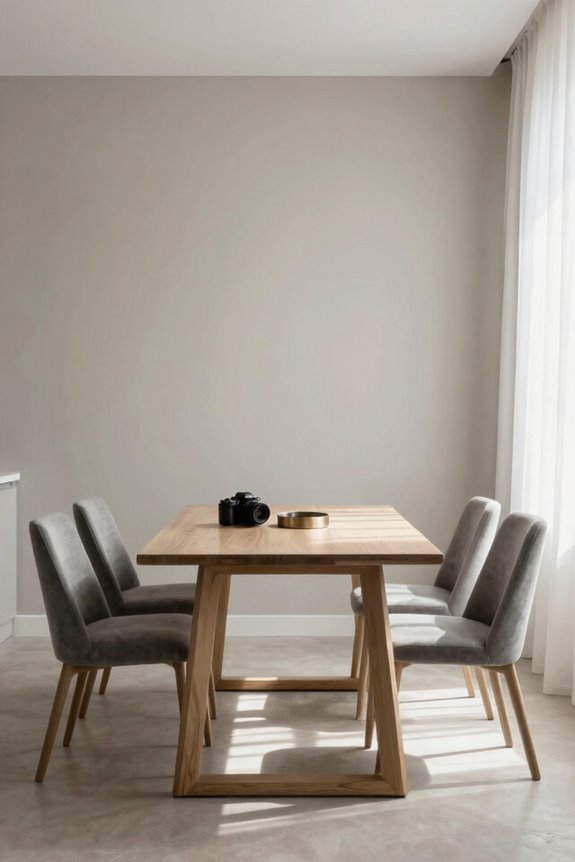
Your walls set the foundation for everything else in your dining room, so choosing a restrained color palette is necessary. I recommend limiting your color palette to soft, coordinated neutrals like beige, taupe, and pale greige. These calm tones create a unified backdrop that complements wood finishes and unifies varied furniture pieces.
A restrained approach allows accent pieces to stand out without overwhelming the space. Consider how natural light sources interact with your chosen colors to maintain brightness. Neutral walls also provide flexibility for future updates; you’ll swap textiles, art, and accessories easily without repainting.
This strategic color palette approach enhances balance when combining antique or ornate elements with simple backgrounds. You’ll create a dining room that feels well-considered and welcoming, with a quality that lasts.
Update Window Treatments to Brighten the Room
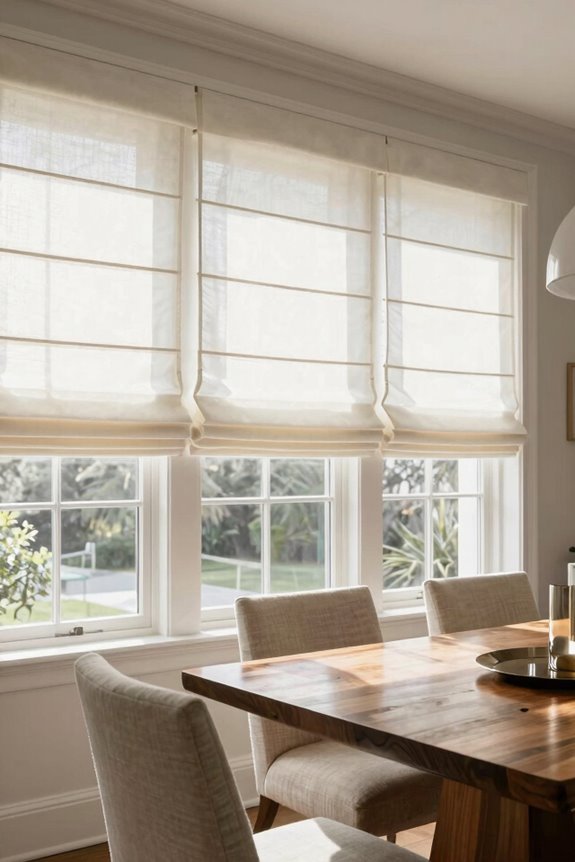
To brighten your dining room effectively, you’ll want to focus on selecting fabrics and hardware that enhance natural light while maintaining durability. I recommend choosing lightweight materials like washed linen in neutral tones, paired with vintage brass tiebacks that add subtle elegance without visual weight.
Proper installation of these elements, whether you’re layering sheer and solid panels or mounting oversized curtains, directly impacts how your windows function and how spacious your room feels.
Fabric Choices for Light
How much light flows through your windows right now?
Light fabrics change how natural light enters your dining room. I recommend considering these fabric options:
- Sheer or voile in off-white and ivory – These materials diffuse daylight beautifully while keeping your privacy intact. You’ll notice the room feels instantly airier.
- Pale neutral tones like bisque or greige – Light-colored window treatments reflect natural light effectively. They create a welcoming atmosphere that invites people together.
- Solar shades or light-filtering fabrics – These reduce glare without darkening your space. You’re maintaining brightness while protecting your dining experience.
Layering sheer under-drapery with lightweight fabrics adds soft texture without absorbing precious light. Choose wider curtain panels with minimal stacking when drawn. This maximizes your visible window area and brightens the entire room, creating the inviting dining space you deserve.
Hardware and Installation Options
The right hardware and installation technique change how light enters your dining room. I recommend choosing polished nickel or warm brass hardware that reflects light naturally. These finishes coordinate beautifully with crystal or glass accents, amplifying brightness throughout the space.
Installation height matters significantly. I suggest hanging curtains closer to the ceiling and extending them wider than your window frame. This strategic placement visually enlarges windows and maximizes perceived light entering your dining area.
Proper installation creates multiple benefits beyond aesthetics. You’ll notice improved light distribution and enhanced room proportions. The combination of reflective hardware and elevated placement works together strategically, giving you a brighter, more spacious dining environment that feels well-designed and polished.
Swap Out Dining Chairs for Comfort and Performance
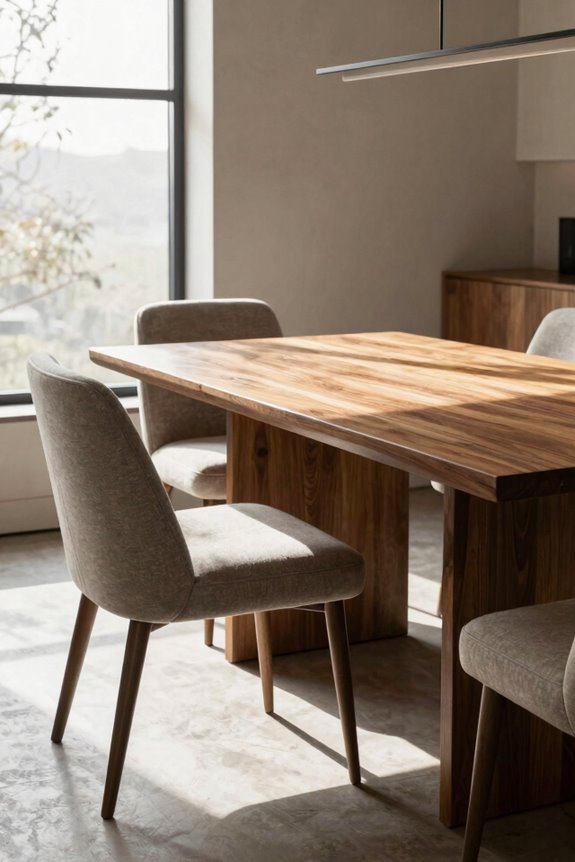
Your dining chairs deserve as much attention as your table and décor. Upgrading your seating improves both comfort and style while protecting your investment during gatherings.
Dining chairs deserve equal design attention as your table and décor—upgrade for comfort, style, and investment protection.
Consider these practical approaches:
- Install white slipcovers on existing Parsons chairs for an instant refresh without replacement costs or furniture waste.
- Choose performance fabrics that resist spills and stains, extending chair longevity through regular use and entertaining.
- Mix chair styles strategically, pairing gilt armchairs with simpler designs balances visual interest and comfort across your dining space.
You can also repaint or reupholster current chairs to match your new aesthetic. In open-plan rooms, select appropriately scaled seating with adequate padding for extended dining experiences.
These changes invite guests to linger longer while maintaining the polished look you’ve envisioned for your dining room.
Layer Your Lighting to Set the Right Mood
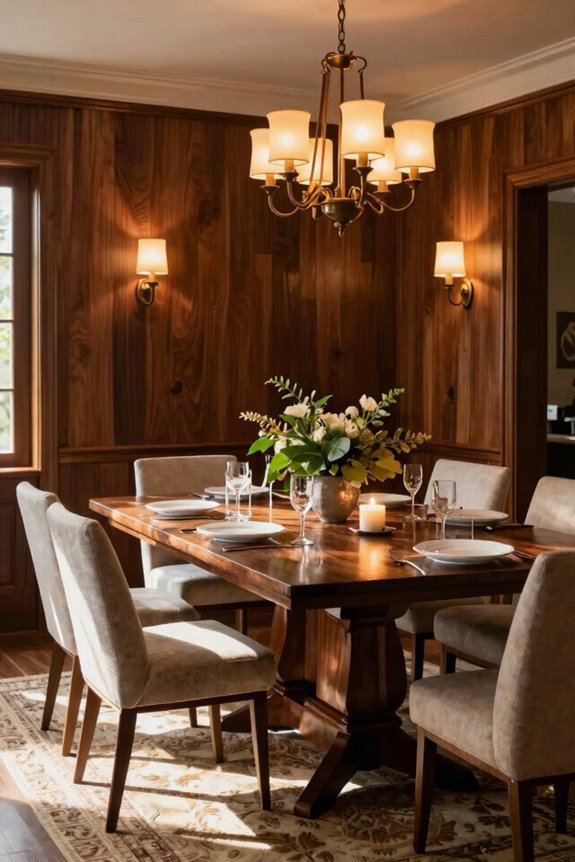
I’ll create depth and warmth in your dining room by layering lighting strategically. Combine a central pendant with wall sconces and table lamps, anchoring the space with overhead fixtures while secondary lights provide softer, indirect illumination that reduces harsh shadows and builds intimacy.
Dimmable options and mixed color temperatures give you flexibility to adjust the lighting for different occasions and gatherings. Use cool overhead light for tasks and warm accents for mood.
Central Pendant Creates Focus
How can one fixture improve an entire dining room’s visual appeal?
A central pendant acts as your room’s anchor, drawing the eye upward and creating immediate visual interest. This key piece guides attention and establishes your dining space’s character from the moment you enter.
Consider these key elements:
- Scale and height – Match your central pendant’s size to your table dimensions, maintaining 30–36 inches of clearance from the tabletop for comfortable sightlines and conversation flow.
- Warm color temperature – Select fixtures between 2700–3000K to create an inviting, welcoming atmosphere that encourages gathering.
- Dimmable capability – Install dimmable central pendants to adjust ambiance for different occasions, from bright dinners to intimate evenings.
A well-chosen central pendant foundation supports your layered lighting scheme, improving the entire room’s presence and functionality.
Layered Lighting Adds Intimacy
While a single overhead fixture provides basic illumination, layered lighting creates a dining room that adapts to every occasion.
I recommend combining multiple lighting sources to create depth and control your room’s mood. Wall sconces, table lamps, and a central pendant work together to eliminate harsh shadows. Dimmer switches let you adjust brightness instantly, bright for meal prep and warm for evening gatherings.
| Lighting Type | Purpose | Best Location |
|---|---|---|
| Pendant/Chandelier | Anchors the table | Directly overhead |
| Wall Sconces | Adds intimacy | 60-66 inches high |
| Table Lamps | Task lighting | Buffet or sideboard |
| Floor Lamps | Indirect glow | Room corners |
Indirect lighting bounces softly off walls and ceilings, broadening your perceived space. This approach delineates your dining area beautifully, especially in open-plan layouts.
You’ll discover that layered lighting creates an inviting atmosphere that encourages connection.
Mood Through Strategic Placement
The placement of your light fixtures matters just as much as the fixtures themselves. Strategic positioning shapes your dining room’s atmosphere and functionality. Consider these three placement strategies:
- Position wall sconces on either side of focal pieces like china cabinets or artwork to draw attention and anchor your table within the open space.
- Pair a dimmed chandelier with surrounding sconces to soften shadows and enhance perceived room size through underlighting and indirect lighting techniques.
- Install dimmers on all lighting fixtures to shift quickly from bright, functional dining to intimate evening gatherings.
Proper color temperature around 2700–3000K and consistent luminous intensity across fixtures prevent harsh contrasts. This unified approach creates an inviting atmosphere where you’ll feel welcomed and comfortable hosting gatherings that strengthen your connections with loved ones.
Add a Sideboard for Function and Style
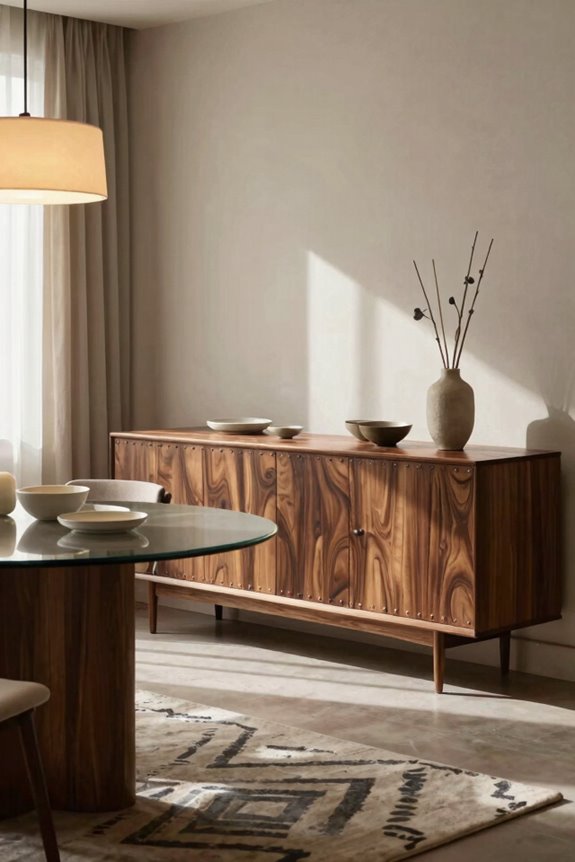
Why does your dining room need a dedicated storage piece? A sideboard keeps your dining area organized by concealing extra dinnerware and clutter behind closed doors. This keeps your table visually clean and inviting for gatherings.
A sideboard conceals dinnerware and clutter behind closed doors, keeping your dining table visually clean and inviting for gatherings.
Functionality First
When selecting a sideboard, prioritize internal space and adjustable shelves over decorative styling. You’ll need room to accommodate various dishes, serving pieces, and table linens. A well-sized sideboard also serves as a staging surface for drinks and prevents countertop chaos during entertaining.
Style and Balance
Choose a sideboard that matches or complements your existing furniture finishes. It should anchor your dining room and reinforce your color palette. Pairing it with a textured rug beneath the dining area grounds the layout and defines the space beautifully.
Anchor Walls With Art, Mirrors, and Strategic Décor
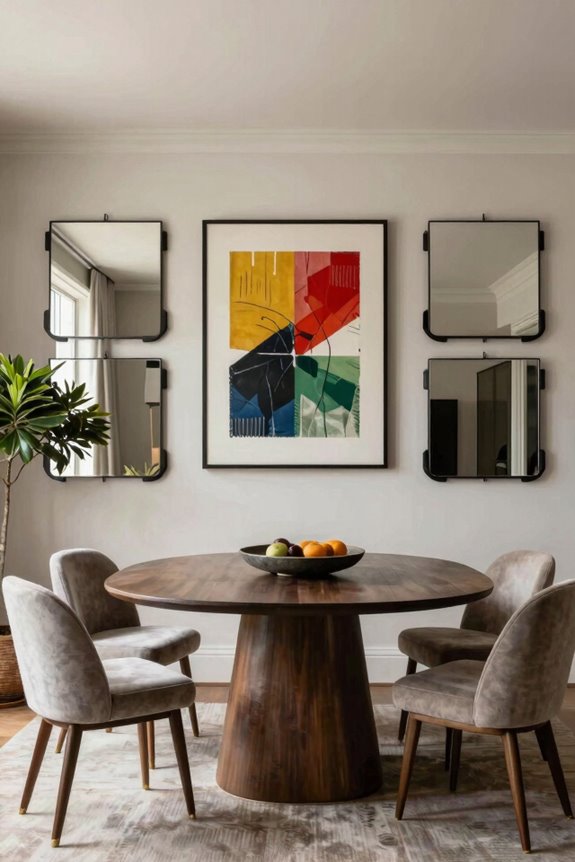
How do you create bare dining room walls into a polished backdrop that enhances your entire space?
Strategic wall décor anchors your dining room while establishing a unified design. I recommend implementing these three approaches:
- Position mirrors strategically – Place trumeau mirrors or framed pieces opposite windows to amplify mirror reflections and natural light throughout the room.
- Create a color palette – Select artwork and frames in complementary tones that ground the space and unify your design vision.
- Balance scale with space – Hang large-scale pieces with intentional negative space between them, avoiding wall overcrowding.
Crystal accents add focal points without cluttering tabletops. This thoughtful approach creates walls into a refined, light-filled backdrop. Your dining room becomes a unified gathering space that reflects your design intentions while maximizing visual impact and spatial perception.
Style With Greenery and Natural Textures
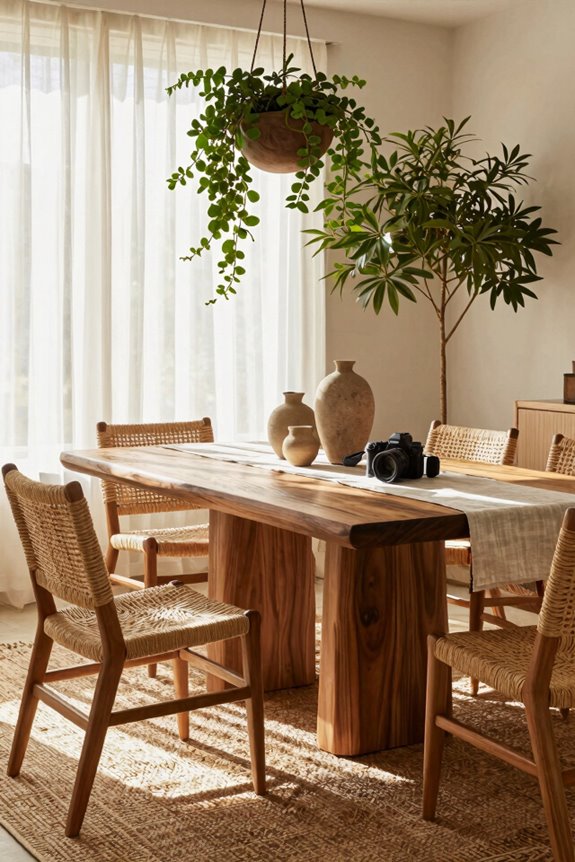
Greenery brings life and warmth to rigid dining layouts, creating spaces that feel alive and inviting. I recommend pairing tall plants like pothos or snake plants along walls to frame your dining area while maintaining balance. These low-maintenance options require minimal watering, making them practical for busy households.
Layer natural textures throughout your space. Incorporate linen drapes, wood furniture, and woven table runners to create softness alongside greenery. Small plants on your dining table establish a lived-in rhythm without overwhelming the surface.
Consider hanging planters to save floor space and add vertical interest. Use biophilic accents like botanical prints and green-toned accessories to unify your greenery with neutral palettes. This strategic approach creates harmony while establishing an organic, welcoming atmosphere throughout your dining room.
Refresh Accessories and Textiles to Complete the Look
Once you’ve established your greenery foundation, thoughtful accessories and textiles complete your dining room with polish and cohesion. Strategic updates create refinement without replacing existing furniture.
Consider these essential elements:
- Statement lighting – Install reproduction sconces and an antique crystal chandelier as focal points that anchor the room’s sophistication.
- Refined textiles – Switch floral drapes to washed linen panels in bisque with vintage brass tiebacks for versatile neutral backdrop.
- Layered soft furnishings – Add slipcovers and linen runners that balance the space while maintaining flexibility.
A unifying rug in beige and grey-blue tones featuring heraldic medallion-inspired patterns grounds your design with cohesion. Neutral walls and layered lighting maximize openness, allowing future accent colors to integrate seamlessly.
These deliberate choices create a refined gathering space in your dining room.