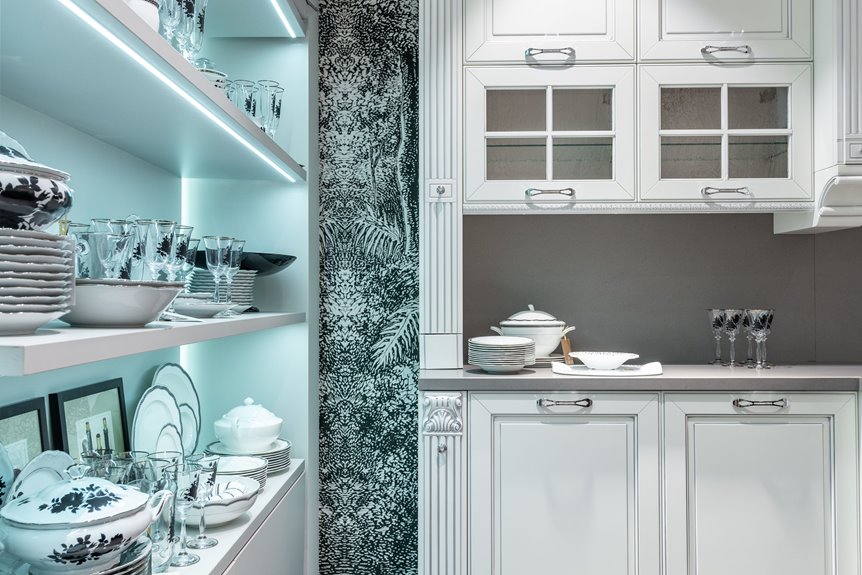
Your china cabinet holds untapped potential. Right now, it’s probably cluttered with mismatched pieces that don’t work together. What if I told you that five straightforward styling strategies could turn it into a carefully arranged display that reflects your taste?
The secret isn’t expensive pieces; it’s intentional arrangement. Let’s explore how professionals create visual impact using the pieces you already own.
Empty Your Cabinet and Choose Your Styling Theme
How do you reorganize a cluttered cabinet into an organized display? Start by emptying everything completely. Remove all items, then clean each shelf and glass thoroughly. This dust-free environment lets you reassess your layout properly.
Next, define your styling theme before arranging anything back. Choose a mood: spring freshness, autumn warmth, or neutral elegance. Your theme guides which pieces you’ll display together.
With your theme selected, apply the Rule of Three using odd-number groupings. Arrange items in groups of one, three, or five for visual balance. Create varying heights by positioning tall pieces toward the back and shorter items forward. This approach establishes a professional, intentional arrangement that works well in any home.
Gather Your Best Pieces and Decide What Stays
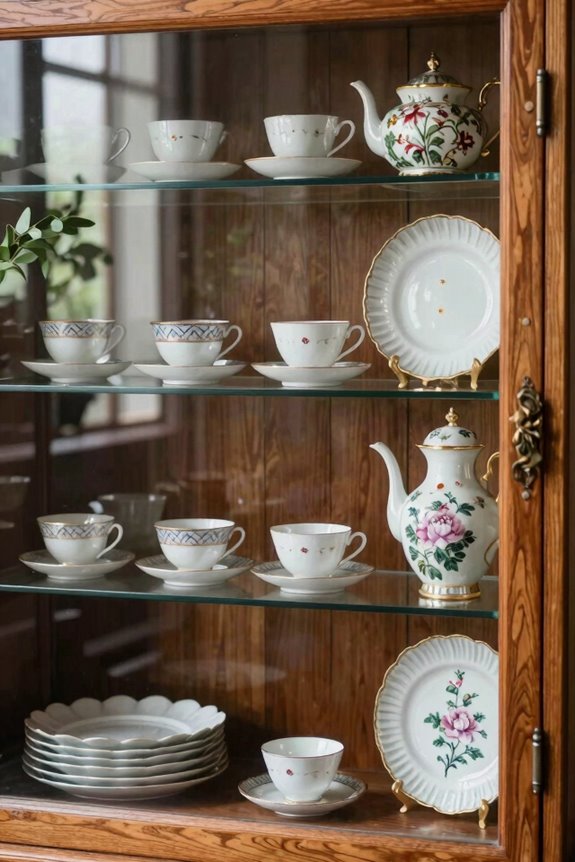
Now that your cabinet is clean and your theme is set, it’s time to gather every piece you’re considering for display. Pull out all your china, glassware, and decorative items from storage to assess what you’re actually working with.
Next, identify your “rockstars,” those best pieces that genuinely make you happy. Your grandmother’s platter or favorite patterned plates become anchor pieces that guide your staging decisions. These treasured items deserve prominent placement.
Separate everything by type: dinnerware, stemware, and accessories. This organization helps you evaluate what fits your china cabinet’s space and what can rotate in seasonally.
Don’t aim for perfection in every selection. Gather slightly more than you need to achieve display cohesion. This approach keeps your cabinet feeling purposefully arranged rather than sparse, while maintaining the visual balance your theme requires.
Layer From Back to Front: Create Instant Depth
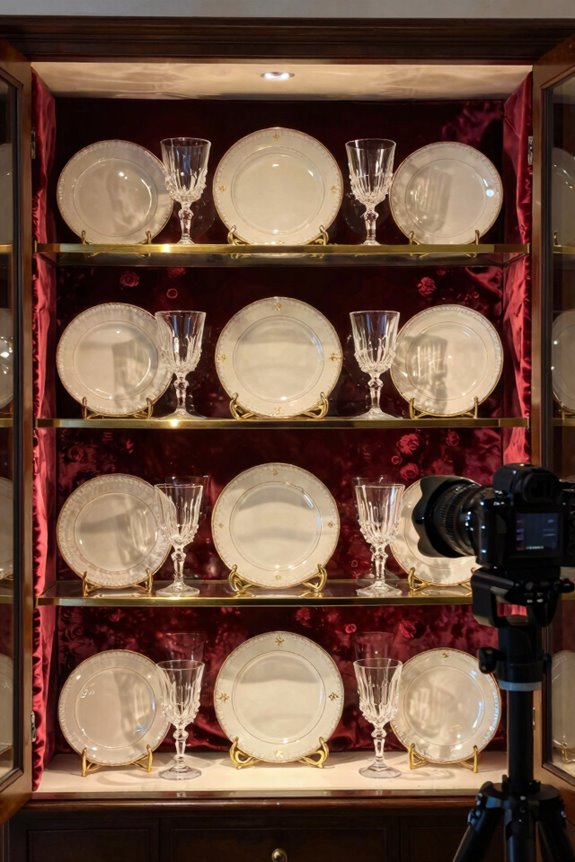
What makes a china cabinet look professionally styled rather than randomly filled? Strategic layering creates the depth that separates amateur displays from polished arrangements.
Strategic layering creates the depth that separates amateur displays from polished, professionally styled china cabinet arrangements.
The Three-Layer System
Position your tallest and flattest pieces at the back as your foundation. These background elements anchor the entire display and draw the eye inward. Place your workhorse pieces, everyday favorites and statement items, in the midground. Offset them slightly to prevent blocking views of background treasures.
Finishing Touches Matter
Position smallest items and delicate pieces in the foreground. This staging technique reveals your collection’s full depth and creates visual interest at every angle.
Material Balance
Alternate textures across layers: glass, china, wood, and textiles work together. This variation reinforces the diorama effect, making your china cabinet display feel carefully considered and complete.
Add Colors, Textures, and Plants for Visual Interest
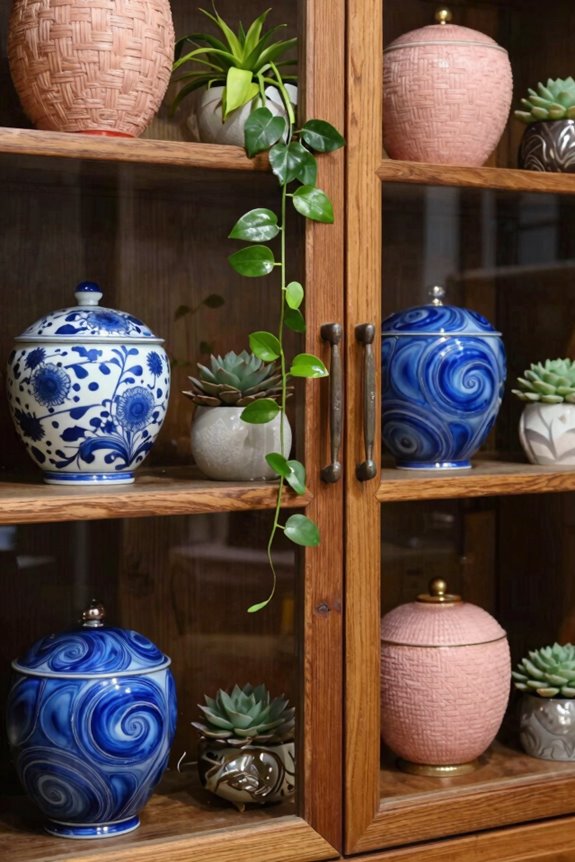
While layering creates the structural foundation for your display, introducing color, texture, and plants makes a technically sound arrangement into a visually compelling one. I start with white-dish groupings as my base, then layer in contrasting elements.
I weave together glassware, china, wood pieces, and books to build textural variety that catches light differently. Blue accents or patinaed hardware provide strategic color pops that draw the eye through your china cabinet. Natural elements like small potted plants or fresh greenery add life and break up ceramic surfaces. I position a teacup with seasonal flowers as a focal point.
These textural and botanical additions create display depth while keeping your arrangement feeling personally expressive rather than simply functional.
Step Back and Edit: Why White Space Matters More
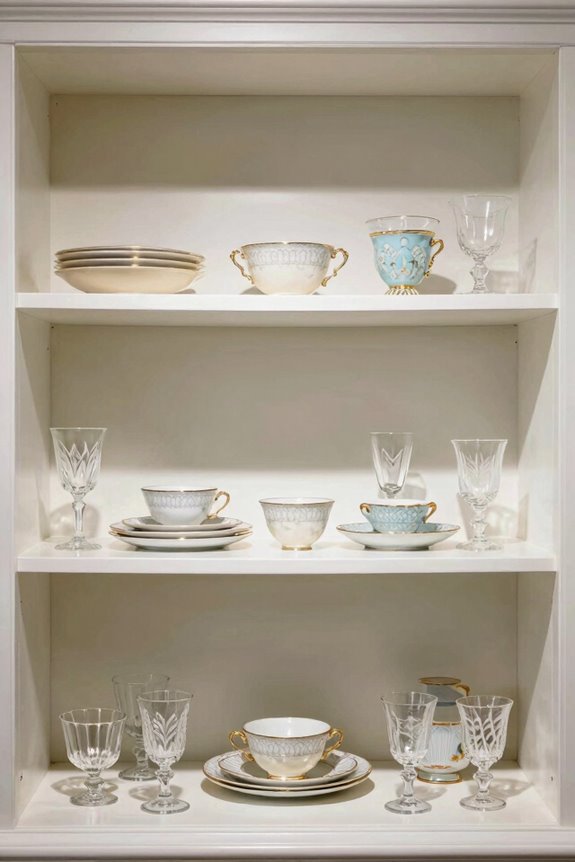
After layering colors, textures, and plants, here’s where many enthusiasts stumble: they forget that empty space is just as important as what you display. This breathing room helps create a unified display.
Empty space is just as important as what you display—this breathing room creates a unified, gallery-quality collection.
Start editing ruthlessly. Remove pieces that don’t strengthen your chosen mood or theme. Each item remaining should earn its place on your shelves.
White space lets your eye rest between groupings. It prevents visual clutter and draws attention to your best pieces. Think of negative space as the frame around your collection, making everything stand out more.
Leave gaps around odd-numbered groupings (three or five items). Space anchor pieces across shelves generously. This restraint changes your cabinet from crowded to gallery-quality, proving that a minimalist approach works better in professional styling.