I’ve noticed that your kitchen probably lacks a dedicated space for coffee, and that’s where a well-designed coffee bar makes a real difference. You don’t need much: a compact espresso maker, grinder, and organized canisters create a functional hub. The real impact happens when you arrange these elements with purpose, using risers and open shelving to display what matters.
But here’s what most people miss about coffee bar design.
Essential Appliances: The Foundation of Your Coffee Bar

How do you build a coffee bar that actually works? Start with the core essentials: a reliable coffee maker, a quality grinder, an espresso machine, and a teapot. These four appliances form your foundation.
Your coffee maker handles daily brewing for multiple people. A grinder keeps your grounds fresh, which noticeably improves taste. An espresso machine lets you create bold, specialty drinks that enhance your setup. A teapot rounds out your beverage options for tea drinkers.
Pro Coffee Gear offers both new and used espresso machines suited to different budgets and skill levels.
Beyond appliances, add essential accessories: mugs, bean canisters, sugar containers, and nearby bowls or spoons. This organized approach balances functionality with visual appeal, creating an efficient coffee bar that invites regular use and belongs in your space.
Keep Your Coffee Bar Organized & Accessible
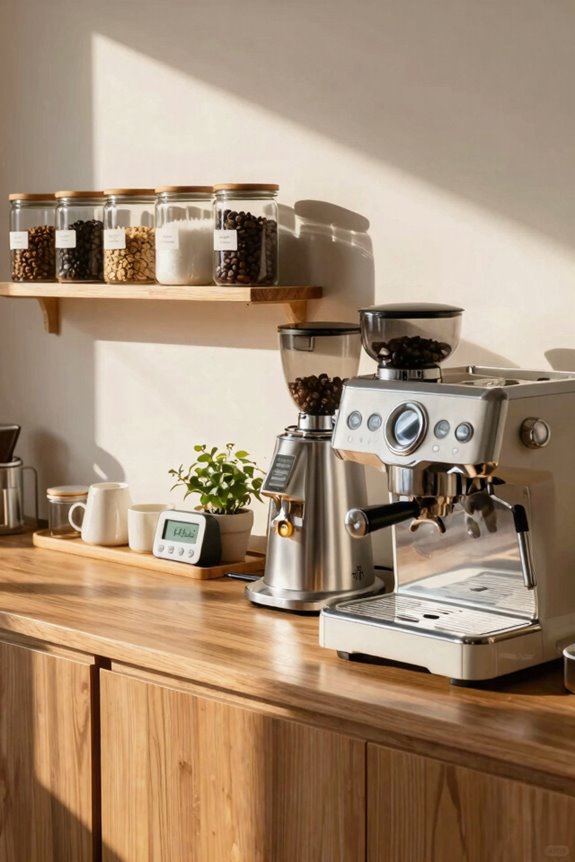
I’ll create an organized coffee bar by grouping similar items together and mixing display and storage methods strategically. I’ll place frequently used appliances and supplies within arm’s reach while tucking less attractive items in opaque containers or baskets.
This approach helps me maintain both functionality and visual appeal throughout my coffee bar setup.
Strategic Item Placement
Where you position each item on your coffee bar directly impacts how smoothly your daily routine runs.
I’ve found that strategic placement improves both function and style. Here’s what works best:
- Place brewing appliances at the front and center for immediate access
- Position risers at cabinet backs to showcase teas and syrups vertically
- Group similar items together, pods separate from tea bags, for efficient restocking
- Arrange trays and lazy Susans to corral stirrers, napkins, and sugar bowls
- Use labeled containers and display jars for beans and syrups
This organization system maximizes your vertical storage while keeping everything visible. I arrange my coffee bar so frequently used items sit within arm’s reach. Labeled containers eliminate confusion during busy mornings.
Display jars showcase your collection beautifully while maintaining accessibility. When everything has its designated spot, your coffee bar becomes both functional and inviting, exactly what you deserve.
Display And Storage Mix
The best coffee bars balance beauty with function by showing off what looks good and hiding what doesn’t. I recommend using clear containers to showcase beans and syrups while tucking grinders and filters away in closed cabinets.
Consider these practical solutions:
1. Vertical Organization
Use floating shelves and wall rails to display mugs and frequently used items. This approach maximizes space while keeping essentials accessible.
2. Elevation Techniques
Risers, trays, and lazy Susans organize your setup and make items easy to reach. They create visual interest while maintaining functionality.
3. Concealment Strategy
Store less attractive supplies in opaque baskets or wooden boxes. This maintains a neat, tidy appearance throughout your space.
Label all containers and group similar items together; pods with pods, sugar with sweeteners. This system allows for quick restocking and straightforward usability for daily coffee preparation.
Choose Shelving for Your Coffee Bar Layout
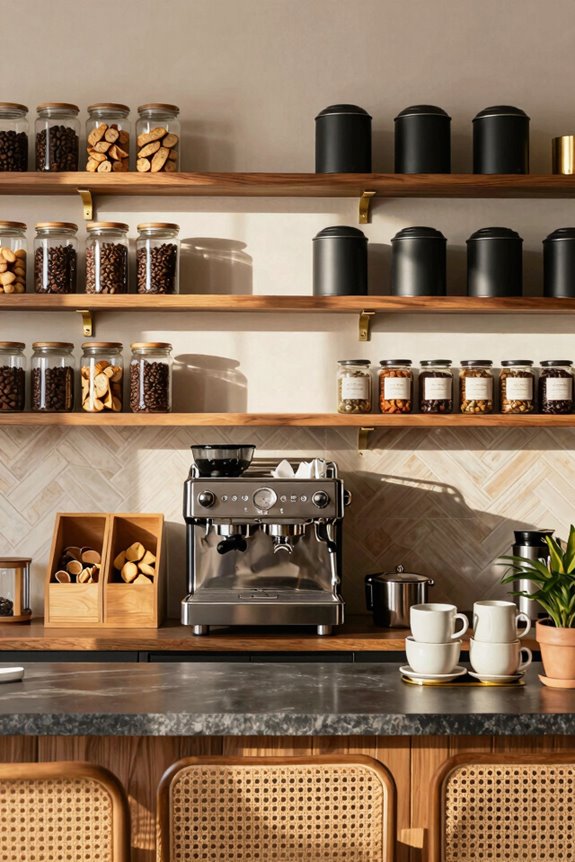
When designing your coffee bar, you’ll want to consider how different shelving styles—open shelves, closed cabinets, or a thoughtful mix of both—serve your storage needs and visual goals. Open shelving displays your favorite mugs and coffee gear beautifully, while closed cabinets hide less attractive items and reduce dust on supplies.
The right combination of display and storage solutions lets you create an organized space that’s both functional and inviting.
Open Shelving Visual Appeal
How can you organize your coffee bar into a display that’s both functional and attractive? I’ve found that strategic open shelving creates the perfect foundation for showcasing your essentials while maximizing vertical space in small kitchens.
Mixing materials adds depth and interest to your setup:
- Display mugs on wood shelves paired with metal brackets for visual contrast
- Use glass containers to reveal colorful beans, syrups, and grounds at a glance
- Install floating shelves to optimize limited square footage efficiently
- Arrange labeled canisters for organized accessibility and a well-designed look
- Layer baskets between shelves to contain supplies while maintaining visual flow
This approach combines functionality with design appeal. Clear glass containers let guests immediately see what’s available. Wood and metal accents create depth and texture. You’re building a coffee bar that’s inviting and thoughtfully curated.
Closed Cabinet Storage Solutions
Where should your less attractive coffee equipment live? I recommend investing in closed storage to hide your grinder, filters, and less aesthetic parts while keeping essentials accessible. A dedicated coffee cabinet organizes mugs, canisters, and syrups behind doors, reducing counter clutter significantly.
Use labeled containers inside cabinets to maintain clarity and prevent mix-ups between pods, tea bags, and cacao. This system keeps your space organized and functional.
Pair closed storage with floating shelves above for balanced display. The shelves showcase frequently used items and decorative touches while cabinets handle storage duties.
During space planning, consider cabinet height and depth to accommodate standard coffee maker and grinder dimensions. This consideration allows equipment to fit seamlessly, creating a well-planned coffee bar that feels deliberate and well-designed.
Mixed Display and Organization
Now that you’ve hidden less attractive equipment behind closed doors, it’s time to showcase what makes your coffee bar visually appealing. I recommend combining floating shelves, baskets, and open displays to create a mixed display that balances function with beauty. This approach lets you store essentials while featuring items worth seeing.
Consider these strategic additions:
- Clear containers for beans, pods, and syrups that enhance visibility
- Floating shelves at varying heights for visual interest and accessibility
- Labeled containers grouped by type for easy identification
- Pegboard systems for organizing coffee tools and accessories
- Decorative baskets for hidden storage on lower shelves
This mixed display and organization strategy creates an inviting coffee bar space. You’ll maintain practicality while creating an aesthetically pleasing setup that reflects your style and welcomes others to enjoy your passion for quality coffee.
Small Spaces, Big Impact: Coffee Bars for Tight Kitchens
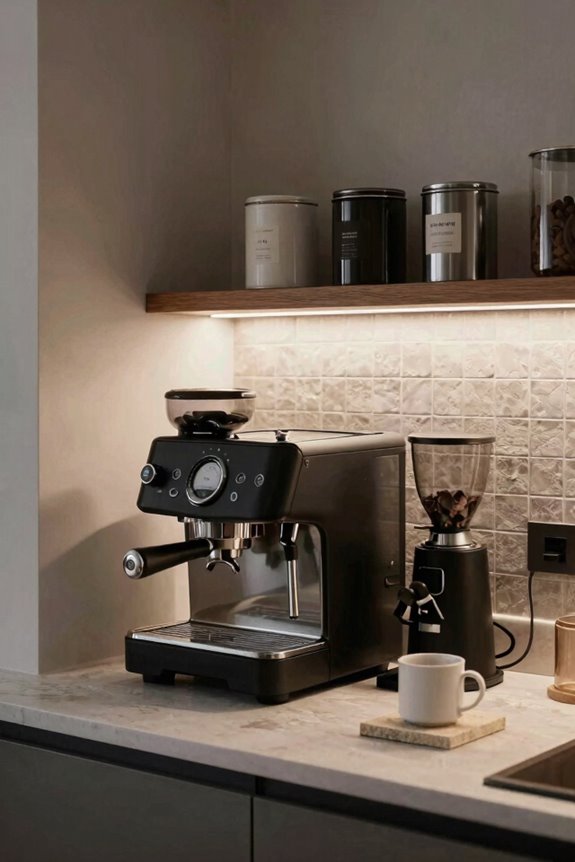
Why settle for a cramped kitchen without a dedicated coffee station?
You can create functional coffee bars in tight spaces using smart strategies. A compact counter or bar cart creates your coffee hub without consuming valuable real estate. Floating shelves maximize vertical storage by displaying mugs and bean jars while keeping countertops clear.
Implement tray organization to centralize accessories like spoons and syrups for effortless cleanup. Group similar items together: pods in one area, tea bags in another. Store less attractive elements in closed cabinets.
For ultimate space efficiency, consider a pull-out tray or hidden coffee cabinet that maintains clean sightlines while enabling full beverage preparation. These solutions prove that small spaces needn’t limit your coffee bar aspirations. Strategic planning makes even minimal kitchens into inviting gathering spots.
Make It Look Like a Cafe: Styling & Decor
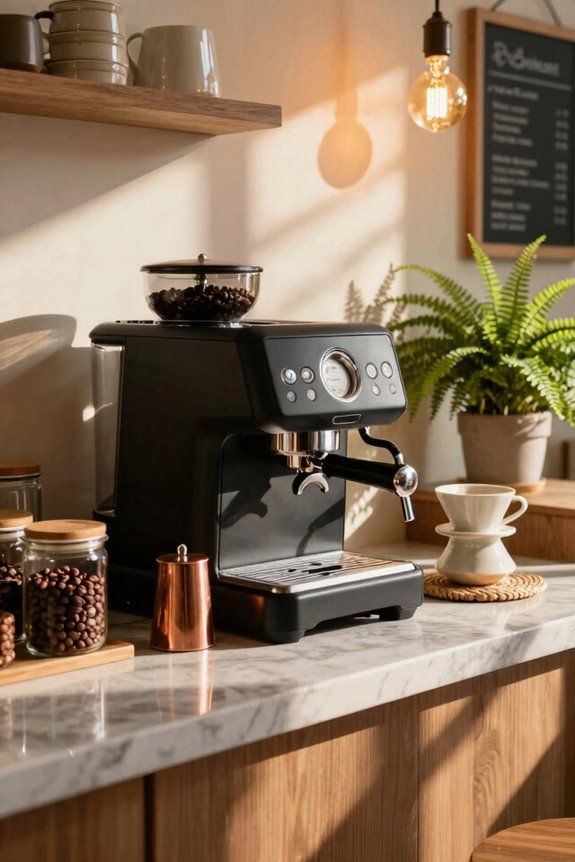
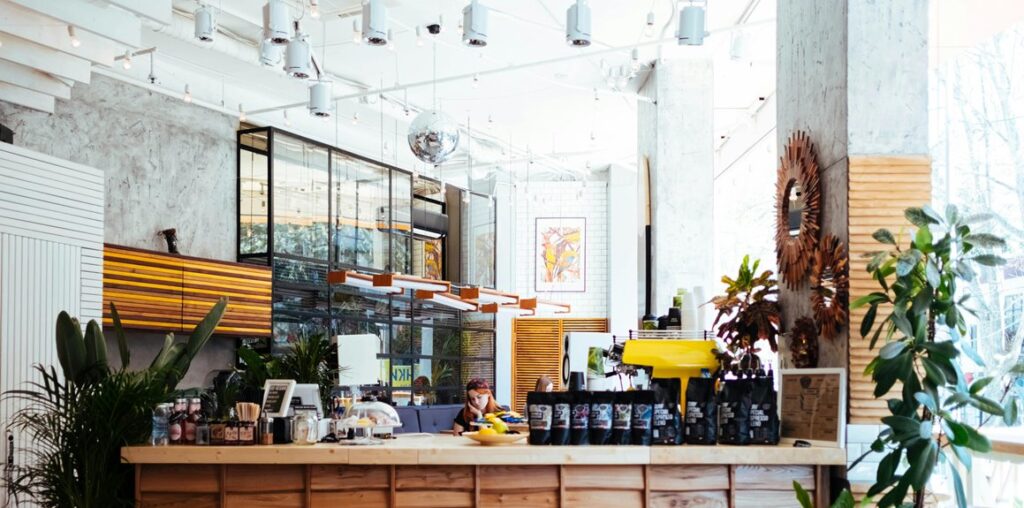
Once you’ve organized your compact coffee station, it’s time to create a space that captures the warmth and appeal of your favorite cafe. I’ll guide you through styling choices that make your coffee bar more inviting and functional.
Key styling elements:
- Layer decorative trays with mugs and spoons at eye level for cafe-inspired decor
- Install warm metallic accents on shelving to mirror coffeehouse hardware
- Mix textures combining wood cabinets, glass canisters, and ceramic pieces
- Add ambient lighting that creates an inviting glow throughout your space
- Display seasonal touches like fresh flowers to keep your coffee bar refreshed
A bold wallpaper or coffee-themed artwork behind shelves instantly establishes atmosphere. This combination of trays and organization, warm metals, and varied textures creates the unified, welcoming environment you’re seeking in your coffee bar.
Set the Mood: Lighting, Plants & Ambiance
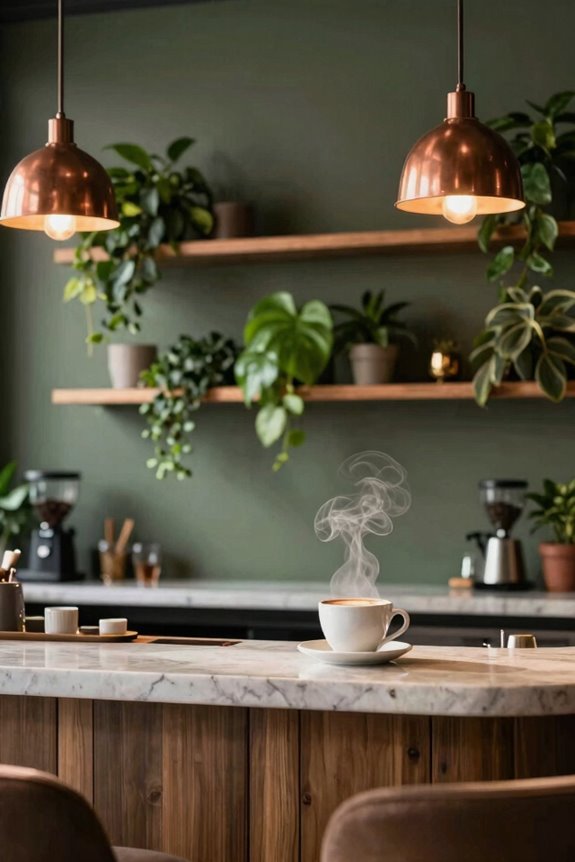
I can refresh my coffee bar’s atmosphere by strategically layering lighting, adding greenery, and choosing colors that work together. Warm-toned sconces and ambient fixtures create an inviting feel, while plants bring natural freshness to the space.
The right color palette brings everything together, making my coffee station feel like a thoughtfully designed cafe rather than a cluttered corner.
Sconces and Ambient Lighting
How does soft, layered lighting change your coffee bar from functional to inviting? Sconces paired with warm-toned bulbs create the ambient lighting you’ll appreciate during morning rituals and evening entertaining. Install them at eye level to illuminate your workspace evenly without glare on reflective surfaces.
Consider these sconce essentials:
- Choose brass or bronze finishes to coordinate with existing brass accents
- Add dimmers to adjust brightness for different times of day
- Position sconces to highlight key features like marble backsplashes
- Use warm-toned bulbs for a welcoming atmosphere
- Space them strategically around your coffee bar area
Sconces soften harsh overhead light while drawing attention to display shelves showcasing your favorite mugs and beans. This layered approach to ambient lighting creates an inviting atmosphere that makes your coffee bar feel like a genuine gathering place.
Greenery and Natural Touches
Why settle for a sterile workspace when greenery creates a revitalizing retreat? I’ve found that incorporating plants and natural textures creates an inviting atmosphere where you’ll actually want to spend time.
Start by placing potted plants and a seasonal arrangement near your back wall. Use terracotta pots and woven baskets to ground your design with organic warmth. Wood shelves paired with greenery soften the overall look while maintaining functionality.
| Element | Benefit | Best Location | Impact |
|---|---|---|---|
| Potted Plants | Air purification | Shelves, corners | Welcoming |
| Seasonal Flowers | Visual interest | Back wall | Refreshing |
| Woven Baskets | Texture, storage | Shelving units | Organic |
| Terracotta Pots | Natural warmth | Display areas | Grounding |
Balance plants with warm lighting and minimal clutter. This combination keeps your space airy while establishing the community-focused atmosphere you’re building.
Color Palette and Atmosphere
Atmosphere changes a coffee bar from a functional space into a destination where customers linger and return. I’ve found that selecting the right colors and lighting creates an inviting environment that encourages people to stay. You’ll want to consider these design elements:
- Warm lighting through soft, ambient fixtures enhances the cozy atmosphere
- Monochrome or neutral tones (whites, beiges, greiges) unify your entire space
- Plants accents soften hard surfaces and add visual interest
- Cohesive decor across cabinets, mugs, and accessories maintains calm organization
- Texture mix of wood, metal, glass, and fabric creates depth
I recommend pairing neutral tones with warm lighting to establish sophistication. This approach makes your coffee bar feel welcoming without overwhelming the senses. Plants accents complement these choices naturally, strengthening your design vision and creating the kind of space people genuinely want to visit.
Coffee & Breakfast Nook: Adding Seating & Comfort
When your kitchen feels cramped during morning routines, a dedicated coffee and breakfast nook solves the problem by combining a functional coffee station with comfortable seating.
Creating Your Nook Layout
- Position a small dining chair or bench directly beside your coffee bar. This arrangement encourages quick breakfasts without congesting your main kitchen space.
- Install floating shelves above the seating area to organize mugs, beans, and syrups. A compact cart beneath provides additional storage for daily essentials.
Enhancing Comfort
Choose a cohesive color palette using neutrals with warm wood tones. This harmonizes your coffee bar with breakfast nook styling.
Add seasonal textiles like linen napkins, throw pillows, or small vases to increase comfort. These touches create continuity and invite daily ritual.
Build a Coffee Bar on a DIY Budget
How can you create a functional coffee station without spending hundreds of dollars? I’ve found that repurposing existing furniture and thrifted pieces creates any corner into a dedicated brewing area. A DIY-budget coffee bar doesn’t require major renovations, just intentional planning.
Start with these budget-friendly essentials:
- Pull-out tray concept for minimalist, space-saving setup
- Rolling bar cart for mobility and flexible storage
- Floating shelves using affordable materials and basic tools
- Vertical organization with risers and labeled containers
- Compact coffee maker, grinder, and essential syrups
I prioritize functional basics first, then upgrade gradually. Clear containers and strategic labeling maximize small-space efficiency.
Repurposed cabinets and DIY backsplashes add unity without full remodeling costs. This approach lets you build a personalized coffee bar that fits your lifestyle and budget perfectly.
Mobile Coffee Stations for Renters & Flexible Layouts
Why stay locked into one coffee corner? A mobile coffee station gives you flexibility in how you brew and enjoy coffee in your space. I recommend choosing a bar cart with sturdy shelves to hold your compact setup: grinder, maker, mugs, and syrups all within arm’s reach.
For renters seeking flexible layouts, this solution eliminates permanent installation. Select lightweight, durable materials with lockable wheels for safe movement between rooms. Include a portable power solution to maintain brewing independence anywhere.
Organization accessories matter too. Use small trays for pods, sugar, and stirrers. Add baskets for beans and filters. A compact milk frother nestles easily on lower shelves.
This adaptable approach lets you create the coffee experience you deserve without compromising your rental agreement or space constraints.
Coffee Bar Inspiration by Style: Modern, Rustic, Minimalist
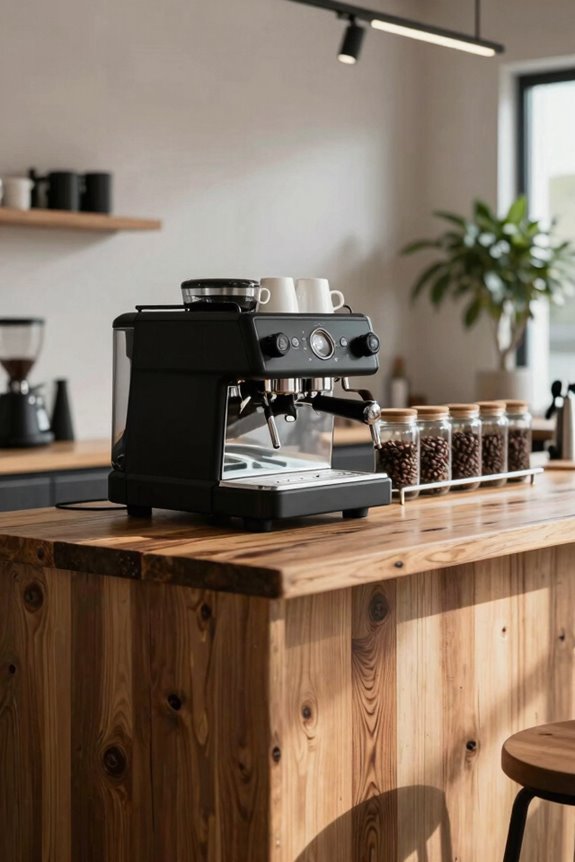
Your coffee bar’s style sets the tone for your entire brewing experience. I encourage you to explore three distinct approaches that’ll help you create a space reflecting your personality and lifestyle.
Design Style Foundations:
- Modern designs feature sleek glass, metal, and light wood with your espresso machine as the focal point
- Rustic styles incorporate warm wood shelving, stone backsplashes, and vintage hardware for authentic character
- Minimalist layouts prioritize function, using pull-out trays and compact footprints to eliminate clutter
- Built-in cabinet storage keeps your coffee bar organized and integrated into your kitchen
- Each style emphasizes accessible storage and efficient workflows within your defined coffee zone
Consider how your chosen style flows with adjacent spaces. Modern approaches demand clean lines and cohesive color palettes. Rustic options embrace natural textures and lived-in warmth.
Minimalist coffee bars maximize efficiency while maintaining visual simplicity. Select materials and layouts supporting both your brewing routine and your home’s overall aesthetic.