Your barndo’s soaring ceilings present a unique design opportunity; one that demands intentional planning to feel inviting rather than cavernous. You’ll want to anchor that vertical expanse with strategic lighting, material choices, and focal points that draw the eye purposefully upward.
The challenge isn’t filling the space; it’s creating visual harmony that makes your kitchen feel both grand and functional. Use these strategies to make those impressive heights work for you.
Light Your Barndo’s High Ceilings
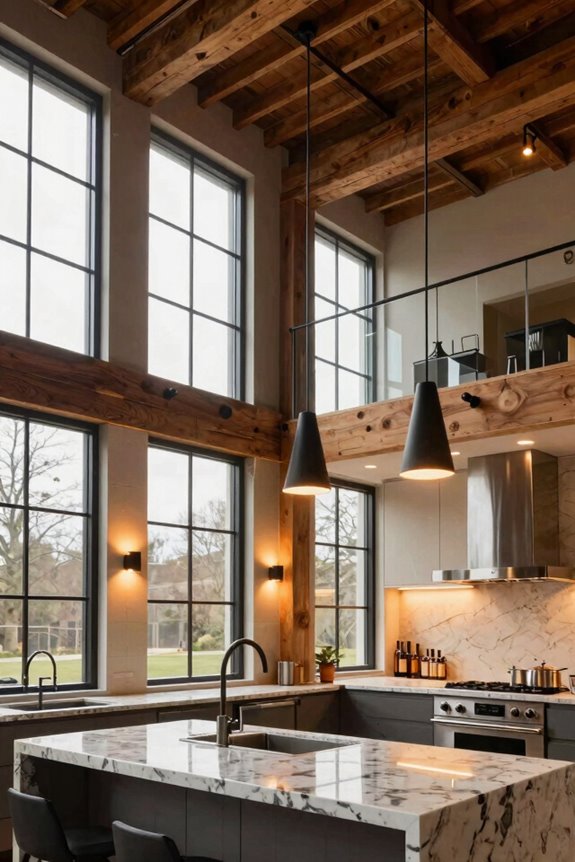
How do you fill soaring vertical space without making a room feel empty and cold? Strategic lighting design makes two-story ceilings welcoming features rather than vacant voids.
Layer Your Lighting Approach
Combine ambient, task, and accent lighting to create depth. Strip lighting along the upper perimeter provides continuous glow without clutter. Large hanging fixtures draw eyes upward while anchoring the kitchen below soaring heights.
Maximize Natural Light
Floor-to-ceiling windows and glass doors brighten expansive spaces naturally. This reduces reliance on high-mounted artificial lighting while connecting your kitchen to outdoor views.
Balance Height Intentionally
Position fixtures strategically to complement your barndominium’s open aesthetic. Proper layering prevents shadows and creates inviting warmth throughout the vertical space.
Whitewash Beams to Highlight Height
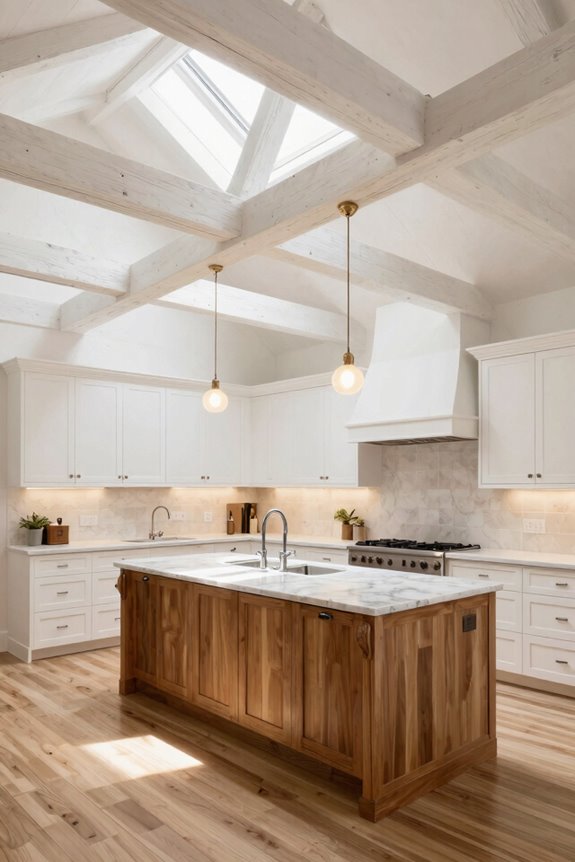
Why settle for dark, heavy beams when you can brighten your barndominium’s soaring architecture?
Whitewashed beams enhance your high ceilings by improving visibility and texture throughout your barndominium kitchen. This treatment creates perceived height without introducing heavy color, which amplifies the spaciousness of 26-foot ceilings.
Whitewashed beams enhance visibility and amplify spaciousness, transforming high ceilings into architectural assets.
Pair whitewashed beams with light countertops and neutral cabinetry to reinforce an airy aesthetic. This unified approach emphasizes vertical openness and creates visual continuity across your space.
Natural materials like reclaimed wood balance rustic elements with modern minimalism. When combined with abundant natural light, whitewashed beams reflect illumination effectively, establishing an expansive two-story kitchen feel.
The result? Your high ceilings become architectural assets that define your entire design scheme rather than overwhelming it.
Install Floor-to-Ceiling Cabinets
When you’ve got 26-foot ceilings, leaving wall space empty wastes prime storage potential. Floor-to-ceiling cabinets in your barndominium kitchen maximize vertical space while creating a clean, built-in look. This storage optimization reduces visual clutter and makes high ceilings functional advantages.
Design your cabinetry with glass-front upper doors paired with solid lower doors. This combination balances accessibility and display in open-concept layouts. Crown molding can accent the tall cabinetry, or leave it unobtrusive to preserve openness.
Deep drawers and integrated organizers enhance everyday functionality and party-ready entertaining. Pair your cabinets with lighter wall tones and minimal hardware to maintain brightness despite the substantial ceiling height.
The seamless wall plane these cabinets create establishes a sophisticated foundation for your entire kitchen design.
Maximize Natural Light in Tall Kitchens
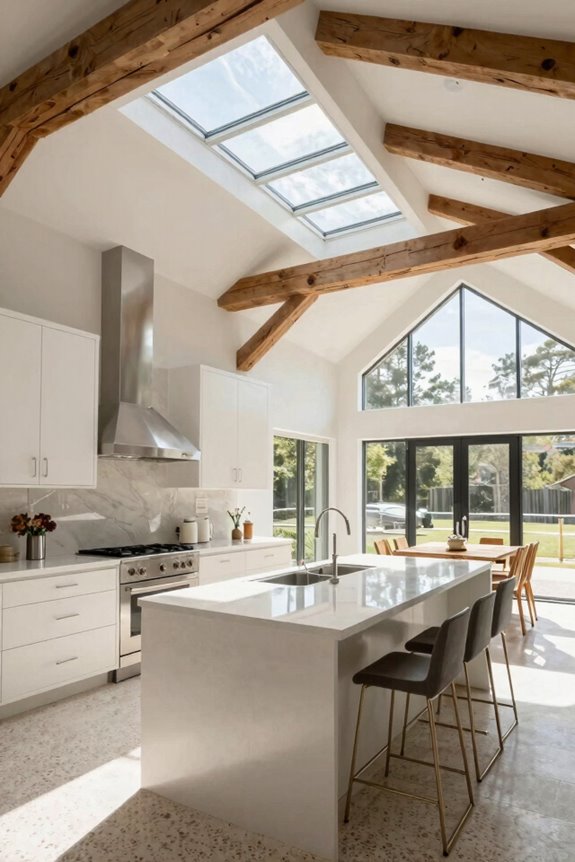
While floor-to-ceiling cabinets anchor your kitchen’s storage and visual foundation, strategic lighting choices prevent those soaring walls from creating dark, shadowy spaces.
Large windows and floor-to-ceiling glass maximize natural light throughout your two-story space. Position windows to draw daylight across beam surfaces and brighten upper walls. Sheer curtains maintain privacy while allowing light penetration without blocking views.
Large windows and floor-to-ceiling glass draw daylight across beam surfaces, brightening upper walls while sheer curtains maintain privacy.
Reflective surfaces amplify illumination naturally. Install light fixtures that combine task and ambient lighting to balance tall ceilings effectively. Consider polished countertops or metallic finishes that bounce light around the room.
This layered approach creates brightness at every level. You’ll notice how natural light and strategic fixtures work together, making your barndo kitchen feel open and welcoming while appearing spacious and well-designed.
Design Your Island as a Focal Point
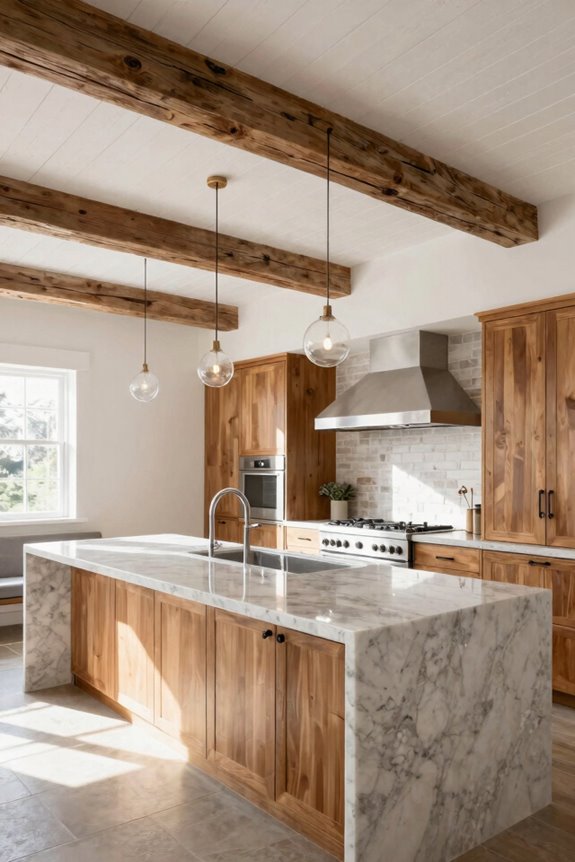
How can you design your barndominium kitchen so that everything naturally centers around one striking feature?
Your island as the central anchor stabilizes the open floor plan while maximizing function. Position it centrally between entry points and appliances, creating effortless traffic flow. A bold island color or contrasting countertops distinguish it from surrounding cabinetry, drawing the eye upward toward high ceilings.
| Design Element | Implementation |
|---|---|
| Lighting | Oversized pendant lights scaled to proportions |
| Storage | Deep drawers and concealed outlets |
| Seating | 24 inches width per person minimum |
Incorporate built-in island storage to eliminate clutter on surrounding counters. Allow adequate legroom underneath for comfortable stool seating.
These deliberate choices position your island as the kitchen’s visual and functional heart, establishing the gathering space your barndominium deserves.
Ground the Space With Warm Materials
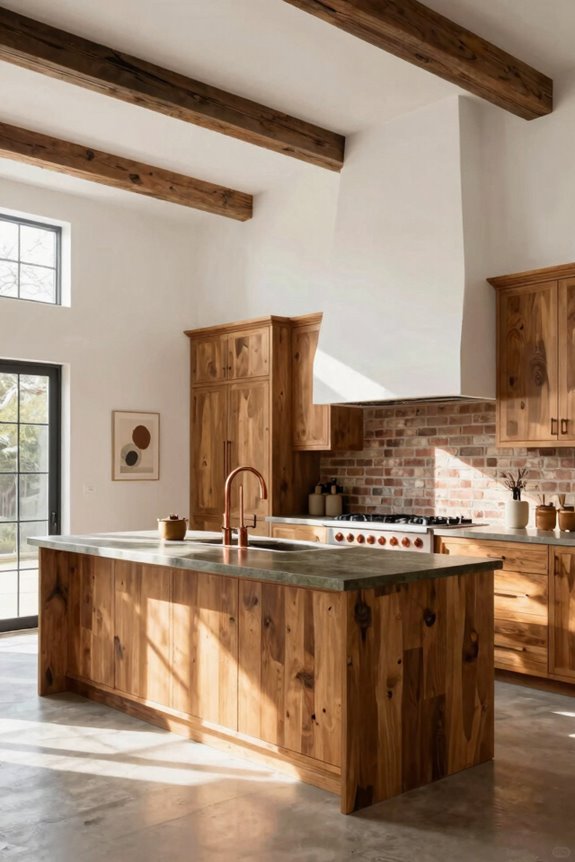
I’ll ground your barndominium kitchen by selecting warm woods and layering complementary materials that anchor the towering space. Natural wood selection, like reclaimed beams and whitewashed floors, softens those 26-foot ceilings while warm material layering with stone or concrete prevents the kitchen from feeling cold and industrial.
This foundation creates an open kitchen that feels welcoming and balances architectural scale with genuine warmth.
Natural Wood Selection
When you’re designing a barndominium kitchen with soaring ceilings, natural wood becomes your most effective tool for creating warmth and visual balance.
I recommend selecting wood materials that ground your vertical space while maintaining durability:
- Reclaimed wood for ceiling beams and shelving adds authentic rustic charm and sustainability
- Whitewashed wood reflects natural light from tall windows, enhancing the airy atmosphere
- Natural wood tones in cabinetry create warm neutrals that prevent the space from feeling cold
- Timber beams paired with contrasting finishes delineate kitchen zones visually
Two-tone wood selections work particularly well. You might pair darker wood cabinetry with lighter ceiling treatments, creating definition without overwhelming your high ceilings.
Mixing wood with stone or metal accents establishes additional texture and depth. This approach makes your kitchen feel connected and deliberate rather than sparse.
Warm Material Layering
While natural wood selection establishes the foundation for warmth, material layering takes your design further by creating depth and coziness throughout the space.
I recommend combining reclaimed wood beams with stone or concrete surfaces. This pairing creates tactile contrast that anchors your kitchen and prevents the tall ceiling from feeling imposing.
Choose a light color palette for cabinetry and walls: creams, tans, and light grays work beautifully. These hues enhance warmth while preserving the airy feel above.
For durable surfaces, consider butcher block or warm-top countertops on your island. Pair these with metal accents and fabric textures like throws and rugs.
Textures layering fights flatness and adds visual interest. This approach makes your high-ceiling barndo kitchen feel like an inviting, grounded gathering space that balances spaciousness with intimacy.
Open Your Kitchen Layout
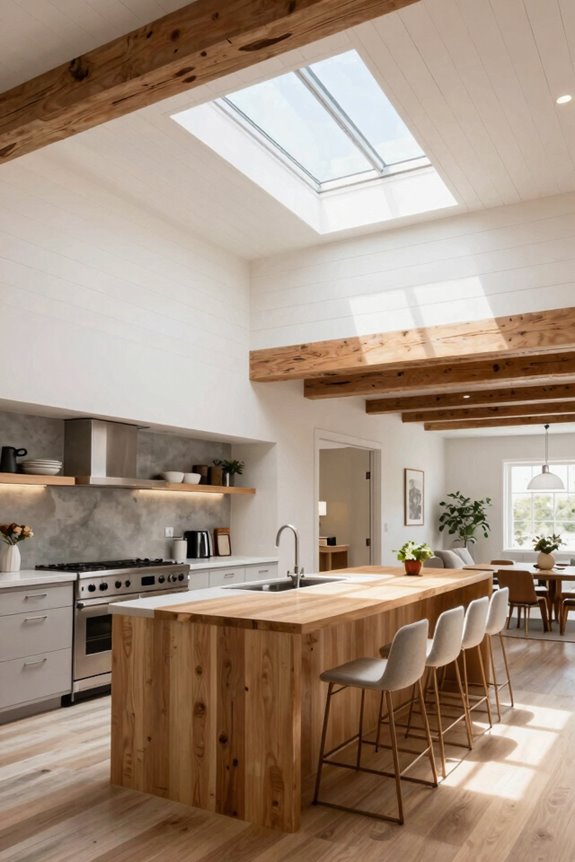
I’ve discovered that the key to maximizing your barndominium’s towering ceilings lies in how you arrange your kitchen’s core zones. Strategic island placement creates natural traffic flow while vertical space management helps your eyes travel upward, making the entire area feel even more spacious.
You’ll want to position your island to anchor the space and allow clear sightlines from your cooking area through the dining and living zones beyond.
Maximize Vertical Space Flow
How do you create a kitchen with soaring 26-foot ceilings into a connected, functional gathering space? By strategically maximizing vertical flow, you’ll create an open floor plan that feels unified rather than cavernous.
Start with these design moves:
- Position a large centerpiece island to anchor the space while maintaining clear movement pathways
- Install a lighting strategy using high strip lights and oversized pendants to balance the scale
- Incorporate two-story drapes or roman shades for soft vertical texture and light control
- Embrace industrial rustic finishes on exposed structural elements like catwalks and HVAC closets
These deliberate choices guide your eye upward while keeping sightlines open to fireplace and kitchen walls. High ceilings become an asset, not a challenge, when you acknowledge their presence through thoughtful vertical design that connects every zone.
Strategic Island Placement Design
Once you’ve mapped your vertical flow, the island becomes your layout’s anchor point. I recommend positioning it strategically to optimize sightlines toward both your kitchen wall and fireplace wall, creating natural visual connections throughout your open floor plan.
Your island should function as a work triangle hub, connecting sink, stove, and refrigerator while establishing clear pathways around it. This placement promotes natural movement between kitchen and living areas without obstructing HVAC cat walks or soffits.
For two-story designs, integrate storage beneath the countertop and consider a secondary height for informal dining. Pair your island with open shelving on perimeter walls to preserve openness. This approach anchors your space while maintaining the airy feel high ceilings provide.