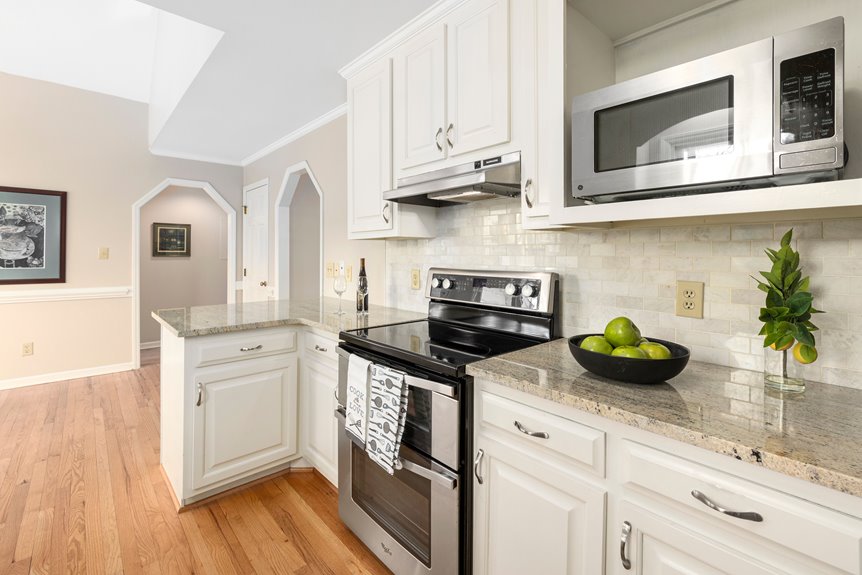
You probably don’t realize that removing your kitchen soffit costs thousands and disrupts your entire layout.
Instead, you can repurpose it into a design feature.
By strategically matching materials, adding lighting, or extending cabinets, you’ll create a polished, unified space.
The right approach depends on your layout and goals.
We’ll explore seven proven strategies to help you decide which works best for your kitchen.
Should You Remove Your Soffit or Redesign It?
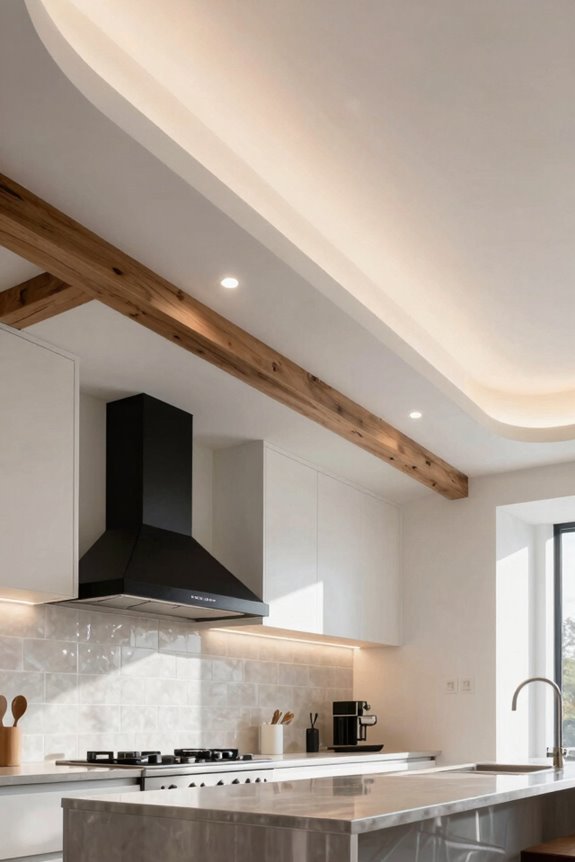
When you’re planning a kitchen renovation, you’ll face an important choice: remove the soffit entirely or give it a fresh new look?
Soffit removal sounds appealing, but it’s often complicated. Rerouting utilities and wiring beneath soffits demands professional expertise and significant investment. You’ll need to evaluate cabinet heights and whether taller cabinets can fill the newly opened space without leaving awkward gaps.
Soffit removal demands professional expertise and significant investment—evaluate cabinet heights carefully to avoid awkward gaps.
Redesigning your soffit frequently offers a smarter solution. Adding integrated lighting, matching materials, or decorative trim creates a polished appearance while protecting existing utilities and wiring. This approach improves your kitchen without major disruptions.
Before deciding, consult a cabinet maker or contractor. They’ll assess load-bearing concerns and identify practical pathways forward. Whether you choose removal or redesign, professional guidance helps your kitchen achieve the unified, modern look you want.
Match Your Soffit to Cabinets for a Seamless Look
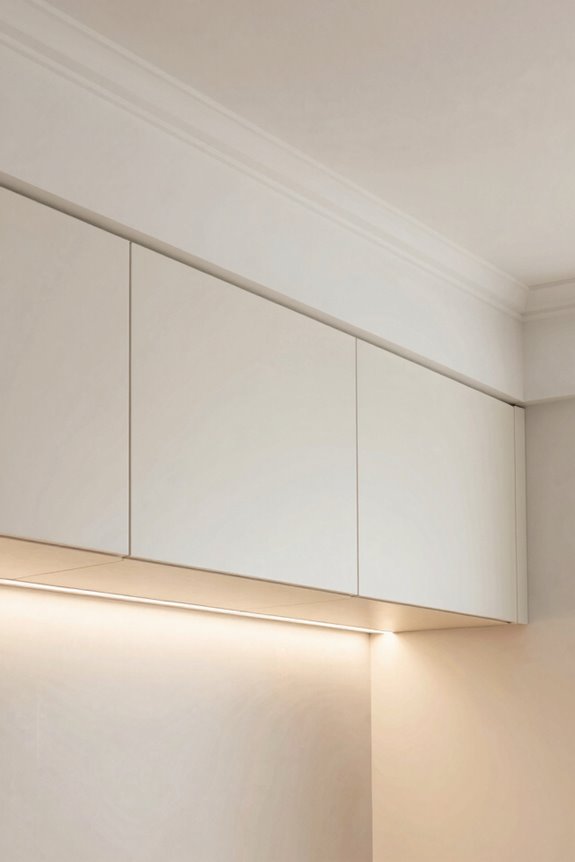
Once you’ve decided to redesign your soffit, matching it to your cabinets offers one of the most effective ways to create visual harmony. When the soffit and cabinets share the same finishing elements, your kitchen feels unified and deliberate rather than disjointed.
Consider these matching strategies:
- Paint the soffit the same color as upper cabinets to create height and consistency.
- Wrap the soffit in identical cabinet materials for a seamless, built-in appearance.
- Align wood tones between soffit and cabinets to reduce the boxed-in feeling.
- Extend cabinet veneer to the soffit edge, concealing transition lines completely.
A flush, mono-material approach works beautifully too. Smooth drywall with matte paint creates a deliberate ceiling-cabinet area that belongs together. You’ll achieve the polished look you’re after by treating these elements as one cohesive zone.
Add Crown Molding to Soften the Edges
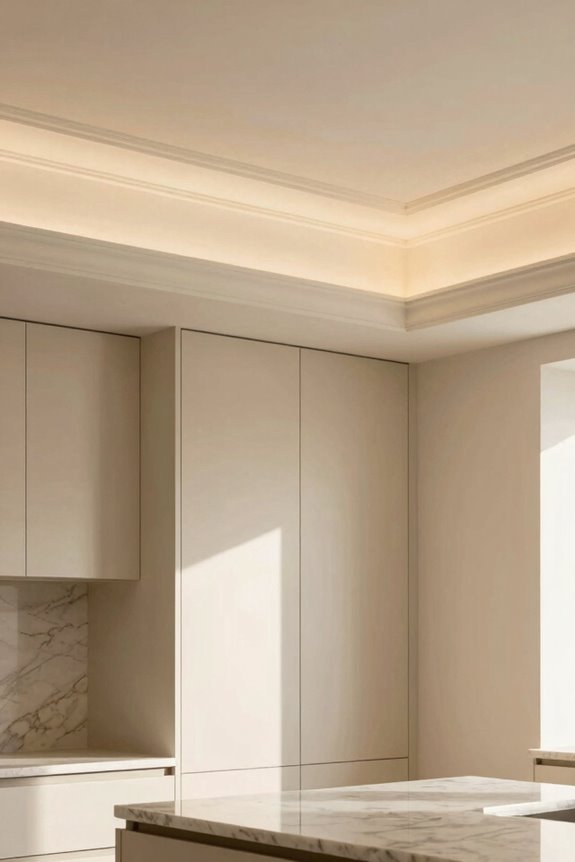
I’ll add crown molding along your soffit to create a polished transition that enhances your kitchen’s visual appeal. This simple accent softens the hard edge where cabinets meet the ceiling, giving your space that high-end, finished look you’re after.
Softening Visual Transitions
How can you bridge the gap between your cabinets and ceiling with elegance? Crown molding turns that awkward space into a polished architectural feature. I’ve found that this simple addition creates a smoother visual transition between your upper cabinets and the soffit above.
Consider these strategies for maximum impact:
- Paint molding to match your cabinetry for seamless integration and consistency
- Install extended crown molding to establish the soffit as a deliberate design choice
- Choose lighter finishes to brighten the kitchen and reduce perceived depth
- Check for precise mitered joints for professional alignment with cabinet lines
When you add crown molding to your soffit, you’re investing in visual continuity. The molding softens hard edges where vertical and horizontal planes meet. This approach improves your entire kitchen aesthetic, making the space feel purposefully designed rather than incomplete.
Elevated Aesthetic Appeal
Crown molding transforms that gap between your cabinets and ceiling into an intentional design element. I’ve found that adding this architectural detail brings sophistication to your entire kitchen.
When you paint the crown molding to match your cabinetry, it visually extends upward, minimizing that awkward soffit space. This unified approach creates a seamless connection between your cabinets and ceiling, making your kitchen feel more spacious.
The installation requires precise measuring and mitered corners, but the results prove worthwhile. You’ll achieve a polished, high-end appearance without removing your soffit entirely.
Matching stains or paint colors further strengthen the connection between molding, cabinetry, and soffit. This cohesive treatment turns an overlooked architectural feature into a refined finishing detail that shows careful design choices throughout your space.
Paint Walls and Soffit One Color to Make It Disappear
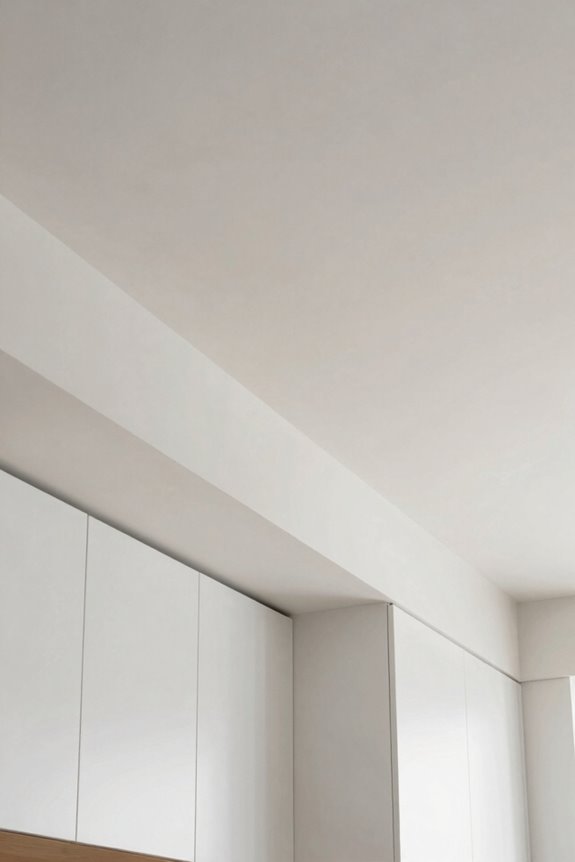
I’ve found that painting your walls and soffit in matching colors creates a powerful visual trick; the gap essentially vanishes, making your kitchen feel taller and more open. When you choose lighter shades or the same hue as your upper cabinets, you’ll achieve seamless continuity that prevents the soffit from interrupting your sightlines.
This unified approach turns a potentially awkward architectural feature into an integrated design element that improves rather than interrupts your space.
Unified Color Strategy Works
Want your kitchen soffit to simply vanish? A unified color strategy makes this possible. When you paint your walls, soffit, and cabinets the same color, you create visual continuity that gives your space a finished look.
Here’s how to execute this coordinated kitchen design:
- Select one neutral tone for walls, soffit, and upper cabinets to eliminate visual breaks
- Paint crown molding to match, reinforcing the continuous line between cabinets and ceiling
- Choose lighter shades to brighten the kitchen and enhance the sense of openness
- Integrate the wall behind cabinets into your soffit color scheme for maximum impact
This monochromatic approach reduces contrast at the top of your room. Your soffit becomes an integrated architectural element rather than a separate box. The result is a coordinated kitchen design that feels carefully planned and professionally finished.
Lighter Shades Expand Space
How do lighter colors actually make your kitchen feel bigger? When you paint your walls and soffit the same pale tone, you create a seamless visual experience. I’ve found that lighter shades reflect more light throughout your space, brightening everything while reducing depth perception between cabinets and ceiling.
| Design Element | Impact |
|---|---|
| White/pale neutral soffit color | Maximizes light reflection |
| Cohesive color strategy | Eliminates visual breaks |
| Consistent eggshell sheen | Maintains uniformity |
| Light wall paint | Extends sight lines upward |
This soffit color choice minimizes contrast, making the gap virtually disappear. Your eye travels smoothly from walls to ceiling without stopping.
Choosing lighter shades for space expansion works because they extend your cabinet line visually upward. Keep the sheen consistent across both surfaces, whether matte or eggshell, to avoid noticeable differences. This unified color approach makes your kitchen feel more open and airy by creating visual continuity from your cabinets all the way to the ceiling.
Seamless Visual Continuity Achieved
What if your kitchen soffit could simply vanish?
You can achieve seamless cabinet-ceiling transition by painting your soffit and upper cabinets the same color. This optical illusion cabinet technique creates a unified color scheme that feels intentional and polished. When done correctly, the gap disappears entirely, giving your kitchen a unified appearance.
Here’s how to master soffit color coordination:
- Select lighter wall and cabinet tones to brighten your space and enhance the unified color scheme
- Match your trim or crown molding with the cabinet color for continuous visual flow
- Use identical finishes—matte or semi-gloss—across all surfaces to reinforce seamlessness
- Keep soffit widths modest, as larger gaps require additional design techniques
This approach works best in kitchens where you’re ready to invest in thoughtful, strategic color choices that give your entire space a more polished appearance.
Install Lighting to Soften and Define the Space
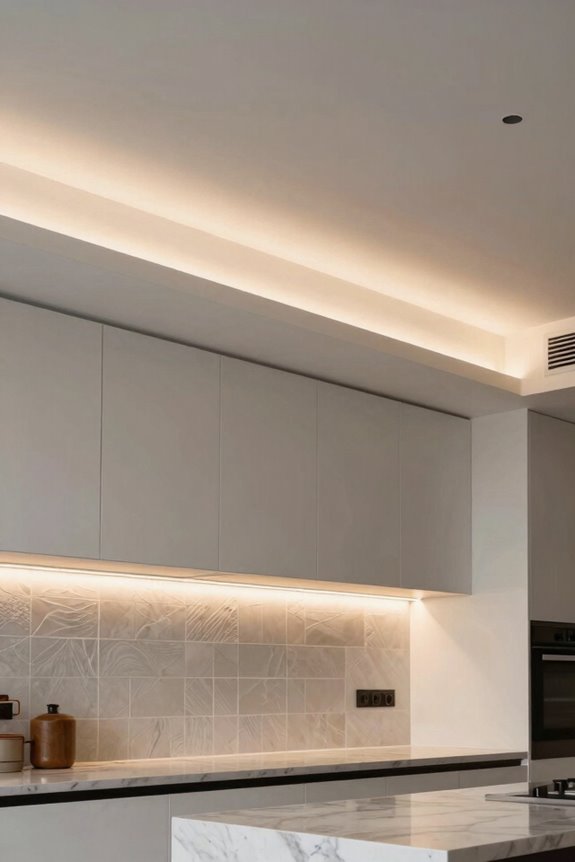
Since soffits can make kitchens feel boxed-in and dark, strategic lighting creates polished design features.
LED strip lights installed along the soffit edge create a soft, ambient glow that softens harsh shadows. This approach integrates the space beautifully while drawing your eye upward, making ceilings feel higher and more open.
Recessed can lights or wall sconces positioned around the soffit brighten under-cabinet areas effectively. Layered lighting combines task, ambient, and accent sources to enhance perceived space continuity throughout your kitchen.
Dimmable lighting options give you flexibility for both daily tasks and decorative displays. This control lets you adjust the mood whenever you’d like.
Strategic soffit lighting moves the focus away from the boxed structure itself. Instead, it becomes an intentional design element that improves your entire kitchen’s polished appearance.
Wrap Your Soffit in Veneer for Natural Warmth
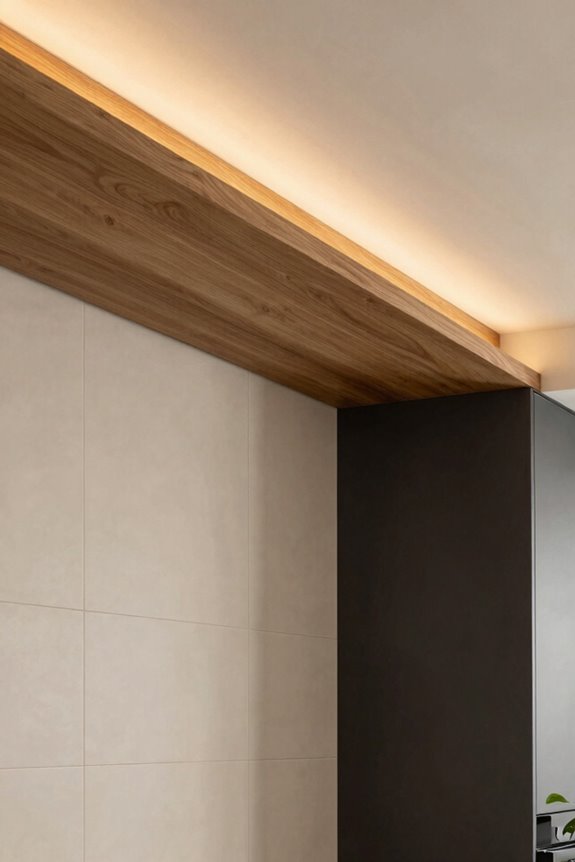
When you’re ready to soften a kitchen soffit’s harsh appearance, wood veneer offers a practical solution that creates a more polished kitchen. I’ve found that veneer creates a seamless, unified look by matching your cabinetry finish perfectly.
Here’s why wood veneer works so well:
Wood veneer seamlessly hides visual contrast, adds natural warmth, and coordinates perfectly with your cabinetry for a unified kitchen aesthetic.
- Hides the visual contrast between soffit and walls, reducing disruption
- Adds natural warmth through authentic wood grain and texture
- Applies directly over existing surfaces for durability and easy cleaning
- Coordinates seamlessly with adjacent cabinets for a unified appearance
The veneer’s monochromatic finish makes your kitchen feel more integrated and polished. You’ll appreciate how natural wood grain enhances your space, whether your style leans rustic or modern.
This approach lets you achieve that designer kitchen look without removing the soffit entirely, giving you a sense of belonging in a truly personalized space.
Extend Cabinets to the Ceiling and Close the Gap
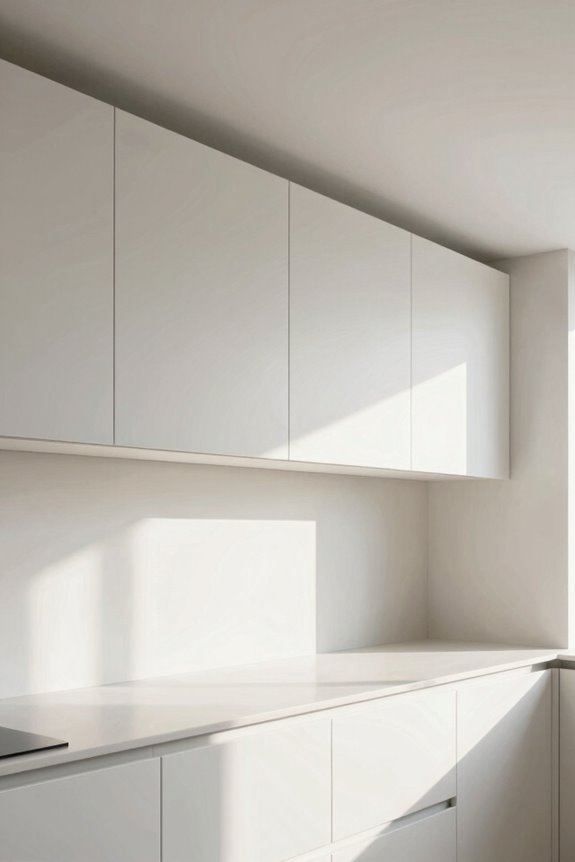
One of the most effective ways to handle a kitchen soffit is extending your upper cabinets all the way to the ceiling. This approach eliminates that awkward gap while dramatically increasing your cabinet height and storage capacity. You’ll create a continuous cabinet line that makes your kitchen feel more spacious and well-planned.
| Benefit | Impact | Consideration |
|---|---|---|
| Storage gain | 12-18 inches | Measure precisely |
| Visual height | Enhanced | Adds sophistication |
| Soffit removal | Avoided | Preserves structure |
| Crown molding | Polished finish | Professional alignment |
| Space perception | Larger feel | Reduces visual breaks |
Working with a cabinet maker ensures your kitchen cabinets align seamlessly with existing walls. The cabinet height reaches your ceiling, blending beautifully with crown molding for that high-end appearance. This design strategy improves your space while maintaining structural integrity and utility access.