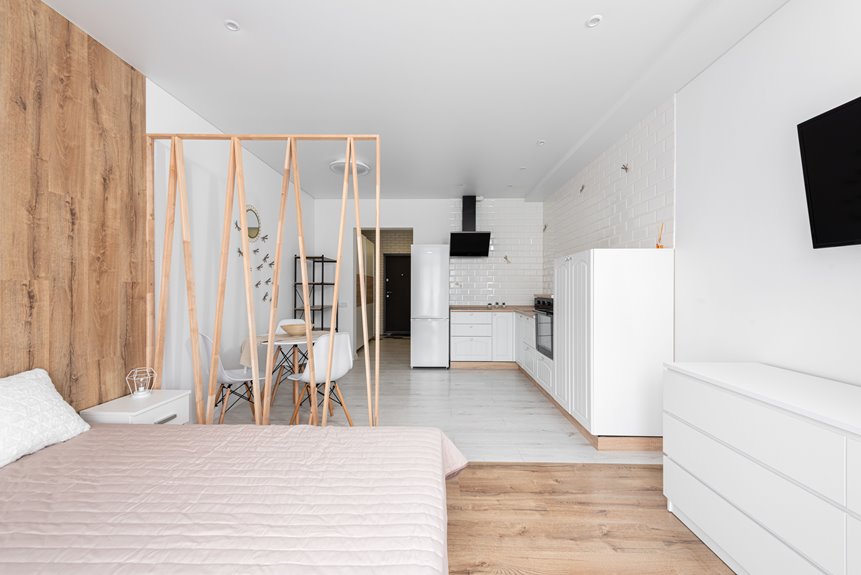
Like Michelangelo sculpting David from marble, you can carve distinct spaces from an open floor plan without erecting walls.
I’m going to show you how glass dividers, wood screens, and strategic furniture placement create boundaries that feel purposeful, not restrictive.
You’ll discover which partition styles preserve natural light while keeping your kitchen separate from living areas.
The right approach depends on your layout and what you’re trying to achieve; here’s where we start.
Glass Dividers: Light and Boundaries Without Walls
How can you separate your kitchen from your living area without sacrificing the openness you love? Glass dividers offer an elegant solution that maintains light flow and visual continuity throughout your space.
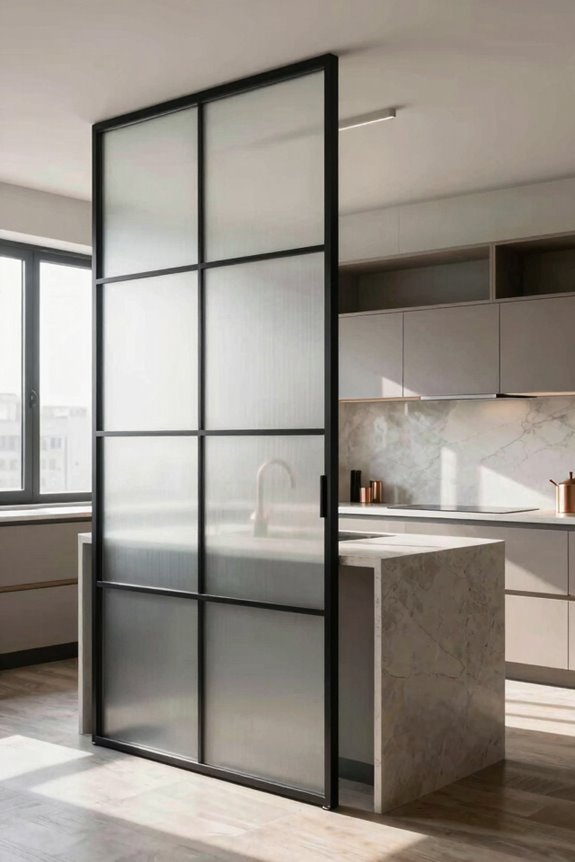
Consider installing black metal frames on clear glass panels. This modern partition style creates structure and an industrial aesthetic while keeping sightlines completely open. The frames provide necessary support, while transparent panels prevent you from seeing kitchen clutter from your living room.
Glass dividers work exceptionally well in contemporary homes seeking defined zones without heavy closure. They make spaces feel larger by preserving natural light and uninterrupted views.
Glass dividers create defined zones while preserving natural light and uninterrupted views in contemporary homes.
The main trade-off involves regular fingerprint cleaning, particularly in households with children. This open kitchen approach delivers the boundary you need while maintaining the connected feeling you desire.
Wood Slat Screens: Minimalist Warmth With Separation
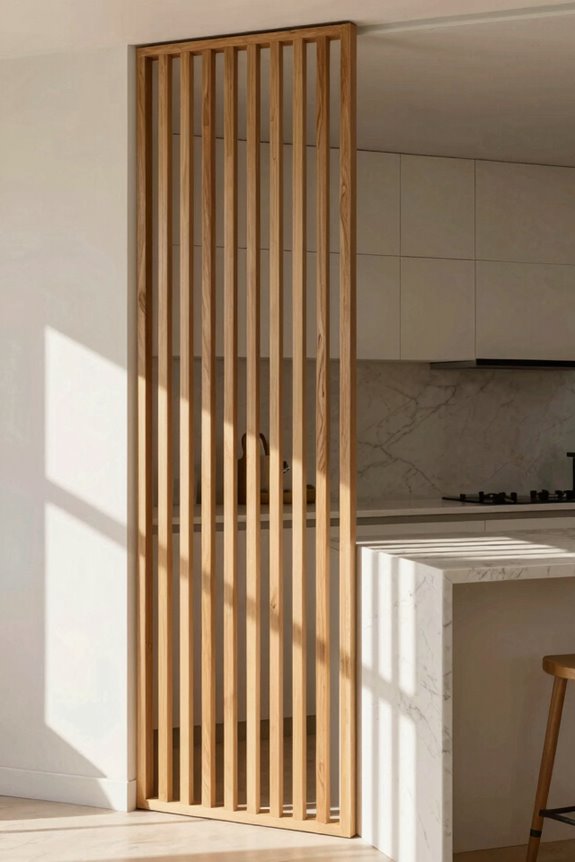
If you’re drawn to natural materials but still want defined kitchen boundaries, wood slat screens offer you a smart middle ground.
I’ll show you how their minimalist design delivers warmth while maintaining the light and airflow that keeps your open layout feeling spacious. You’ll discover why these screens work well for renters and design-conscious homeowners who value both flexibility and aesthetic appeal.
Natural Aesthetic And Warmth
When you want separation without sacrificing openness, wood slat screens offer an elegant solution that’s both functional and beautiful. Natural wood tones create warmth throughout your space while harmonizing with existing cabinetry and flooring. The vertical slats allow light passing through, maintaining visual connection between areas while providing subtle separation.
This design approach celebrates the natural aesthetic of wood, bringing organic texture to modern interiors. The screens work as simple backdrops for décor without fully closing off the kitchen. You’ll appreciate how they preserve sightlines and keep your home feeling connected.
Installation remains straightforward and non-permanent, making wood slat screens reversible for renters or those exploring design options. This flexibility lets you achieve defined spaces while maintaining the openness you desire.
Light Flow And Visual Openness
While wood slat screens deliver the warmth we discussed, their real power lies in how they manage light and maintain visual connection. Vertical slats create an open kitchen partition that preserves natural light flow between adjoining spaces. Unlike solid walls, these screens allow sightlines to pass through, keeping your kitchen and living room visually connected.
The gaps between slats enable light to travel freely, preventing the dim, enclosed feeling that permanent barriers create. This light flow changes how you experience your home; spaces feel larger and more inviting. Vertical slats establish space definition without sacrificing visual openness, making them ideal for those wanting separation without isolation.
You’ll achieve a refined, modern aesthetic while maintaining the airy quality that defines contemporary open layouts.
Installation And Design Flexibility
How much customization do you want in your kitchen partition?
Wood slat screens offer remarkable installation flexibility that adapts to your space and vision. You’ll choose slat width, spacing, and wood type, all adjustable to match your aesthetic. This open partition works as a free-standing divider or anchors securely to ceilings and floors for added stability.
Installation requires no permanent construction, preserving your rental or owned home’s integrity. Natural light filters through vertical slats, maintaining brightness while creating subtle boundaries between kitchen and living areas.
Light wood tones and neutral palettes work well throughout your space. The minimalist divider creates separation without blocking sightlines or airflow. This customizable approach lets you achieve the division you want, creating rooms that feel purposeful rather than confined.
Sliding Doors and Pocket Partitions: Flexibility on Demand
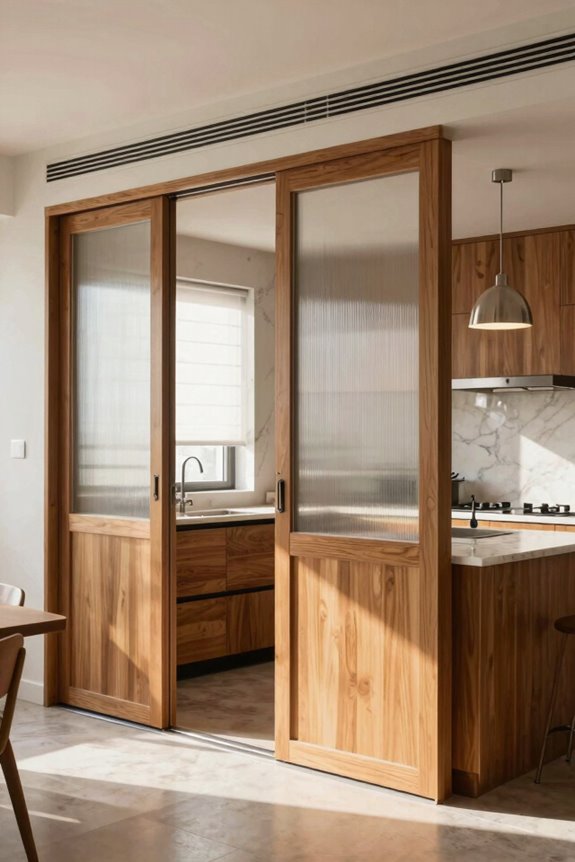
Why settle for a permanently open kitchen when you can control your space? Sliding doors and pocket partitions create flexible environments in your open-plan layout. These solutions let you close off your kitchen instantly or keep it completely open, the choice is yours.
Pocket partitions slide seamlessly into cabinet cavities, vanishing entirely when you want unobstructed sightlines and natural light. Traditional sliding doors offer equally quick transitions between zones without consuming precious floor space. Both options work beautifully in compact layouts where every square foot matters.
Consider bold finishes like navy or forest green, or select wood tones that serve double duty as decorative features. Pair these partitions with built-in storage to maximize functionality. You’re creating space definition that adapts to your lifestyle, not the other way around.
Open Shelving and Bookcases: Storage That Defines Zones
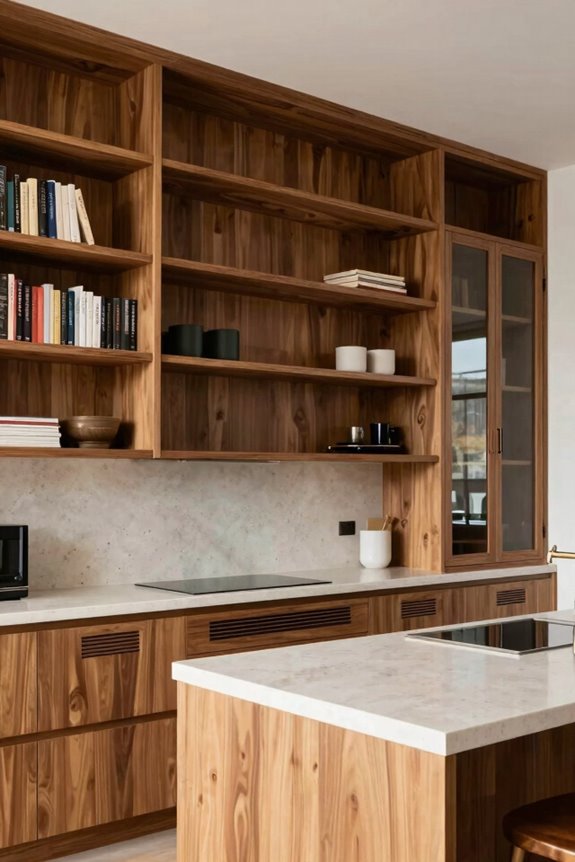
I’ll show you how open shelving and bookcases create functional boundaries while maintaining the light and sight lines that make open kitchens feel spacious. These dual-purpose storage solutions let you display cookbooks, plants, and decor while establishing clear zones between your kitchen and living areas.
Dual-Purpose Storage Solutions
When you’re designing an open kitchen, strategic storage becomes your helpful tool for defining zones without sacrificing the airy feel you’re after. Back-to-back bookcases create visual barriers while maintaining sightlines between spaces. Built-in shelving with integrated storage, such as cabinets or baskets, tucks away clutter near entries and establishes clear boundaries.
| Solution | Function | Visual Impact |
|---|---|---|
| Open shelving | Displays items, allows light passage | Maintains openness |
| Back-to-back bookcases | Creates separation between zones | Preserves sightlines |
| Built-in storage | Conceals clutter, organizes items | Defines space boundaries |
Adding hooks or cork strips to bookcase backs enhances functionality. This flexible divider approach lets you adjust space delineation as needs evolve.
Secondhand bookcases offer affordable, non-permanent options that you can rearrange easily. Strategic storage integration helps you organize your kitchen into visually distinct zones that feel connected rather than cramped.
Visual Light Flow Design
Open shelving and bookcases serve as powerful design tools that divide your kitchen from adjoining living spaces without blocking light or sightlines. I recommend positioning back-to-back units to create a visual boundary that maintains openness throughout your home.
This approach preserves the airiness you want in open-plan living while establishing clear zones. Freestanding shelves with varying heights and strategic gaps allow light to flow naturally between areas. You’ll notice how this room divider approach eliminates the heaviness of traditional walls.
Quality materials like CenturyPly plywood offer durability and customization. Your open shelving becomes functional storage for books, plants, and decor while reducing clutter in both zones. The result is a thoughtfully designed space where your kitchen and living area feel connected yet distinctly defined, creating the balanced environment your family deserves.
Kitchen Islands: Permanent Partitions With Function
Kitchen islands offer a smart solution when you’re looking to separate spaces without closing them off completely. I’d recommend considering a dual-finish design that uses contrasting materials on each side. A grey marble-effect kitchen side paired with wood-effect living side creates a subtle boundary while maintaining visual continuity.
For enhanced functionality, incorporate built-in storage and a seating overhang. This approach defines your open kitchen while serving practical purposes. If you prefer maximum light transmission, integrate glass or smoked glass panels into your island design. This prevents a solid wall feel while still establishing zone delineation.
Calacatta marble-effect cladding provides a refined, high-contrast option that remains integrated with surrounding spaces. These permanent partitions preserve sightlines between areas, making your home feel spacious and connected.
Rugs and Furniture: Visual Cues That Divide Without Walls
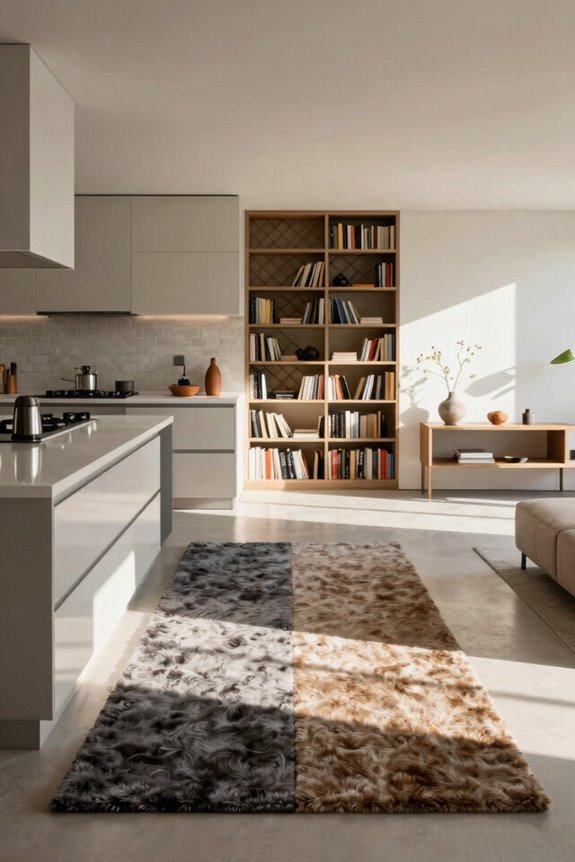
How can you establish distinct zones in your open kitchen without installing walls or permanent structures? Rugs and furniture placement offer sophisticated visual cues for space separation in open-plan living.
1. Area-Defining Rugs
Large rugs beneath dining tables or seating arrangements create rug-defined zones while maintaining sightlines. Neutral base rugs paired with smaller accent pieces subtly differentiate spaces without blocking light or foot traffic flow.
2. Strategic Furniture Orientation
Position sofas to face dining areas with defined rug perimeters. This signals boundaries while preserving the openness you value in your open kitchen environment.
3. Color and Texture Selection
Warm wool tones contrast with cool flat-weave textures, reinforcing distinct zones. These visual cues establish functional areas without physical barriers, supporting comfortable open-plan living while creating a unified design throughout your home.
Layering Partitions With Materials: A Multi-Tactic Approach
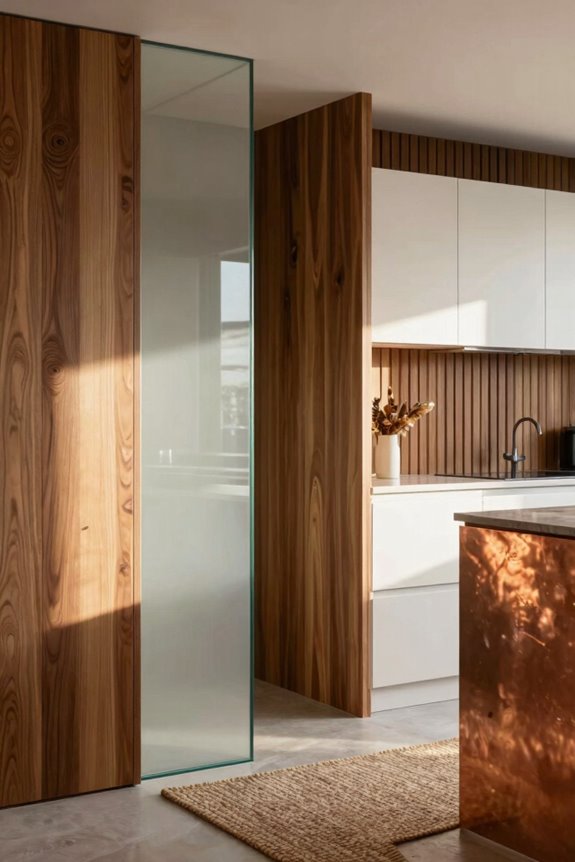
When you combine multiple materials strategically, you’ll create flexible boundaries that preserve both light and conversation flow in your open kitchen.
Layering partitions with mixed materials, such as glass panels paired with wood slats or metal frames alongside translucent screens, delivers visual depth while maintaining openness. This approach defines space without installing permanent walls.
Mixed materials like glass, wood, and metal create visual depth while maintaining the openness your kitchen needs.
Consider back-to-back bookcases topped with lighter screens. This combination provides storage and separation simultaneously. Glass offers transparency; wood brings warmth; fabric or greenery softens the overall effect.
Partial-height elements work best here. They remain permeable to air and sound while establishing clear zone boundaries. Pocket doors and sliding panels add flexibility, letting you adjust privacy as your needs shift throughout the day.