I understand that planning a kitchen remodel feels overwhelming. You’re balancing aesthetics, functionality, and budget constraints at the same time. But here’s what I’ve found: when you approach your remodel strategically, starting with solid financial planning and smart design choices, you can create a space that works as beautifully as it looks.
The seven ideas ahead will show you exactly how to make that happen.
Plan Your Kitchen Remodel Budget Before Designing
Why does budget planning matter before you pick out cabinets or countertops? Setting your remodel cost upfront prevents overspending and keeps your project on track. The NKBA suggests allocating 15–20% of your home value as your budgeting guideline. Medium kitchen remodels range from $45,000–$71,159, while large projects run $95,000–$137,228.
Start by researching local quotes on sites like Angi.com and HomeAdvisor to understand realistic pricing. Create a menu of upgrade ideas with specific cost ranges; slab cabinet doors typically cost $8,000–$20,000, and panel-ready appliances add $2,000–$8,000.
Plan a 15–25% contingency buffer for unforeseen issues discovered during demolition. Prioritize your must-haves over nice-to-haves to guide decisions and prevent scope creep. This strategic approach helps you develop your vision into an achievable plan you’ll feel confident executing.
Build Your Kitchen Around Smart Storage Solutions
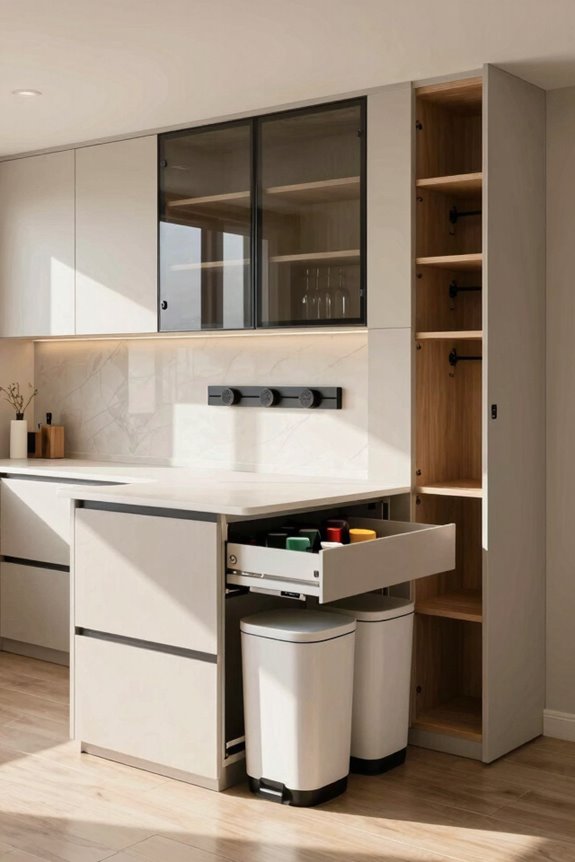
You’ll improve your kitchen’s functionality by prioritizing smart storage solutions that work as hard as you do. I recommend starting with three key strategies: installing floor-to-ceiling pantry cabinets or walk-in pantries that maximize vertical space, designing task-specific zones like beverage stations or pet feeding areas, and integrating storage directly into your island for dual-purpose organization.
These approaches keep your countertops clear while maintaining the clean, modern aesthetic that defines successful 2026 kitchen designs.
Pantry Cabinets and Walk-Ins
How much of your kitchen’s potential goes unused because storage isn’t strategically planned? Pantry cabinets and walk-in pantries form the backbone of modern kitchen design, with 47% of renovating homeowners prioritizing pantry solutions and 16% choosing walk-in formats.
Consider incorporating pantry cabinets that maximize vertical space while keeping daily essentials accessible. Walk-in pantries offer dedicated zones for bulk storage and meal prep, improving workflow efficiency. Pair these with prep kitchens or butler’s pantries to create specialized task areas for baking and beverage stations.
Layered storage organization reduces visual clutter while maintaining functionality. Concealed appliances and panel-ready finishes blend smoothly with cabinetry, creating unified interiors. Well-designed pantry systems support your routine and establish the kitchen as your home’s organized hub.
Task-Specific Zones Matter
Pantry systems create the foundation for kitchen organization, but purposeful zones multiply that advantage. Task-specific zones help you create a personalized workspace that supports how you actually cook and live.
Consider these dedicated micro-areas:
- Beverage stations with brewing equipment and glassware within arm’s reach
- Baking zones featuring ingredient storage and prep surfaces together
- Coffee bars with appliance garages hiding countertop clutter
Islands evolve into multifunctional hubs, often housing prep sinks or charging stations. Vertical solutions, pull-outs, and corner optimizers maximize storage within each zone. Hidden or tucked-away areas maintain clean surfaces while providing specialized functionality.
This layered approach keeps your kitchen both beautiful and efficient, supporting your unique lifestyle and workflow patterns.
Island Storage Integration
Where does your kitchen’s workflow center? Your island’s storage potential deserves strategic planning. I’d recommend integrating hidden storage solutions beneath countertops and appliance integration into your multifunctional islands for seamless functionality.
| Storage Type | Best Use | Benefits |
|---|---|---|
| Drawers | Utensils, linens | Easy access, organized |
| Cabinets | Small appliances | Concealed clutter |
| Open Shelving | Frequently used items | Visual appeal, convenience |
Your open-layout kitchen benefits from thoughtfully designed island storage that balances beauty with organization. Consider two-tier designs that accommodate both prep work and casual dining while maximizing every cubic inch.
Built-in dishwashers and microwaves within your island eliminate workflow interruptions. By determining your island’s specific roles (seating, storage, and prep), you’ll create a practical kitchen hub supporting your daily routines and entertaining needs effectively.
Bring Warmth With Wood Cabinets and Natural Materials
Why do warm, inviting kitchens feel so much more livable than cold, sterile ones? I’ve found that wood cabinets and natural materials create welcoming gathering spots. Designers increasingly favor wood over painted finishes, with 59% choosing wood for its authenticity. White oak leads the preference list at 51%, offering visible grain and genuine warmth.
Wood cabinets and natural materials create welcoming gathering spots that feel far more livable than cold, sterile kitchens.
Consider these elements for your kitchen:
- White oak cabinetry that showcases natural grain patterns and depth
- Warm neutrals paired with wood tones for a cohesive, minimalist design
- Hardware and accents in warm wood tones that reinforce visual unity
Clear, light finishes on wood cabinets maintain brightness while preserving warmth. Organic textures and grain patterns create natural depth throughout your space.
This approach establishes the inviting atmosphere you’re seeking.
Create Visual Contrast With Two-Tone Cabinets and Island Surfaces
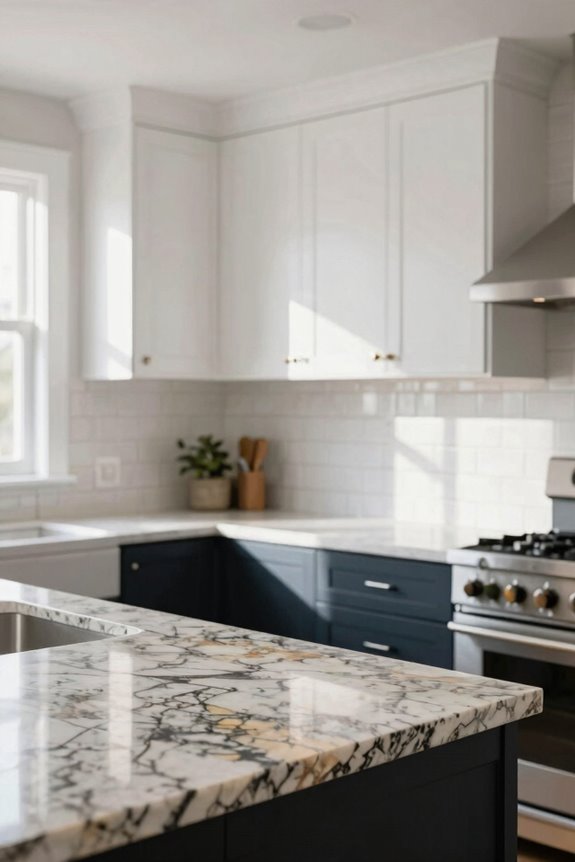
Two-tone cabinets, pairing light uppers with darker lowers, create striking visual depth that you can customize to your style. I’ll guide you through selecting the right color combinations and island countertop materials to achieve this contemporary look.
Wood island surfaces work particularly well with two-tone designs, adding warmth while establishing the contrast that makes your kitchen feel purposeful and modern.
Cabinet Color Pairing Strategies
How can you create a kitchen that feels both balanced and visually striking? Cabinet color pairing strategies let you achieve exactly that through deliberate choices.
I recommend these three approaches:
- Pair bold lower cabinets (navy or forest green) with lighter upper cabinets for depth and brightness
- Differentiate your island with a contrasting color that anchors the space visually
- Use white or off-white countertops as neutral connectors unifying your two-tone scheme
This upper and lower cabinet contrast creates the visual interest you’re seeking. Your island contrasting color becomes a focal point that grounds the entire kitchen.
Brushed nickel or black hardware reinforces this balance without overwhelming the design. Cabinet color pairing creates a cohesive, intentional environment in your space. You’ll achieve a kitchen that’s both sophisticated and welcoming, exactly what modern homeowners deserve.
Island Countertop Material Selection
Your island countertop deserves its own spotlight through thoughtful material selection. I’ve found that pairing your island countertop with two-tone cabinets creates visual impact that draws the eye. Wood island surfaces rank as the top choice, delivering warmth against lighter or darker cabinet finishes.
| Material | Best With |
|---|---|
| Wood | Contrast cabinets |
| White/Off-White | Two-tone cabinets |
| Slab countertops | Bold veining |
| Granite | Dark finishes |
| Quartz | Light finishes |
When you select slab countertops with dramatic veining, your island becomes a center of attention. I recommend choosing materials that differ noticeably from surrounding surfaces.
This strategy emphasizes your island’s importance while harmonizing with your overall design direction. The wood island paired with contrasting cabinet colors creates that unified yet distinct aesthetic you’re seeking.
Build Multi-Functional Islands With Seating, Storage, and Appliances
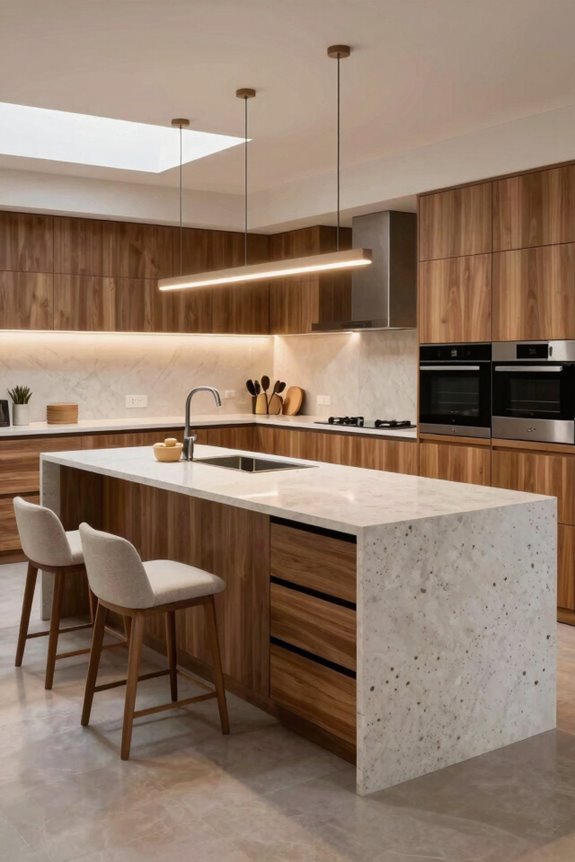
Because modern kitchens center around open layouts, islands have evolved into busy workstations rather than simple countertops. You’re creating the heart of your home by building multifunctional islands that serve multiple purposes.
Consider these essential features for your island design:
- Built-in appliances like dishwashers and microwaves streamline your workflow and eliminate clutter
- Generous storage drawers keep prep tools accessible while maintaining a clean aesthetic
- Tiered seating encourages family gatherings while preserving workspace for cooking
Most renovated islands exceed seven feet in length, providing ample room for both preparation and socializing. Prioritize your island’s roles early, whether you need seating, storage, appliances, or a combination.
This strategic approach maximizes your kitchen’s efficiency and creates a central centerpiece. Your island becomes the hub where cooking, cleanup, and casual dining seamlessly converge.
Select Smart Appliances With Precise Temperature Control
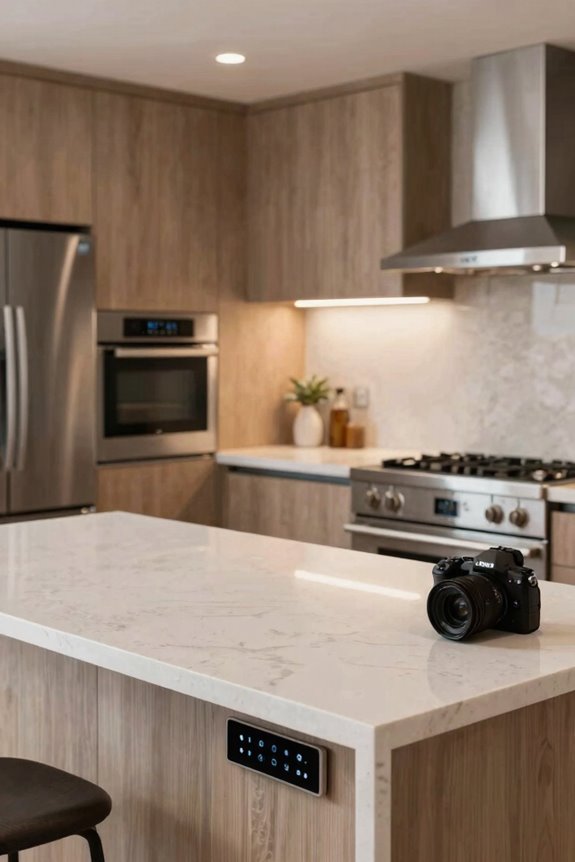
What makes smart appliances essential in 2026 kitchen design? They deliver exact climate management that improves how you cook and preserve food. Refrigerators and ovens with adjustable temperature zones let you maintain ideal conditions for different foods simultaneously.
Wi-Fi connectivity enables app-based control, so you’re preheating your oven on your way home. Water filter alerts notify you when maintenance is needed, keeping your ecosystem running smoothly. These precise temperature controls support both efficiency and consistency in every meal you prepare.
Panel-ready, integrated smart appliances blend seamlessly with your cabinetry for coordinated aesthetics. Budget $2,000–$8,000 for these premium features depending on your selections and brand preferences.
Combine Task and Ambient Lighting for Every Kitchen Activity
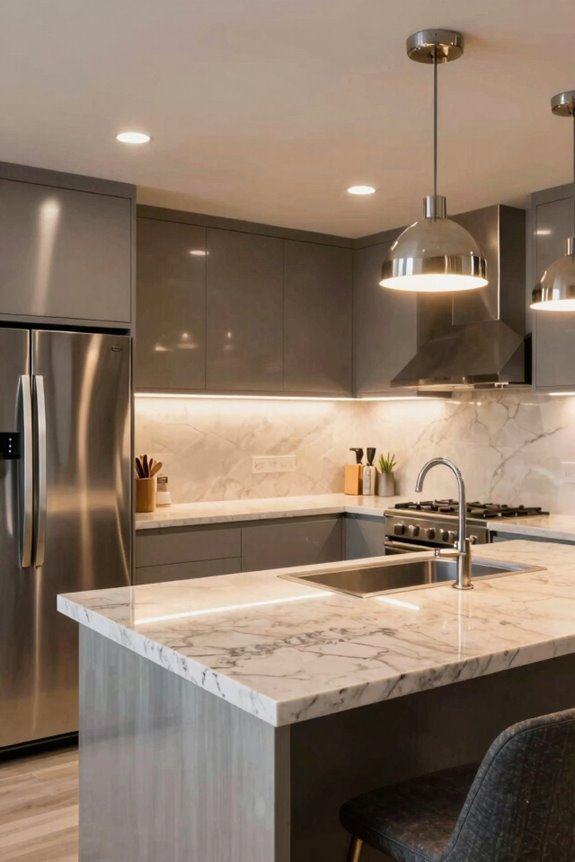
How can layered lighting help your kitchen work better for both cooking and gathering? I’ve discovered that combining task and ambient lighting creates a kitchen designed for both functionality and connection.
Layered lighting transforms your kitchen into a functional cooking space and inviting gathering place through strategic task and ambient design.
Here’s what I’ve learned works best:
- Install under-cabinet LEDs (82% adoption rate) to eliminate shadows during food prep and cooking
- Add ambient lighting overhead to create an inviting atmosphere for family gatherings and meals
- Include decorative statement fixtures that blend style with purpose while supporting kitchen activities
This four-layer approach, task, ambient, accent, and decorative, gives you versatility across your prep zones and social areas. Natural light remains your foundation, so I prioritize windows alongside quality fixtures.
You’ll achieve professional-grade illumination without overspending. Budget-friendly layering ranges from $200 to $2,000, making this accessible for everyone wanting a modern kitchen.