Like a painter adding layers to a canvas, you’ll discover that kitchen lighting isn’t just about brightness. It’s about creating depth and functionality. Your space deserves a thoughtful approach that combines ambient, task, and accent lighting into one coordinated plan.
The right setup improves how you cook, eat, and entertain. Here’s what you need to know to get started.
Start With Recessed Ambient Lighting as Your Base
Why does kitchen lighting matter so much? Your kitchen deserves illumination that works as hard as you do.
I recommend starting with recessed ambient lighting as your base lighting foundation. These fixtures provide broad, even coverage across your entire space without visual clutter. Strategic positioning eliminates shadows on countertops and seating areas where you need clarity.
Here’s what makes this approach effective: recessed lights create consistent illumination throughout work zones. Install dimmers to adjust brightness from focused daytime tasks to softer evening settings. Even spacing, typically 4-6 feet apart, reduces shadows and prevents hotspots.
This base layer isn’t your complete solution. Layered lighting combines recessed ambient lights with task and accent options, creating depth and visual interest. Your kitchen becomes a space that’s both functional and inviting, supporting how you actually live and cook.
Add Task Lighting Under Cabinets and Over Work Zones
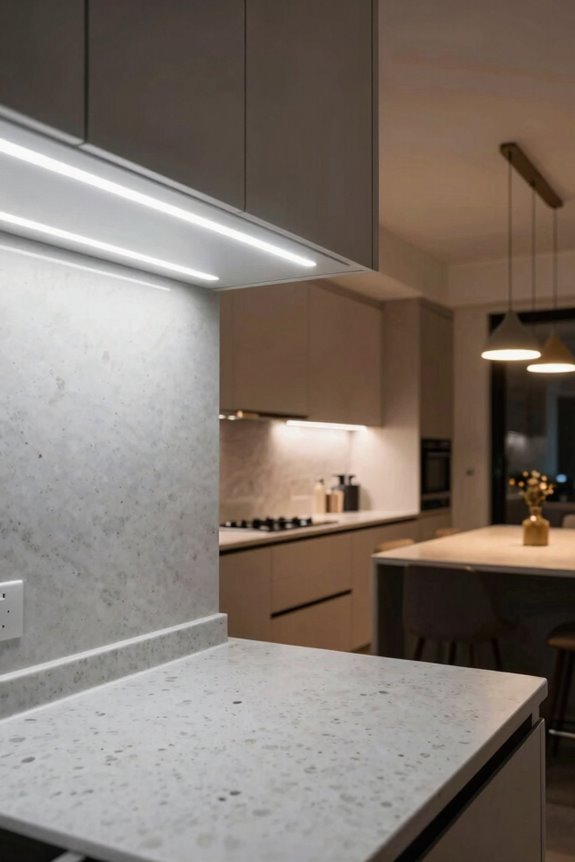
When does your countertop work become difficult to see? Under-cabinet lighting solves this problem by brightening your work zones directly where you need it most.
LED strip lighting beneath upper cabinets delivers task lighting that complements your ambient lighting foundation. I recommend positioning these lights to shine directly on countertops, eliminating shadows and improving visibility during meal prep.
Dimmable LED options give you flexibility. You’ll adjust brightness for different tasks: bright for detailed chopping, softer for evening cooking.
Layer your cabinet lighting with zone-based controls. Separate switches let you customize illumination across your kitchen’s various work areas. This strategic approach creates even, functional lighting throughout your space.
Combined with recessed ambient lighting, under-cabinet fixtures enhance how you work and experience your kitchen daily.
Layer Accent Light With Statement Pendants or Chandeliers
I recommend combining accent fixtures with bold statement pieces to create depth and visual interest in your kitchen. A dramatic chandelier or cluster of pendants serves as your room’s main visual anchor, while strategically placed accent lights frame architectural details like range hoods or open shelving.
This layering approach makes your space feel purposefully designed rather than simply lit for function.
Statement Chandeliers For Drama
Because kitchens with high ceilings or open layouts can feel visually disconnected, a statement chandelier serves as a powerful center of attention that draws the eye upward and emphasizes the room’s height and openness.
I recommend pairing your statement chandelier with layered lighting to create depth and balance. This combination merges bold sculptural form with softer surrounding light, preventing one fixture from overwhelming your space.
Consider scale and placement carefully. Large-scale fixtures like sculptural chandeliers work beautifully in vaulted or open-beam kitchens, but they shouldn’t obstruct sightlines or dominate the ceiling’s negative space.
Complement your dramatic lighting with varied finishes such as brass, matte black, or glass to add texture and prevent visual monotony. This approach works particularly well in transitional or modern kitchens, creating a design that feels well-considered and inviting.
Pendant Layering Techniques
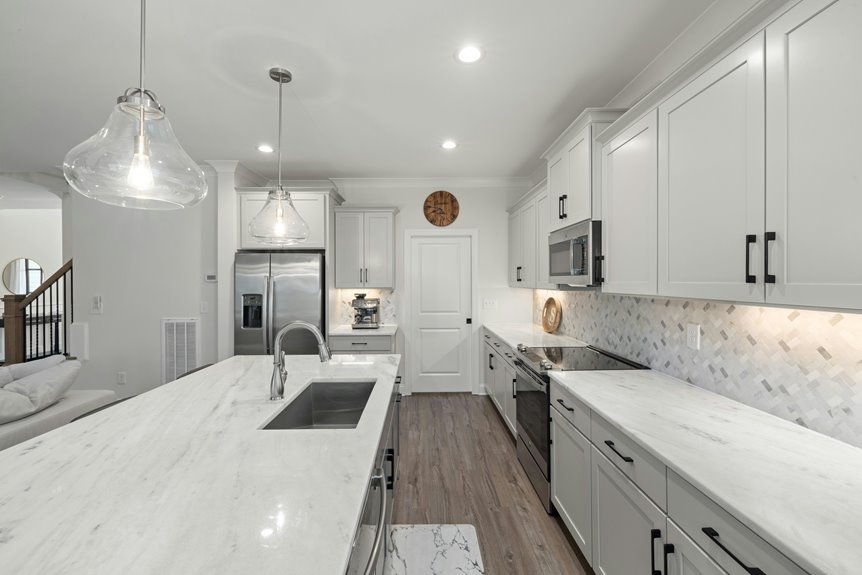
How do you create focused light that also anchors your kitchen’s design? Pendant layering combines multiple pendants with ambient task lighting for both function and style.
Here’s how I’d approach this technique:
- Install 2–3 pendants clustered above your island, spaced 24–30 inches apart for balanced sightlines
- Position fixtures 30–36 inches from the counter to avoid obstructing views while delivering optimal illumination
- Select varied fixture finishes: brass, matte black, glass to add texture and visual depth
- Pair pendants with dimmer control to adjust brightness and create adaptable ambiance throughout your day
This pendant layering approach combines island lighting with under-cabinet and ambient lighting, creating balanced visual weight. You’ll achieve balanced sightlines while establishing a point of interest that reflects your design vision and enhances functionality.
Creating Visual Focal Points
Statement pendants and chandeliers serve as visual anchors that draw the eye and define your kitchen’s personality. I recommend pairing bold fixtures with subtler ambient lighting to avoid overwhelming your space. A single dramatic chandelier or clustered pendants over your island establishes a strong focal point without blocking sightlines.
| Fixture Type | Best Location | Finish Option | Purpose |
|---|---|---|---|
| Statement Chandelier | Island center | Brass or matte black | Primary focal point |
| Clustered Pendants | Island edges | Glass or mixed | Secondary accent |
| Brass Pendants | Kitchen perimeter | Warm metallic | Ambient support |
| Oversized Pendants | Dining area | Matte finish | Visual interest |
| Accent Lights | Range hood | Varied finishes | Architectural highlight |
Varying finishes—brass, matte black, glass—across your accent and task fixtures adds depth. Directing light onto architectural features while maintaining complementary ambient lighting creates layered sophistication.
This approach makes your kitchen a cohesive, deliberate space that reflects your design vision.
Use Wall Sconces to Highlight and Define Spaces
Wall sconces let you target light exactly where you need it, above countertops, open shelves, and work zones, without depending on overhead fixtures. I recommend positioning them strategically to reduce shadows and showcase your dishware or architectural details. These fixtures create definition in your kitchen while providing soft, warm light through dimmable options with color temperatures between 2700K and 3000K.
Accent Lighting Above Counters
Why settle for flat, shadowless countertops when sconces can add dimension and warmth to your kitchen?
Wall sconces deliver targeted accent lighting that makes ordinary counter zones more visually interesting. When you layer sconces with under-cabinet lighting, you create depth and improve how colors appear in your kitchen. I recommend mounting fixtures at eye level along counter runs to frame work areas evenly.
Consider these placement strategies for maximum impact:
- Position sconces above open shelving to highlight decorative displays and reduce harsh shadows
- Install near sinks to enhance tile texture and backsplash detail
- Choose dimmable fixtures at 2700K–3000K for warm, inviting ambient glow
- Space sconces 24–36 inches apart for consistent cross-lighting that minimizes glare
Models like the Baker Sconce offer the diffused warmth you’re seeking. This layered lighting approach improves your kitchen’s functionality and visual appeal.
Open Shelving Display Enhancement
How can open shelving become a centerpiece in your kitchen instead of just a storage spot? I’ve found that strategic wall sconces highlight shelves as deliberate design choices. Position sconces at eye level or slightly above shelf centers to evenly illuminate ceramics and decor. This focused ambient lighting showcases your collection while adding warmth.
I recommend choosing sconces with adjustable arms to direct light precisely and reduce glassware glare. Pair warm white bulbs (2700K, 3000K) with dimmers for a soft glow that complements your cabinet textures.
| Feature | Benefit |
|---|---|
| Adjustable diffusers | Minimize reflections |
| Brass/matte finishes | Enhance visual contrast |
| Dimmer controls | Create flexible atmosphere |
| Warm white tones | Complement decor warmly |
Mix sconce finishes—brass, matte black, textured glass—to draw attention to shelving as a distinctive display lighting feature that showcases your personal style.
Ambient Glow For Kitchens
Sconces create soft, layered lighting that defines your kitchen’s zones without relying entirely on harsh overhead fixtures. I’m guiding you toward ambient lighting that makes your space feel like an inviting sanctuary.
Consider these four elements:
- Warm white bulbs (2700K–3000K) cast a welcoming glow that encourages gathering and conversation.
- Dimmable wall sconces like the Baker Sconce let you adjust mood lighting from morning brightness to evening coziness.
- Strategic placement above open shelving highlights displays while softening the kitchen’s overall appearance.
- Smart controls enable app-based zone adjustments, giving you flexibility without overhead fixture dependency.
The Salem Single Arm Sconce delivers delicate profiles perfect for smaller kitchens needing subtle ambiance. Layered lighting establishes visual depth, making your kitchen feel larger and more purposeful; a space where you truly want to spend time.
Choose Warm Brass or Mixed Metals for Depth
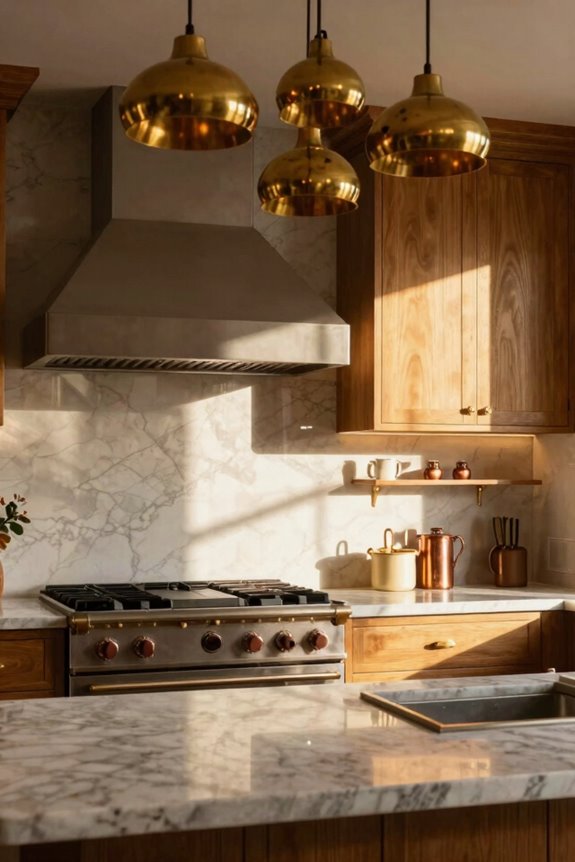
When you’re ready to add sophistication to your kitchen lighting, brass and mixed metals deserve serious consideration. Textured brushed brass creates warmth that contrasts beautifully with black or white cabinetry, establishing visual balance throughout your space.
Brass fixtures work exceptionally well with warm white ambiences ranging from 2700K to 3000K, producing inviting atmospheres that feel cohesive. Consider using brass in island lighting or pendant clusters as focal points that anchor your design scheme.
Mixing brass with other metal finishes adds depth and interest, connecting modern and transitional styles smoothly. This approach extends to cabinet hardware, creating unified visual continuity across your kitchen’s surfaces and fixtures.
Incorporate Smart Controls for Flexible, Dimmable Light
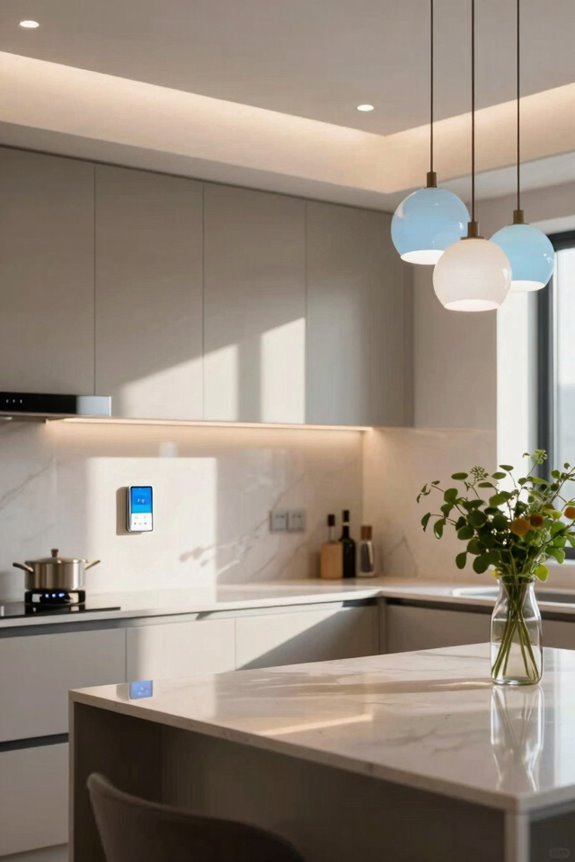
Beyond selecting the right fixtures and finishes, you’ll want to maximize your lighting’s flexibility through smart controls. Modern dimmable lighting changes how you use your kitchen throughout the day. Voice assistants like Alexa and Google Assistant let you adjust settings hands-free.
Multi-zone lighting gives you independent control over ambient sconces, island pendants, and under-cabinet strips. Consider these practical features:
- Scene presets (“Dinner Time” or “Cleanup Mode”) activate multiple zones simultaneously with one command
- Color-temperature adjustments shift from warm to cool light based on time of day
- Memory functions remember your preferred brightness levels, eliminating repeated adjustments
- Motion-activated under-cabinet lighting provides gentle night navigation automatically
Smart dimmer switches integrate seamlessly into your kitchen’s design while reducing energy consumption. Scheduled routines adapt your lighting as your needs change, creating a responsive space that supports your lifestyle and improves functionality.
Test Your Layout Before You Buy
How can you know if your lighting plan actually works? I recommend creating a mockup before making permanent decisions. Start by layering ambient lighting, task lighting, and accent lighting across your kitchen zones: island, sink, prep counters, and shelving.
Create a lighting mockup by layering ambient, task, and accent lighting across your kitchen zones before making permanent decisions.
Use dimmable fixtures during testing to evaluate how different color temperatures (2700K–5000K) affect your space’s appearance. This reveals whether colors and textures truly read as intended.
Add temporary under-cabinet lighting strips and plug-in fixtures to simulate your planned layout. Simulate actual tasks like food prep and cooking at various times to identify shadows and glare issues.
Adjust fixture heights and placements based on your observations. This methodical approach provides balanced illumination throughout your kitchen before you commit to hardwired installations.