
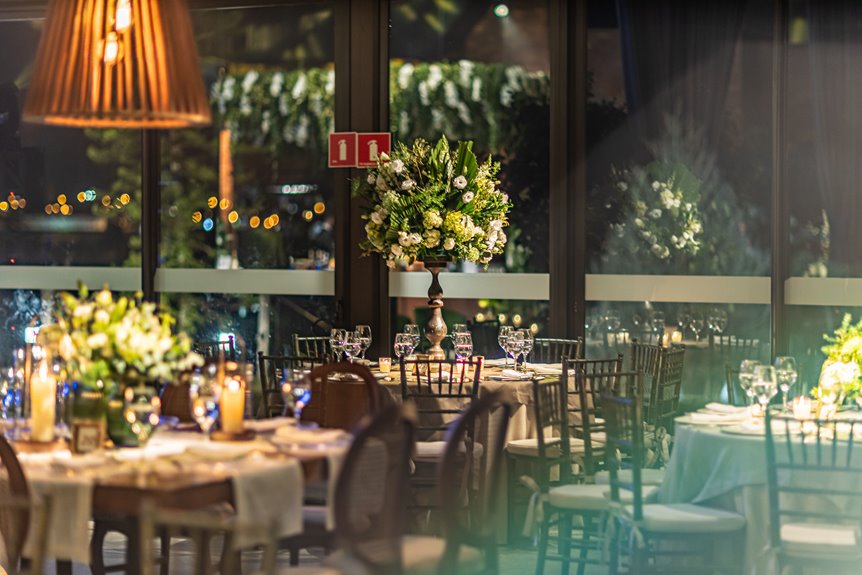
Like a gallery curator arranging a museum display, you can create an attractive dining room table that serves as a visual centerpiece. The difference between a cluttered tabletop and a thoughtfully designed centerpiece comes down to intentional choices about balance, height, and materials.
I’ll show you seven strategic approaches, from elegant single arrangements to layered vignettes. These methods will help you discover which style suits your space and how to execute it flawlessly.
Style One Beautiful Floral Bouquet With Flanking Candles
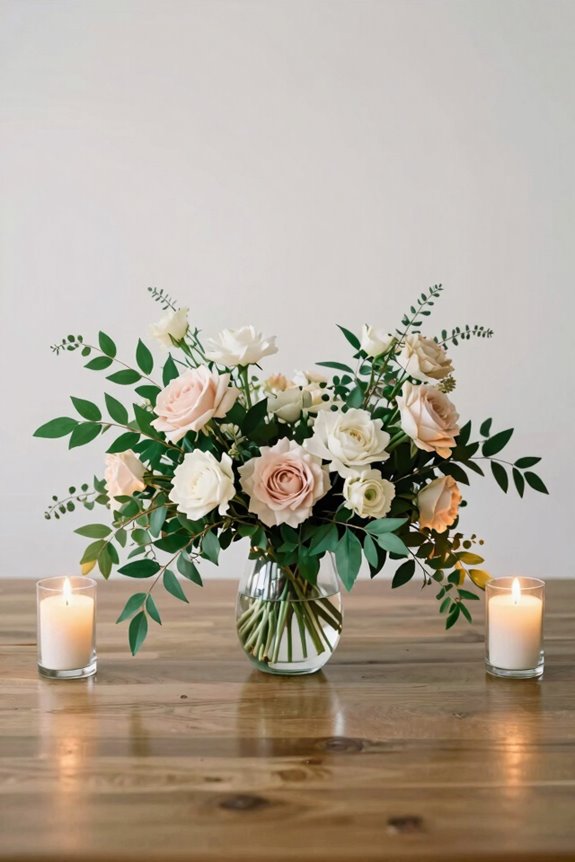
What’s the simplest way to arrange your dining room table? One beautiful floral bouquet paired with flanking candles creates an elegant centerpiece that requires minimal effort.
One beautiful floral bouquet paired with flanking candles creates an elegant, effortless dining room centerpiece.
A single floral bouquet provides instant color and texture with minimal work. Fresh or high-quality faux blooms both work well, depending on your preference and maintenance needs.
Position candles or lanterns on either side of your bouquet to frame the arrangement beautifully. This flanking technique adds warm, inviting light while creating visual balance across your table.
Choose flowers that complement your room’s color palette and match the current season. This keeps your centerpiece consistent with your dining space.
Keep the arrangement appropriately scaled for your table size. Smaller tables benefit from simpler bouquets that leave plenty of open dining space, allowing guests to converse comfortably without obstruction.
Build a Trio Centerpiece for Balance and Interest
I’ll create a trio centerpiece by grouping three containers of varying heights, spacing them evenly across my table to establish visual balance. I’ll coordinate the containers through shared colors or materials, like ceramic, glass, or metal finishes, so they feel purposefully connected rather than random.
Three Containers Create Balance
Three containers arranged thoughtfully across your dining table create natural rhythm and visual interest that a single centerpiece can’t match. I recommend selecting vessels that differ slightly in height to establish visual hierarchy and sophistication.
Your three containers work best when they share a unifying element, whether matching material, color, or finish. This cohesion brings separate pieces together into one coordinated centerpiece idea that feels deliberate rather than random.
Space your containers evenly along the table’s length, leaving breathing room between each one. This distribution fills your table without overwhelming the dining space.
Consider anchoring your trio with a grounding element beneath: a textured runner, low tray, or cascading garland. This foundation connects your three containers visually and creates a polished, designer-quality arrangement that enhances your entire dining experience.
Spacing and Height Variation
How you arrange your trio’s heights and spacing determines whether your centerpiece feels planned or random. I recommend spacing your three containers evenly across the table, giving each piece room to breathe and ensuring every guest sees the full arrangement.
Height variation creates visual rhythm that draws the eye through your centerpiece. Position your tallest container in the center or slightly off-center, then flank it with noticeably shorter pieces. This hierarchy emphasizes your dominant anchor item while supporting pieces complement rather than compete.
Mix container shapes—round, oval, or cylindrical—to add interest without chaos. Tie everything together through a cohesive color palette or material motif, such as coordinating greens or repeating floral accents. When heights, spacing, and colors work together harmoniously, your centerpiece becomes a strong focal point that improves your entire dining experience.
Coordinating Colors and Materials
What ties your trio together—color, material, or both—ultimately determines whether your centerpiece feels thoughtfully planned or mismatched.
I recommend building your color palette around one dominant hue repeated across all three vessels. This creates visual harmony while allowing each piece its own character. Consider these coordinating strategies:
- Repeat a single color in varying depths (light, medium, dark)
- Use complementary tones that enhance each other naturally
- Mix metallic finishes like gold, copper, or silver for sophistication
- Combine matte and glossy textures within your chosen palette
Select three different materials—glass, ceramic, and wood work beautifully together. This textural variety keeps your centerpiece from feeling monotonous. Each material catches light differently, adding dimension to your table.
The key is making sure your color palette connects all three pieces visually. When materials and colors work together on purpose, you’ve created a coordinated, polished display that improves your dining space.
Anchor Your Centerpiece With a Basket or Tray
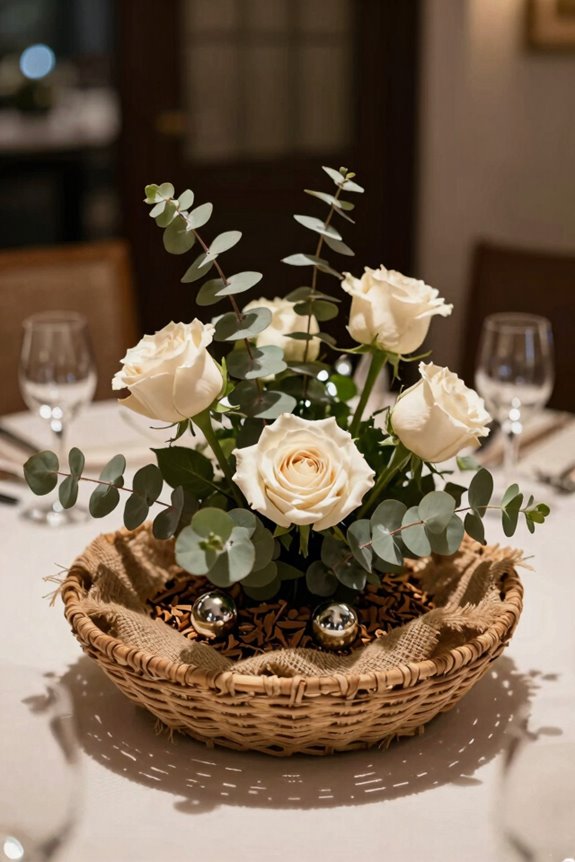
A basket or tray serves as your centerpiece’s foundation, unifying disparate items into one unified design. You’ll want to select a base that proportionally fits your table’s dimensions, then layer larger pieces like potted plants or vases strategically within it.
This anchored approach lets you refresh your arrangement seasonally by simply swapping out a few elements while keeping the same grounding structure.
Choosing The Right Base
When you’re building a dining room centerpiece, the foundation matters just as much as the decorative items themselves. I’ve found that selecting the right tray or basket changes how your centerpiece looks and functions.
Consider these key factors when choosing your base:
- Size alignment – Match your tray dimensions to your table length, leaving breathing room on all sides
- Material selection – Pick wood, woven, metal, or ceramic based on your décor style
- Color coordination – Choose neutral tones that complement your dining room palette
- Weight capacity – Make sure your base supports plants, candles, and decorative objects
A well-chosen tray anchors your centerpiece visually while simplifying cleanup. When everything sits on one surface, you’ll lift and clear it effortlessly.
This practical approach lets you create beautiful tablescapes that feel intentional, not cluttered.
Layering Items Strategically
The art of layering happens when you build your centerpiece in intentional stages, starting with the tray or basket as your anchor. I recommend placing larger items first, like a potted herb or vase, to establish your main focal point and guide the overall composition.
Next, I add complementary pieces around this foundation. I choose items that vary in shape and texture: perhaps a candle beside greenery, or a decorative object near the plant. This strategic layering creates visual interest while maintaining balance.
The key is restraint. I intentionally leave breathing room on the tray, avoiding overcrowding that diminishes clarity. I check that all pieces share cohesive connections through color, material, or repeating greenery elements. This intentional approach creates a centerpiece that feels well-designed and sophisticated, making your dining space feel more refined.
Layer Height and Texture With Candlesticks and Lanterns
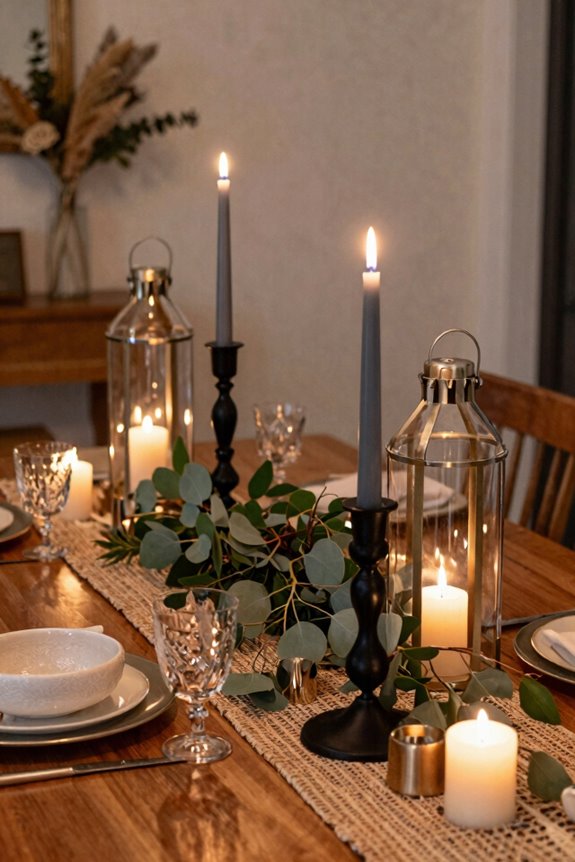
How can you add visual interest to a flat centerpiece? Candlesticks and lanterns create layered depth that brings sophistication to your table.
- Use tall candlesticks on either side of your main arrangement to frame the focal point effectively
- Position lower lanterns between taller elements to soften light and add textural contrast
- Mix holder styles, pairing ornate candlesticks with sleek lanterns for a collected, intentional appearance
- Vary heights strategically to establish rhythm across your table’s length
Select candle colors and heights that complement rather than compete with your centerpiece. Distribute accents evenly for visual balance.
This layering technique changes basic table settings into sophisticated displays that invite guests to linger and connect. You’re creating an environment where gathering feels personal and deliberate.
Arrange a Curated Vignette With Intentional Groupings
Once you’ve mastered layering with candlesticks and lanterns, you’re ready to build a complete vignette: a carefully arranged grouping that tells a visual story.
I recommend starting with two or three key pieces as anchors. A ceramic vase, sculptural bowl, or decorative object establishes your centerpiece’s foundation. Then layer in smaller supporting items like candles, books, or potted plants around these focal points.
| Element Type | Purpose | Example |
|---|---|---|
| Key Piece | Main anchor | Large vase or bowl |
| Supporting Item | Visual interest | Books or small plants |
| Accent | Color cohesion | Candles or stones |
Maintain a limited color palette throughout your arrangement. Vary heights strategically to keep balance and prevent monotony.
Leave intentional open space between pieces. This breathing room prevents crowding and allows each item to showcase its individual value within your unified centerpiece.
Layer Dishes and Kitchen Accents for Visual Depth
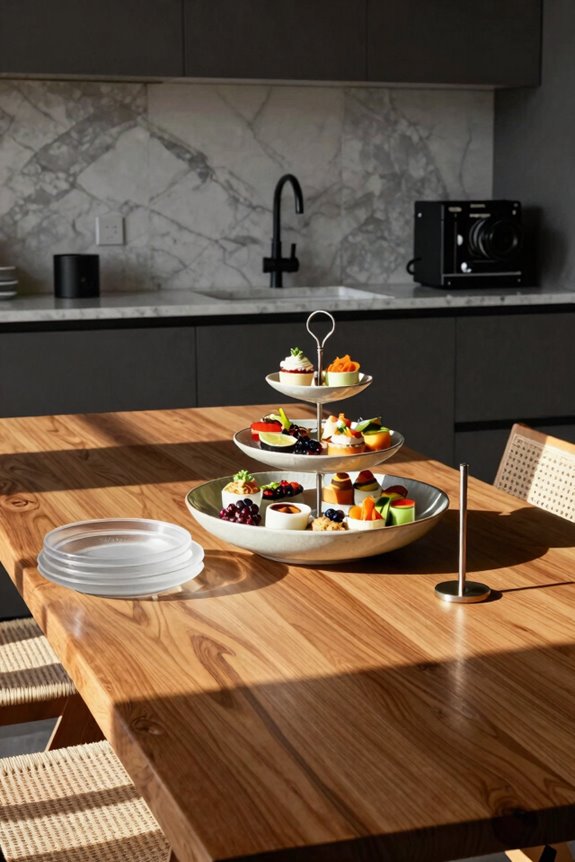
Why settle for a flat, one-dimensional centerpiece when you can build layers that draw the eye across your entire table?
I create visual depth on my dining table centerpiece by stacking and arranging items strategically. Here’s how I achieve that layered effect:
- Stack plates and bowls in varying heights to establish elevation changes
- Tuck small potted herbs between dishes for texture and natural interest
- Position chargers beneath stacked pieces to anchor the composition visually
- Intersperse decorative vases and glassware among functional serving items
I maintain a consistent color palette throughout while varying shapes keeps things dynamic. By spacing elements thoughtfully with intentional gaps, I avoid crowding the arrangement. This approach makes my dining table centerpiece feel purposeful and well-considered, inviting closer inspection and conversation.
Choose Linens That Support Your Centerpiece Style
Your layered centerpiece deserves a strong visual foundation, and that’s where linens come in. I recommend selecting a dining table centerpiece base that coordinates with your arrangement’s colors and textures.
Open-weave burlap adds excellent texture, while crisp white or patterned linens bring warmth and formality. Neutral runners work best because they’re versatile and let you swap seasonal elements like florals or greenery without redesigning your entire setup.
Linens anchor visual balance by controlling how tall or dense your centerpiece appears. When you pair them with a monochromatic or limited color palette, you prevent competing focal points that distract from your design. This strategic choice improves your dining experience while keeping your linens functional and beautiful.