
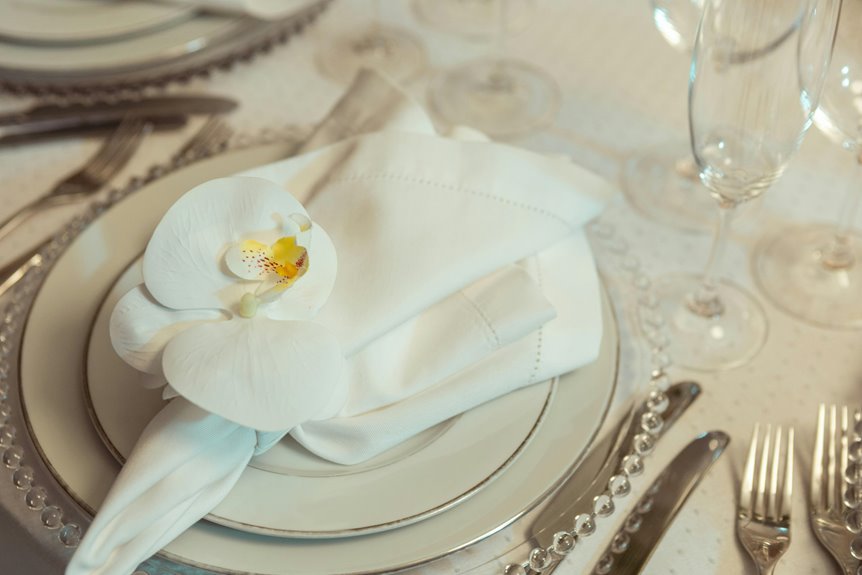
I’ll show you how to create an inviting table that reflects your style. You don’t need complicated rules or expensive pieces; just intentional choices about plates, glassware, and flatware. The secret lies in starting with a strong foundation and building from there.
What makes a table truly modern? The answer might surprise you.
Start With Your Foundation: Plate, Glass, Napkin, and Flatware
Why does a well-set table feel carefully planned and polished? I’ve discovered that a strong foundation improves any dining experience.
A strong foundation improves any dining experience—a well-set table feels carefully planned and polished.
A basic place setting starts with these five essentials: a dinner plate, serving bowl, drinking glass, napkin, and flatware. I arrange them thoughtfully on a placemat or tablecloth to create a unified table setting.
Here’s my approach to positioning each element:
- Plate placement: Center it as your anchor point
- Flatware arrangement: Forks go left; knives and spoons belong right
- Napkin positioning: Place it atop the plate or beneath the forks
- Glass placement: Position it above the knife
- Bowl placement: Set it above the plate for visual balance
This foundation provides structure. Once you’ve mastered these basics, you’ll feel confident building more sophisticated table settings for any occasion.
Choose a Cohesive Metal Tone
I recommend selecting one primary metal family—gold, brass, or silver—for your flatware, chargers, and glasses to create visual unity. When you keep all metallic accents within the same tone family, your table automatically feels more polished and deliberate.
You’ll strengthen this unified appearance by pairing matching metals throughout your core place setting elements.
Unified Metal Selection
How does a single metallic choice affect your entire table? I’ve discovered that committing to one metal family creates the cohesive table setting you’re seeking. This unified metal selection extends across every element, establishing visual harmony throughout your space.
Here’s how I approach this strategy:
- Match flatware to chargers: Gold forks pair with gold-rimmed plates, silver knives with silver accents, creating intentional coordination
- Extend metal accents consistently: Candleholders, napkin rings, and serving pieces should reflect your chosen metallic tone
- Keep centerpieces minimal: Small bronze touches among predominantly gold metal accents remain acceptable, but avoid clashing families
When you select simple white dishes paired with coordinating metal accents, the result feels polished and refined. For smaller gatherings, I prioritize candles over elaborate arrangements, letting your unified metal selection stand out. This approach delivers a streamlined aesthetic that impresses every guest.
Consistent Metallic Accents
Once you’ve committed to a single metal family, the real work begins: making sure every piece at your table reinforces that choice. I recommend extending your metallic accents beyond just flatware to create a unified look. Your charger plates, glassware rims, and candlestick holders should all reflect the same metal tone you’ve selected.
When you match these elements consistently, you’re building visual unity that adds polish to your entire table setting. Gold-toned flatware pairs beautifully with gold-rimmed glasses and brass candleholders. Similarly, silver flatware coordinates seamlessly with chrome accents and clear glassware with silver edges.
This consistent approach to metallic accents doesn’t require expensive pieces. Even modest items aligned in metal tone create sophistication and refinement that guests immediately notice and appreciate at your table.
Add Depth With Layered Place Settings
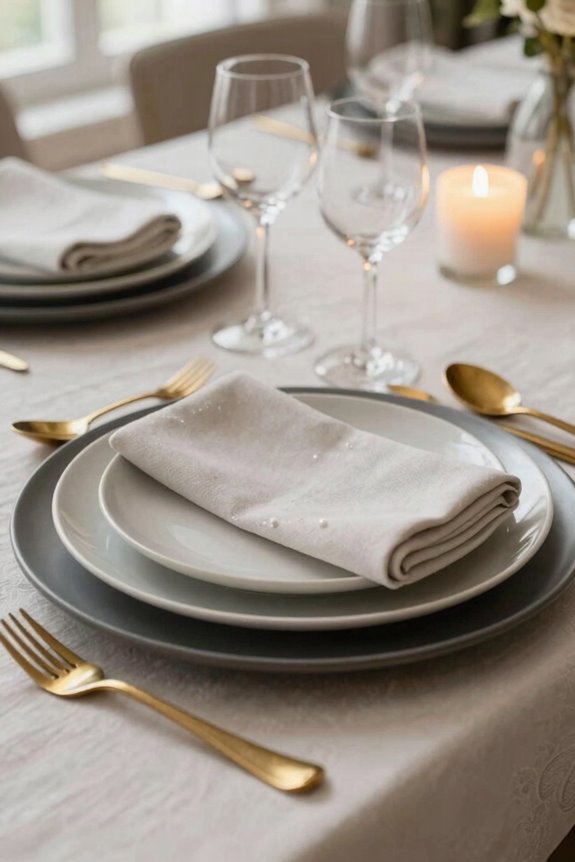
Layered place settings create visual interest at ordinary tables by stacking bowls and salad plates atop dinner plates. This approach saves valuable space while creating visual height that draws eyes upward.
Layered place settings stack bowls and plates to create visual interest while saving space and drawing the eye upward.
To achieve this effect successfully, consider these design strategies:
- Stack salad plates directly on dinner plates, then nestle bowls on top for a unified column
- Vary heights by mixing candlesticks with taper and pillar candles throughout your table decor
- Combine layered place settings with strategic candle placement to build depth without overwhelming compact spaces
Your table gains dimension and sophistication with this method. Layered place settings work especially well on smaller tables where you’re balancing both practicality and aesthetics.
This method makes your dining space feel carefully planned and welcoming for your guests.
Modern Table Settings for Formal Dinners
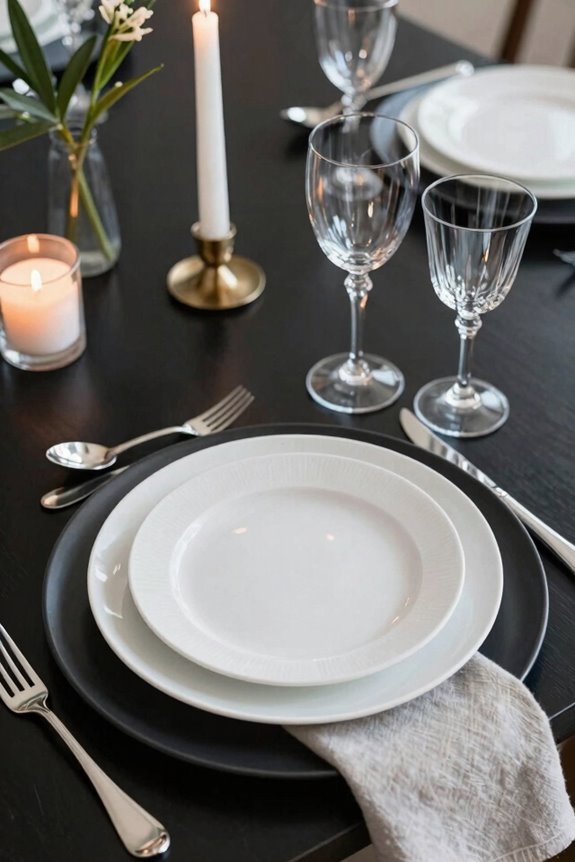
When you’re hosting a formal dinner, your centerpiece and dinnerware choices set the tone for the entire evening. You’ll want to select fine china and elegant glassware that complement each other while keeping your centerpiece arrangement at an appropriate height so guests can see across the table.
These two elements work together to create the sophisticated atmosphere your formal occasion deserves.
Elegant Centerpiece Arrangements
The centerpiece you choose sets the entire mood for your formal dinner table. I’ve found that selecting the right centerpiece creates the atmosphere you want for your guests.
Consider these approaches for your formal dining centerpiece:
- Gold-toned displays pair greenery with refined tableware and simple name cards for polished elegance
- Crystal and floral combinations feature magenta or burgundy blooms with glass-tube candles for romantic formal glow
- Minimalist fruit arrangements maintain uncluttered spaces while adding subtle color through strategically placed seasonal pieces
Each centerpiece style balances visual interest with functionality. I recommend choosing arrangements that don’t obstruct sightlines across the table. Your centerpiece should complement your table setting’s overall color scheme and formal aesthetic. These designs help you achieve the sophisticated atmosphere your guests deserve.
Fine China & Glassware Selection
Your choice of dinnerware and glassware makes or breaks a formal table’s sophistication. I recommend selecting fine china with neutral white or cream bases, which provides versatility for any occasion. Pair your dinnerware with coordinating glassware in matching metal finishes, gold with gold or silver with silver, to create visual unity.
Consider layering a charger plate beneath your main dinner plate to add height and elegance. This strategic placement keeps your dinnerware as the focal point while enhancing the overall table setting.
For glassware selection, choose pieces that complement your china’s style without competing for attention. Clear crystal works beautifully with most formal presentations. Match all metallic accents across your fine china, utensils, and glassware to maintain that coordinated, polished appearance your guests will notice and appreciate.
Modern Table Settings for Casual Gatherings
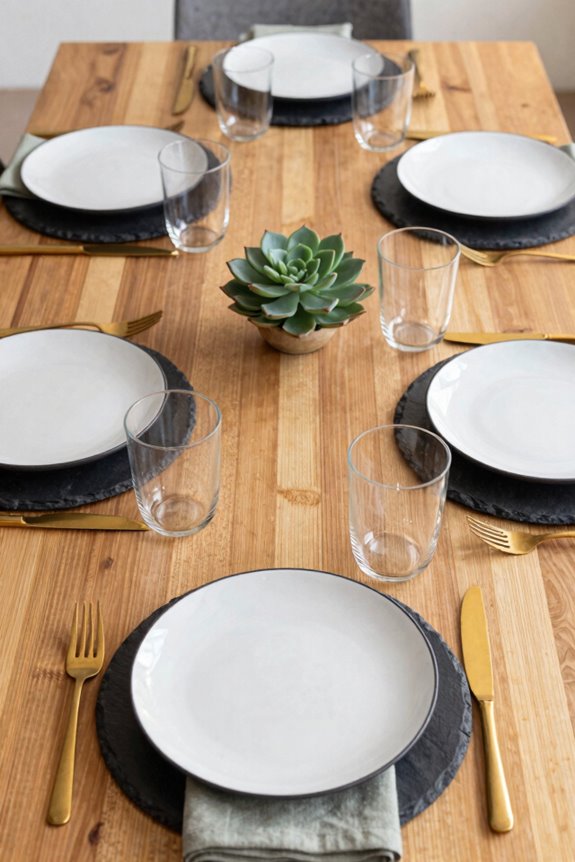
How do you create a welcoming table that feels both polished and relaxed? I’ve found that a simple core setup makes any dinner table an inviting space for casual gatherings.
You’ll want to anchor your table setting with these essentials:
- Core pieces: dinner plate, serving bowl, drinking glass, napkin, and flatware arranged on placemats or tablecloth
- Visual interest: layer salad plates on dinner plates and add candle holders for warmth without overwhelming smaller tables
- Flexible decor: use colorful glassware, varied placemats, and artificial flowers to maintain year-round appeal
I recommend matching metals within the same family for cohesion. Leave your center space open for serving dishes, allowing guests to move comfortably around the table. Consider versatile pieces like cutting boards that double as charcuterie boards.
This approach balances sophistication with practicality, creating an approachable atmosphere everyone appreciates.
Go Minimal: Simple Elegance for Modern Homes
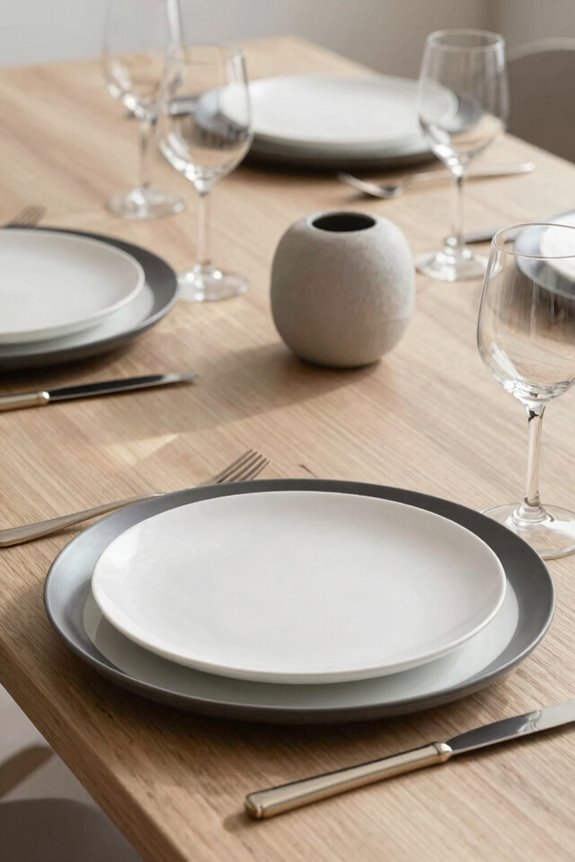
When does less actually become more? I’ve discovered that minimalist table setting design creates ordinary dinners as intentional gatherings. You’ll appreciate how clean lines and purposeful decor provide breathing room on your table.
| Element | Purpose |
|---|---|
| Dinner plate | Foundation layer |
| Bold napkin | Color accent |
| Calligraphy nameplate | Personalization |
| LED candle | Warm ambiance |
I focus on core essentials: dinner plate, glass, napkin, and flatware arranged on a unified placemat. This approach eliminates visual clutter while maintaining sophistication.
A sprig of rosemary or handwritten place card adds meaningful detail without overwhelming the space. Metal accents stay unified in tone, creating harmony. You’re joining a design movement that values intention over excess, proving that elegant table setting doesn’t demand complexity, just thoughtful choices.
Refresh Your Table Seasonally
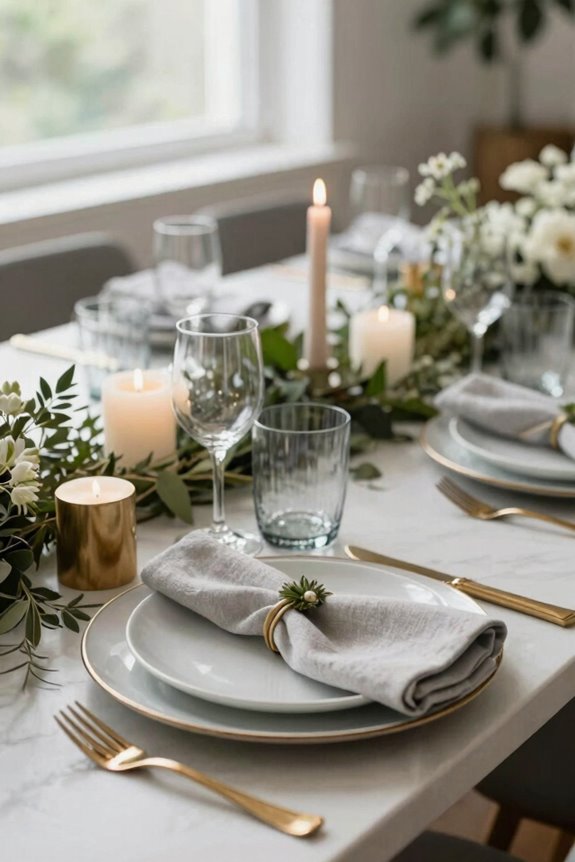
I’ve discovered that seasonal material selection changes your table’s mood throughout the year without requiring a complete overhaul. You can rotate natural centerpiece arrangements, swapping hydrangea stems for spring freshness or dried orange slices for winter warmth, while keeping your core pieces intact.
This approach lets you refresh your table intentionally while maintaining the clean aesthetic that defines modern styling.
Seasonal Material Selection
Why settle for the same table décor year-round when seasonal materials offer fresh possibilities? I’ve discovered that swapping key elements keeps my tables feeling current and purposeful.
Consider these adaptable decor strategies:
- Fall & Winter: Dry hydrangeas, hemlock branches, cedar, and dried orange slices create textured, low-maintenance seasonal centerpieces that serve as the visual anchor of your table
- Spring & Summer: Fresh flowers and pastel linens signal renewal, pairing beautifully with lighter color palettes across napkins and placemats
- Year-Round Foundation: Permission-based stems like ginkgo and Loropetalum provide versatile building blocks for rotating displays
I pair seasonal centerpieces with LED candles to maintain lighting ambiance safely without fire hazards or clutter. Coordinating textiles, placemats, glassware, and linens across your entire table creates a unified appearance.
This approach changes your table affordably while building connection through deliberate, seasonal storytelling.
Natural Centerpiece Arrangements
Natural centerpieces create a curated garden display on your table that shifts with the seasons. I recommend starting with hydrangea stems in neutral vases or dried varieties for fall appeal. These create focal points without demanding excessive space.
Layer your greenery with foraged elements like pears and Loropetalum stems to reflect the current season. This approach grounds your table in authentic, garden-inspired aesthetics.
Candles at varied heights (tapers, pillars, and votives) add warmth and ambiance. They enhance your arrangement without overwhelming sightlines.
Scale your centerpiece appropriately to your table size. A small surface needs a proportional arrangement that maintains conversation ease.
Incorporate natural textures through wood chargers and woven baskets. These elements anchor your design in earthy sophistication while keeping your table seasonally relevant and inviting.
Choose a Color Palette for Your Table Setting
The foundation of any impressive table setting starts with selecting colors that work together harmoniously. I’ve found that combining thoughtfully curated palettes creates a refined, unified appearance you’ll love.
Consider these essential color combinations:
- Dusty pink and blue palettes with printed linens establish sophisticated elegance while soft florals reinforce your color story across the entire table
- Gold accents paired with pinks and greens create luxe, balanced contrast that feels purposeful and refined
- Neutral dinnerware serves as your versatile canvas, allowing color details to shine without overwhelming the design
Color harmony matters everywhere: your flatware, glassware, and textiles should all support your chosen palette. This unified approach from plate to centerpiece creates the polished, modern aesthetic you’re aiming for. When every element works together, your table setting tells a complete, beautiful story.
Centerpiece Ideas for Modern Table Settings
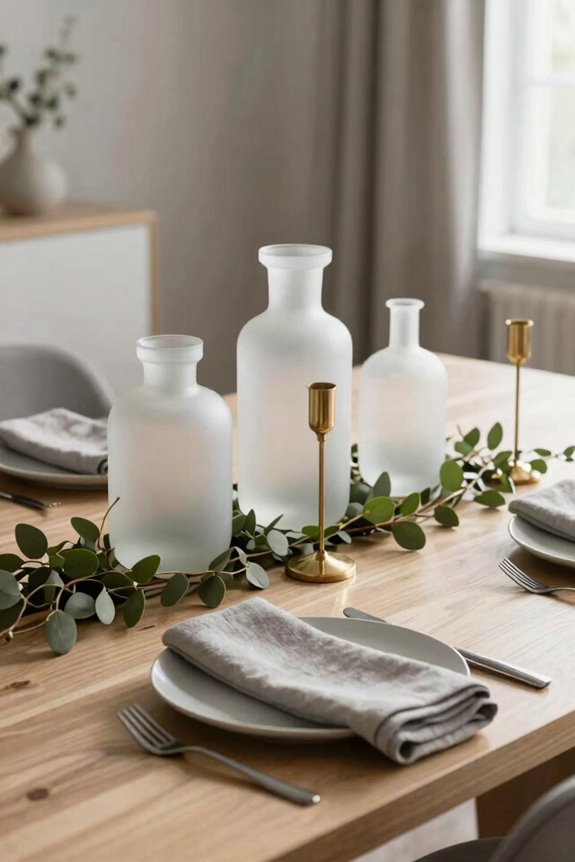
Once you’ve established your color palette, it’s time to anchor your table with a centerpiece that reinforces that vision. I recommend mixing varied candle heights—tapers, pillars, and votives—rather than relying on a single tall focal piece. This approach works particularly well on compact tables where space matters.
For warmth and safety, consider LED candles in your chosen colors. Pair them with seasonal greenery snipped from hydrangea stems or dried fall elements for texture and interest. On smaller surfaces, keep designs intentional and uncluttered.
Create balance by combining colorful accents with greenery and candles in a unified arrangement. This layered approach gives your centerpiece both height and visual interest while maintaining the sophisticated aesthetic your color palette established. The result feels carefully composed and polished.
Quick Modern Table Setting Ideas (5-Minute Upgrades)
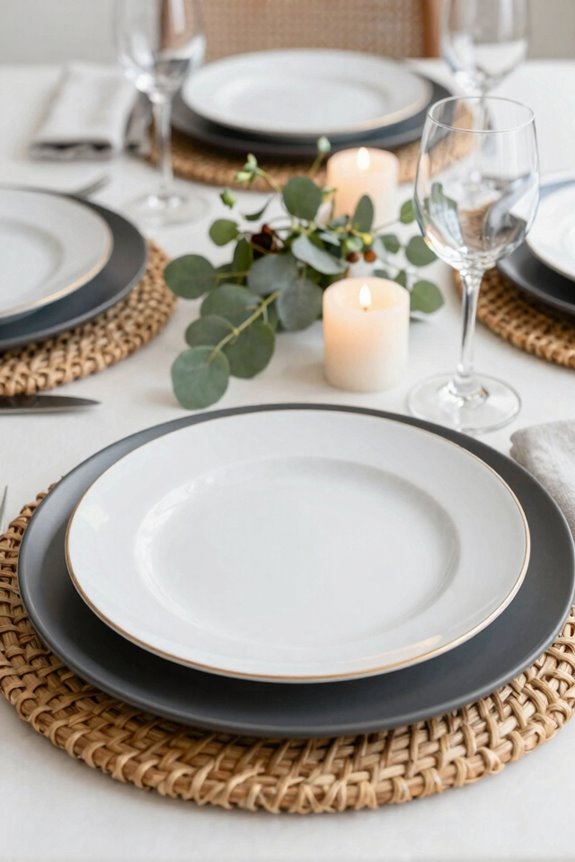
How can you change your dining table in minutes without stress or clutter? I’ll show you that quick upgrades don’t require fancy items or endless preparation time.
Quick dining table upgrades need no fancy items or endless prep time—just minutes and intentional styling.
These table setting solutions work for any occasion:
- Stack your dinner plate with a matching salad plate on top to save space and add visual height to your table
- Layer a neutral placemat beneath a clean white tablecloth to anchor your setting while allowing colorful flatware to stand out
- Place a single candle in a clear holder alongside a small rosemary sprig for an affordable, elegant centerpiece
I recommend keeping all metals in the same family, like gold tones, for a unified, contemporary look. Add a simple name card and bold napkin color to create a striking focal point. These quick upgrades change your dining table into something thoughtfully designed and inviting.