
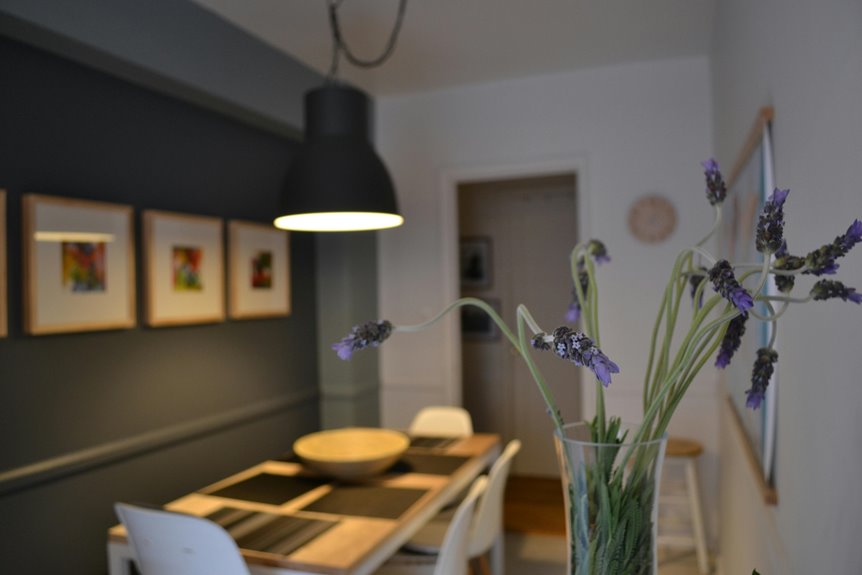
Did you know that 68% of people say table styling influences how they enjoy meals? Your placemats do more than protect your table; they set the entire tone for dining.
I’ll show you how strategic material choices, layered textures, and seasonal adaptations can create a more thoughtful dinner experience. Ready to discover which combinations work best for your space?
Pick Materials That Protect and Complement Your Table
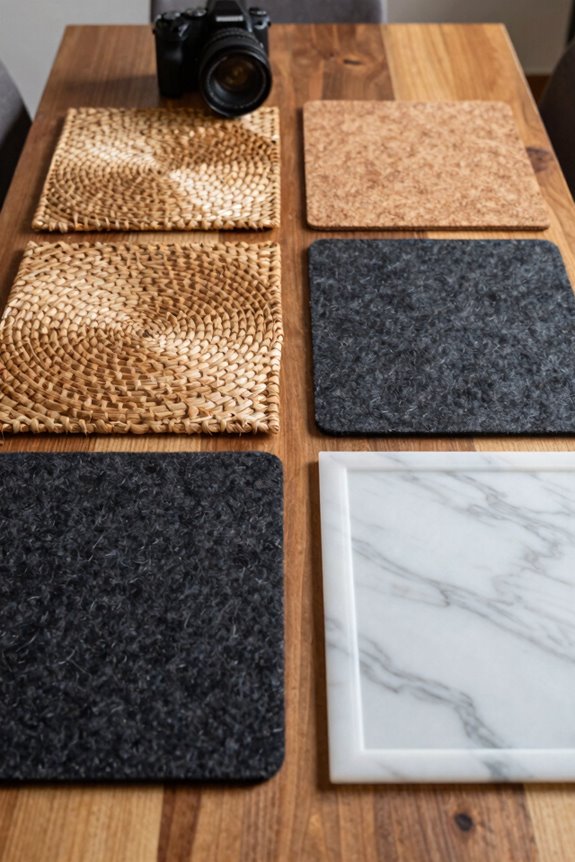
Have you considered how your table mat choice impacts both protection and style? I’ve found that selecting the right material changes your dining experience while safeguarding your investment.
Woven vinyl placemats offer excellent durability for everyday use. They’re heat-resistant, easy to clean, and complement both modern and traditional tables. For wooden surfaces, I recommend cork or leather options that prevent scratches while adding warmth.
Glass tables benefit from fabric or felt placemats with non-slip properties. These materials prevent sliding and provide soft protection.
Consider layering charger plates or handwoven trays beneath your dishes for better protection and texture. This approach creates visual interest while shielding your table from heat and damage.
The key is matching materials to your table type. This keeps your placemats protective while reflecting your personal style and inviting guests into your welcoming space.
Layer Placemat Textures for Visual Depth
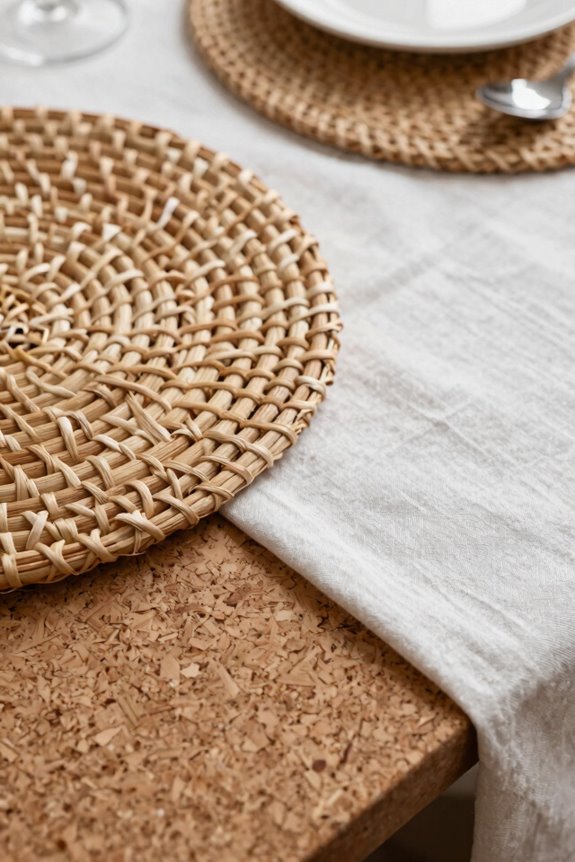
Once you’ve selected protective materials that suit your table, layering different textures creates a visually rich dining experience.
I recommend combining woven placemats with complementary materials to create dimensional separation. This approach adds depth while maintaining practical table protection.
| Base Layer | Middle Layer | Top Layer |
|---|---|---|
| Woven placemat | Linen runner | Ceramic plate |
| Rattan base | Fabric topper | Glassware |
| Leather accent | Linen napkin | Silverware |
| Charger plate | Woven mat | Dinnerware |
Start with a textured foundation, then add contrasting elements like smooth ceramics or metallic accents. Balance is important—mix earthy, matte, and metallic textures moderately to avoid visual clutter.
Layering creates definition in your dining space without overwhelming the tableware. You’ll achieve a refined aesthetic that invites guests to experience your thoughtfully designed environment.
Make Your Placemats Match Your Home’s Vibe

Your placemats should reflect your home’s overall aesthetic, from the colors you’ve chosen to the style that defines your space. I’ll show you how color theory, room themes, and seasonal shifts can guide your placemat selection.
Color Theory and Coordination
Why do certain placemat colors feel perfectly right at your table while others clash with everything around them? Understanding color theory helps create a dining space that feels unified and welcoming.
Color Coordination Strategies:
| Strategy | Example | Best For |
|---|---|---|
| Analogous | Soft greens with earthy browns | Harmonious, calming tables |
| Complementary | Orange placemats with blue tableware | Making tableware pop visually |
| Bold Patterns | Patterned mats with solid dinnerware | Keeping focus on placemats |
| Seasonal Shifts | Bright spring colors to rich fall hues | Year-round freshness |
I recommend starting with the color wheel to identify adjacent hues or opposite colors. Analogous pairings create unity, while complementary colors add visual excitement.
When selecting patterns, pair bold placemats with simple tableware. This balance keeps your dining space feeling intentional and sophisticated, reflecting your personal style while welcoming guests.
Room Theme and Style
Because your dining space reflects who you are, the placemats you choose should echo your home’s overall design language.
1. Rustic Warmth
Weathered wood elements paired with jute or straw placemats create inviting texture. Soft linen napkins enhance this natural materials approach, establishing a warm room theme.
2. Modern Minimalism
Sleek acrylic or metallic-finish placemats complement contemporary dinnerware beautifully. This table decor style prioritizes clean lines and understated elegance for sophisticated spaces.
3. Classic Elegance
Embroidered linen placemats like Croco designs evoke timeless styling. These natural materials choices establish traditional room theme sophistication with ease.
4. Boho Layering
Round water hyacinth placemats mix with bold-colored napkins and macramé runners. This textured approach creates visually interesting table decor that feels personal and deliberate.
Seasonal Styling and Adaptation
As the seasons shift, your table’s visual language should shift too. Placemats offer the easiest way to refresh your dining space. Spring and summer call for bright, airy palettes with pastel placemats and floral patterns that echo outdoor freshness. Fall and winter demand richer color palettes featuring earthy tones and metallic textures that create warmth and formality.
Coordinate your placemats with complementary centerpieces and place settings. Pair vibrant florals with light linens for spring, or use pinecones and evergreens with deep green accents for winter.
Layer your seasonal styling by adding runners or themed tablecloths beneath season-appropriate placemats. This approach lets you quickly adapt your dining space decor without complete overhauls. Bold placemats on simple tableware reflect seasonal energy while maintaining visual balance and sophistication.
Mix Placemats and Dinnerware Without Clashing
How do you create a polished dining table when your placemats and dinnerware have different styles? I’ve discovered that smart coordination blends clashing elements into unified designs.
Bold Patterns Strategy
Pair bold placemats with simple, solid-colored plates and bowls. This approach lets your statement patterns shine without overwhelming the eye.
Scale Matching
Mix patterns sparingly by using similar scales. Small placemats work well with large dinnerware pieces, maintaining visual balance and preventing jarring contrasts.
Texture Coordination
Layer earthy or metallic textures together. Combine woven placemats with ceramic or stoneware dinnerware for formal settings that feel deliberate.
Moderate Contrast
Use contrasting patterns conservatively. Striped placemats paired with polka-dotted tableware create interest without sacrificing harmony.
These coordination techniques help your dining space demonstrate thoughtful design choices.
Adapt Your Placemats Across Seasons
When should you refresh your dining décor to match the changing year? I’ve found that updating your placemats seasonally creates a welcoming atmosphere and helps you feel more connected to your home.
For spring and summer, I choose bright floral or nautical placemats paired with light, airy dinnerware. These pieces establish an inviting color palette that feels fresh and open.
As fall and winter approach, I transition to richer, deeper hues with earthy tones or metallics. This shift complements heavier, more formal tableware beautifully.
Layering works well for emphasizing seasonal changes. I place patterned placemats over coordinating runners or tablecloths to maintain consistent textile textures. Winter calls for pinecone or evergreen centerpieces, while spring demands vibrant florals.
I use similar patterns in different scales to avoid clashing. This strategy keeps my dining space feeling current and purposefully designed.
Style Every Occasion: From Weeknight to Dinner Party
Your placemat choice dramatically shapes how your table functions and feels. I’ve discovered that adapting placemats to different occasions helps you create the right atmosphere every time.
Your placemat choice dramatically shapes how your table functions and feels, creating the perfect atmosphere for any occasion.
For weeknights, I choose durable woven placemats or silicone options that resist heat and clean easily. They’re practical yet intentional.
When hosting dinner parties, I elevate the setting with linen or high-end fabrics paired with fine china and crystal glassware.
To master occasion styling, I follow these approaches:
- Layer textures: woven placemats under runners with ceramic plates for sophisticated depth
- Use bold patterns sparingly with solid tableware to avoid overwhelming the space
- Shift color palettes seasonally for spring/summer brightness and fall/winter richness
- Coordinate seasonal fabrics: light textures for warm months, heavier textiles for cooler seasons
This texture layering and color palette coordination creates a thoughtfully designed experience for any gathering.
Add Luxury to Your Formal Dinners
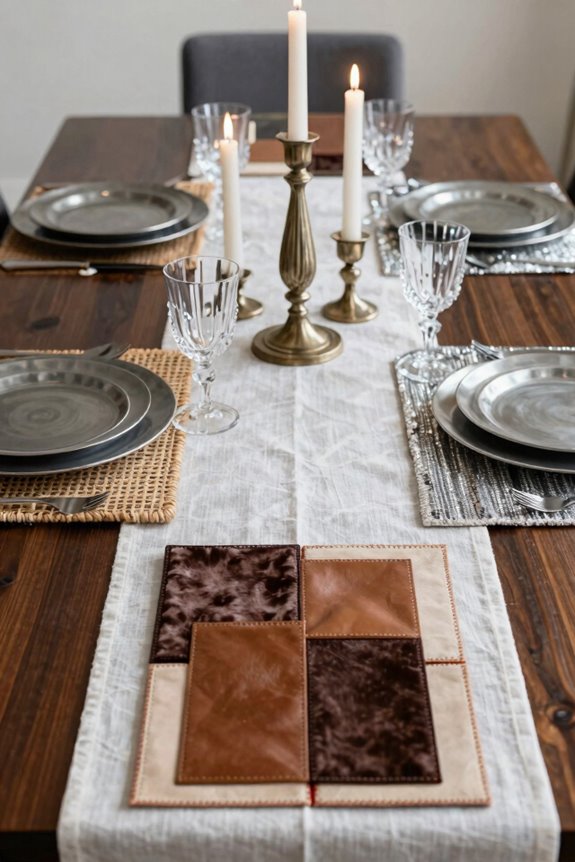
I’ll enhance your formal dining with two powerful techniques: strategic layering and sophisticated color choices. First, I’m layering placemats with tablecloths or runners, then topping them with fine china and polished silverware for classic elegance.
Next, I’m choosing deeply hued placemats in charcoal or espresso paired with gold accents and black linen napkins to create that luxurious, intimate atmosphere you’re after.
Layering For Timeless Elegance
How can a simple table become a sophisticated dining experience? I’ve discovered that layering creates depth without overwhelming your space. This technique combines multiple textures and materials to achieve refined dining decor.
Here’s how I build elegant layers:
- Start with woven placemats as your foundation for texture and visual interest
- Add a linen runner across the center to introduce contrast and movement
- Place ceramic chargers beneath dinnerware for polished sophistication
- Finish with silver or gold candle holders and matching napkin rings
I use durable, heat-resistant silicone beneath luxurious textiles for practical protection. This layering approach balances bold patterns with simple tableware, so nothing feels cluttered.
The result is a formal dining space that reflects thoughtful design choices. You’re creating an environment where guests feel welcomed into refined elegance.
Dark Tones And Metallic Accents
When does a formal dinner table truly shift into a luxurious experience? I’ve found that dark placemats in espresso or charcoal create that sophisticated shift you’re seeking.
The Foundation
Dark placemats provide a moody backdrop that makes candlelight glow beautifully. They work best with lighter dinnerware, keeping patterns readable and preventing visual overload. This contrast maintains the elegance you want.
Adding Metallic Accents
Pairing dark placemats with gold or brass cutlery introduces luxe contrast instantly. Gold candle holders and metallic chargers bring richness to the entire setting. In low-light formal scenes, these metallic elements reflect magnificently against dark surfaces.
Completing the Look
Combine dark placemats with textured runners in complementary shades. Linen or velvet textures add depth without diminishing formality. This layering creates the polished, sophisticated table that impresses guests.