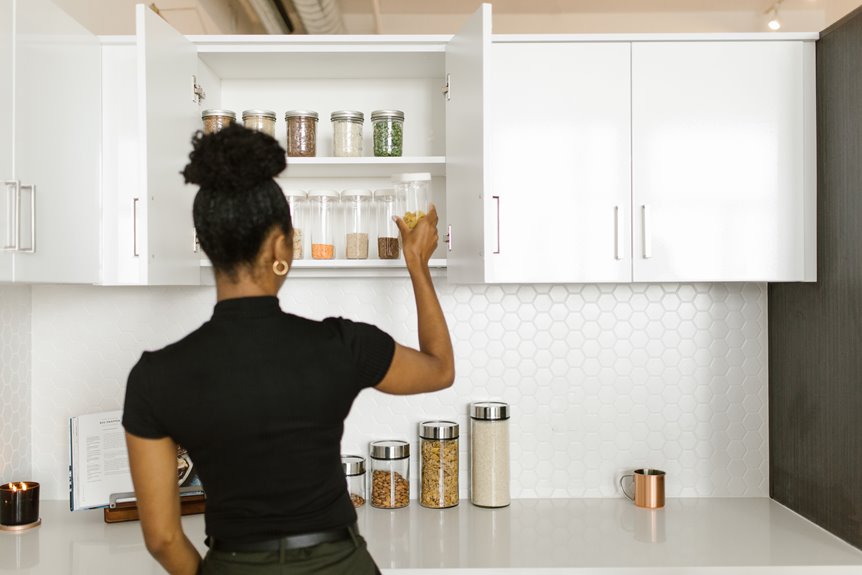
Your pantry is currently a puzzle waiting to be solved. If you’re frustrated by expired items, forgotten duplicates, and wasted shelf space, you’re not alone. The good news? Strategic organization can turn your kitchen storage into an efficient, accessible system.
I’ll walk you through ten proven methods, from simple purging techniques to smart container choices, that’ll help you reclaim control of your space and streamline your cooking routine.
Start With a Complete Pantry Purge and Inventory
The foundation of a well-organized pantry starts with clearing everything out and evaluating what you actually have. Empty your entire pantry space and discard any items older than one year. This pantry purge reveals what’s truly worth keeping and prevents waste.
Next, conduct a thorough inventory. Document every remaining item by category and quantity. This inventory process helps you understand your actual stock and identifies gaps for smarter shopping decisions.
Wipe down all shelves with a clean cloth before reorganizing. This creates a fresh foundation for your new system.
Invest in clear bins to store dry goods and smaller items. Clear bins let you see contents at a glance, making restocking simple. Label each container clearly for quick identification and efficient meal planning.
Measure Your Space and Sketch Your Layout Before Buying Containers
Once you’ve cleared and inventoried your pantry, you’re ready to plan your container strategy.
Once your pantry is cleared and inventoried, strategic container planning transforms disorganized shelves into an efficient, functional storage system.
Start by measuring your available space precisely. Note your door opening width (typically 23.25 inches), shelf depth (around 21.5 inches), and vertical space between shelves (often 26 inches). Create a detailed sketch marking these dimensions.
This space planning foundation prevents costly mistakes. You’ll determine exactly how many storage containers fit each shelf before purchasing anything.
Apply vertical organization strategically. Reserve eye-level zones for daily-use items and lower shelves for heavier goods. Plan your container widths around actual measurements rather than assumptions.
After initial setup, reassess your layout within two weeks. Adjust based on how your family actually uses items and real product sizes. This practical approach creates an efficient, personalized pantry system that works for your household.
Choose Three Container Types and Stick With Them
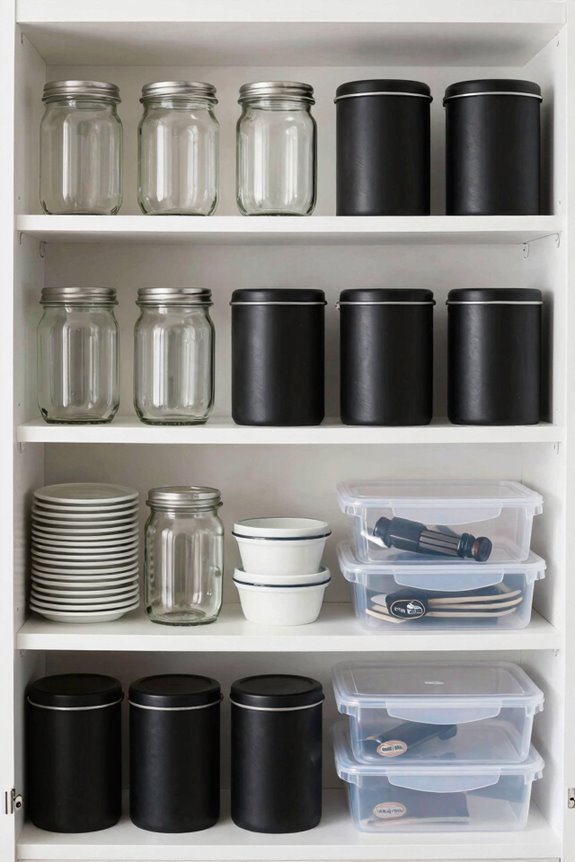
I’ve found that selecting just three container types—airtight pop-top canisters, open plastic bins, and water hyacinth baskets—creates a functional system that works across different storage needs.
Pop-top containers keep dry goods fresh while reducing bulky packaging, making them ideal for frequently used items I want visible at eye level. Water hyacinth baskets handle heavier, bulkier goods on lower shelves, giving my pantry a unified appearance that maximizes both space and accessibility.
Pop-Top Container Benefits
Why do three container types work better than a mismatched collection? Pop-top containers deliver superior visibility and storage optimization when you commit to consistency.
I’ve found that clear pop-top containers let me see exactly what I’m storing without opening each one. This visibility saves time during meal planning and grocery shopping. They stack efficiently, maximizing vertical space on your shelves.
I place pop-top containers on eye-level shelves for convenient access. Their uniform appearance creates a neat, purposeful look throughout your pantry. When identical containers hold matching items, your space feels organized.
The initial effort of transferring bulk items into pop-tops pays dividends. Once established, maintaining this system becomes effortless because everything has its designated spot and remains visible. You’ll spend less time searching and more time enjoying your streamlined kitchen.
Water Hyacinth Basket Strategy
To create a pantry that looks intentional and functions smoothly, you’ll want to select three container types and commit to them across your entire space. I’ve found that water hyacinth baskets work beautifully for this approach, especially on bottom shelves where accessibility matters most.
Water hyacinth baskets maximize storage while maintaining visual consistency throughout your pantry. These natural woven containers hold approximately 15 bottles per basket, based on standard 10 x 16 inch dimensions.
Pair them with your other chosen storage containers for optimal shelf organization:
- Air-tight pop-top containers for dry goods
- Clear open plastic bins for visibility
- Water hyacinth baskets for bulk items
Plan your exact container sizes before purchasing. Avoid buying sets that don’t fit your shelf depths and widths. This deliberate approach creates a pantry space you’ll genuinely enjoy using daily.
Decant Boxed Foods Into Clear Pop-Top Containers
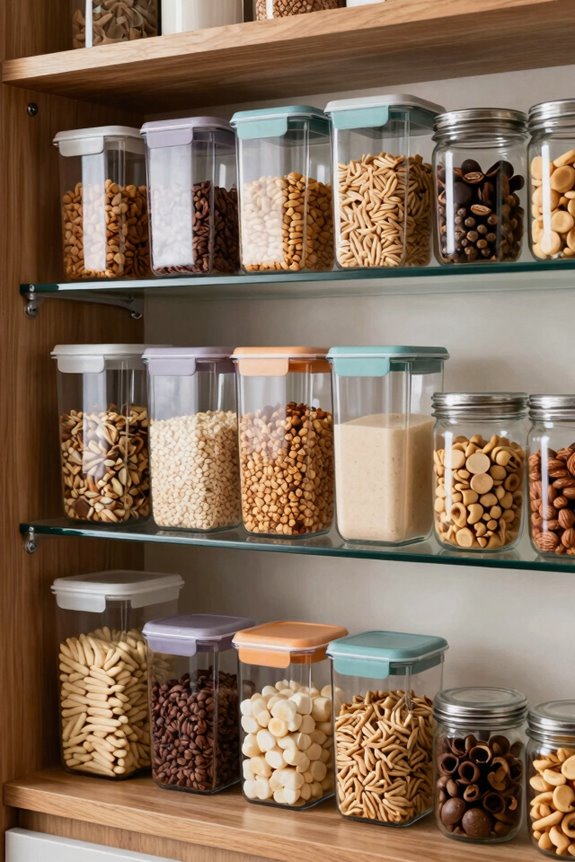
Once you’ve committed to your container types, you’ll want to transfer boxed foods into clear pop-top containers that let you see exactly what you have at a glance. This simple step maximizes your shelf space through smart stacking while keeping your staples fresher longer than they’d stay in their original packaging.
I’ve found that the visibility and extended freshness you gain makes it worth the small effort of decanting.
Maximize Space Through Stacking
How much pantry shelf space do you waste on bulky cardboard boxes?
Stackable pop-top containers improve your pantry’s efficiency. I’ve found that clear containers maximize vertical space while keeping everything visible. By stacking these containers upward, you’ll use your shelves strategically instead of spreading items horizontally.
Here’s what makes this approach effective:
- Clear containers let you see contents at a glance, reducing unnecessary purchases
- Stacking capability lets you build upward, doubling usable space on each shelf
- Uniform sizes create organized columns that look well-planned and polished
I recommend measuring your shelf dimensions before purchasing containers. This prevents buying sets that won’t fit your space.
Place your stacked containers at eye level for easy access. You’ll notice how much more organized your pantry becomes when everything has a designated, visible spot.
Improve Visibility and Freshness
Transparent pantry containers let me see contents instantly without opening shelves or moving items around. This visibility eliminates guesswork during meal planning and weekly restocks. I can spot what’s running low at a glance.
Air-tight pop-top containers preserve freshness significantly longer than original packaging. Grains, cereals, and baking supplies stay protected from moisture and pests. I label each container facing forward for quick identification.
A uniform container system across all shelves simplifies maintenance remarkably. Matching dimensions create visual balance while preventing duplicate purchases. This consistency, combining visibility and freshness, keeps my pantry organized and functional.
Group Pantry Items by Category for Easy Access
Why do you find yourself searching for the same items repeatedly? I’ve discovered that grouping pantry categories improves your kitchen efficiency. When you organize like a grocery store, you’ll locate everything faster.
I recommend creating these distinct zones:
- Breakfast items (cereals, oatmeal, spreads) at eye-level for quick morning access
- Baking supplies (flour, sugar, spices) grouped together to streamline recipe preparation
- Grains and pasta positioned on middle shelves for frequent use
Clear bins work exceptionally well for maintaining visibility across shallow shelves. Eye-level placement reserves premium real estate for daily-use items, while upper and lower shelves store occasional products.
This strategic arrangement prevents duplicate purchases and reduces decision fatigue. As your family’s eating habits evolve, reassess your zones accordingly. This adaptable system keeps your pantry functional and clutter-free long-term.
Design for Access: Eye-Level Placement, Step Stools, and Door Optimization
Once you’ve organized your pantry by category, the next challenge is positioning those items where your family can actually reach them easily.
Eye-Level Placement
Position your everyday essentials at eye-level. This strategic placement reduces rummaging time and maximizes quick access to frequently used items like cereals, snacks, and cooking basics.
Step Stool Accessibility
Keep a sturdy step stool nearby and unobstructed. This tool safely extends your reach to top shelves, allowing you to store less-used items without compromising accessibility.
Door Optimization
Maximize door space by adding organizers or installing sliding doors. This approach frees valuable floor space and improves overall pantry flow while enhancing corner visibility.
Reserve middle shelves for most-accessed items. Top and bottom shelves work best for occasional-use goods. Clear pathways and proper shelf widths help you access your entire pantry with ease.
Why Water Hyacinth Baskets Work for Tall or Bulky Items
How do you store tall bottles and folded linens without wasting precious shelf real estate?
Water hyacinth baskets measure 10 x 16 inches and solve this challenge efficiently. I find they’re ideal for organizing tall items while maintaining a compact footprint on your storage shelves.
Here’s why I recommend them:
- Vertical visibility: Their woven design keeps contents visible, so you’ll quickly identify what you need without opening multiple containers.
- Flexible storage: Each basket fits 15 bottles or accommodates folded items, adapting to your pantry’s changing needs.
- Easy access: The lightweight construction allows you to move baskets between lower and middle shelves whenever you need something.
Pairing these baskets with clear containers improves organization further. I’ve discovered that positioning them on middle shelves maximizes both accessibility and space efficiency.
This approach works well for managing bulky pantry items.
Keep Duplicates Visible and Within Reach
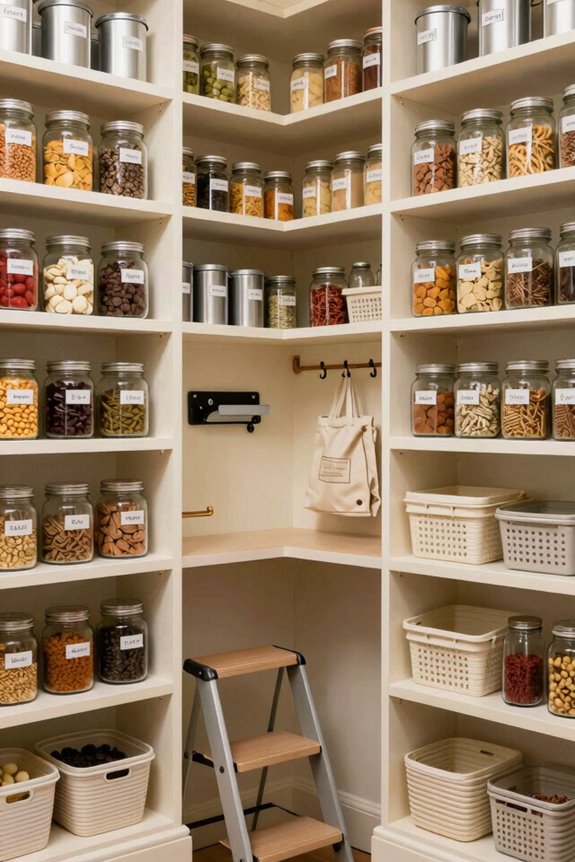
I’ve found that keeping duplicates visible changes how I shop and use what I have. By grouping identical items together and placing them front-facing on shelves, I can quickly see what I already own and avoid wasteful overbuying.
Strategic duplicate placement—storing multiples in clear containers at eye level—helps me reach for what I need without hunting through my pantry.
Buy Multiples Strategically
When you stock duplicate items strategically, you’ll spend less time searching for essentials and more time cooking efficiently. I’ve found that buying multiples works best when you match your actual usage patterns rather than impulse purchasing.
Here’s how I approach strategic buying:
- Purchase exact quantities you’ll use before items expire
- Store duplicates in clear containers so you spot low supplies instantly
- Keep front stock at eye level for quick access during meal prep
I stagger my duplicate purchases across weeks, preventing pantry clutter while maintaining visibility. This approach means I always have what I need without waste.
Clear containers make it obvious when inventory runs low, triggering timely replenishment. By placing duplicates toward the front, I’ve created an efficient workflow that supports my cooking routine and kitchen habits.
Group Identical Items Together
Grouping identical items together helps you create a pantry system where you’ll instantly spot what you have and what you need. I place all cereals in one eye-level zone, keeping duplicates organized and easy to access.
This approach to organization prevents you from buying unnecessary extras. When I arrange duplicate items in front on the same shelf, I see exactly when stock runs low. I know it’s time to restock before running out completely.
Clear, see-through containers enhance this system. I can identify contents without opening multiple jars, saving time during meal prep. Designating a dedicated zone for frequently used duplicates optimizes my daily cooking.
I reassess duplicates monthly to prevent clutter and maintain visibility. This focused organization approach creates a pantry where everything serves a purpose and belongs in its designated spot.
Front-Facing Stock Placement
How can you grab what you need without digging through your entire pantry?
Front-facing stock placement organizes your pantry into a system where visibility meets efficiency. When you position items with their labels forward, you’ll immediately spot duplicates and access what you need without shuffling boxes around.
I recommend implementing these strategies:
- Use see-through containers so you can quickly identify contents and quantities at a glance
- Position everyday essentials at eye level for convenient reach and improved visibility
- Rotate stock regularly, keeping oldest items in front to reduce waste
Maintain consistent container types on each shelf to reinforce your front-facing organization. This approach eliminates rummaging behind items and creates a streamlined pantry that supports your daily routine. Your organized space becomes an asset that saves time and reduces frustration during meal preparation.
Check Expiration Dates and Declutter Monthly to Maintain Order
Why do pantries accumulate expired items and forgotten duplicates? Without a system, we lose track of what we’ve stored. I’ve found that monthly decluttering prevents waste and keeps my pantry functional.
Here’s my approach: First, I check expiration dates on every item, removing anything past its prime. Then I sort by category to spot duplicates I don’t need. I discard unused products honestly; if I haven’t used it in a year, I won’t start now.
Next, I wipe shelves clean before returning essentials. Finally, I create a simple on-wall checklist documenting what I have. This inventory helps me know exactly when to restock and what needs replacing each month.
This ritual makes my pantry more organized and easier to manage.
Maximize Unused Vertical Gaps With Strategic Risers and Under-Shelf Storage
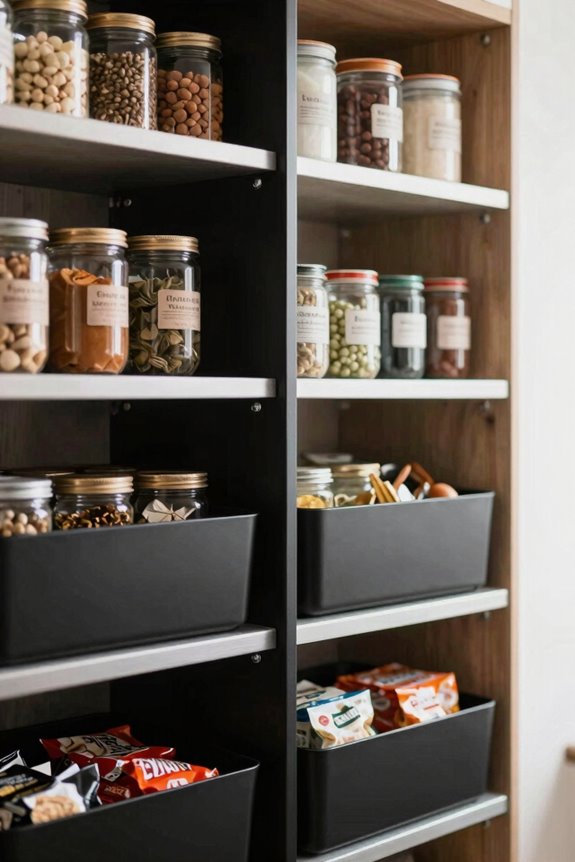
Once your pantry holds only items you’ll actually use, you can focus on making every inch count. Strategic pantry organization makes better use of wasted vertical space by creating functional storage zones that work harder for you.
Strategic pantry organization transforms wasted vertical space into functional storage zones that work harder for you.
Here’s how to maximize your pantry:
- Install acrylic shelf risers to double usable shelf space, positioning daily items below and special-occasion pieces above
- Add under-the-shelf baskets for wraps, bread, and pasta, reclaiming previously inaccessible areas
- Mount wall baskets for potatoes, onions, and snacks, freeing valuable shelf real estate
Vertical storage through risers and tiered shelving eliminates dead space without expanding your footprint. Cabinet shelf risers can triple shelving capacity where possible.
Hooks, whether Command or permanent, hang bags and produce efficiently. These solutions create an organized system where everything has its place and you’ll know exactly where to find it.