Your kitchen floor takes about 10,000 steps yearly; it’s the foundation that either holds up or crumbles under real life. You’ve got choices that actually stand the test of time, but not all materials perform equally.
I’ll walk you through three proven options that balance durability with style. Each one addresses different kitchen challenges. So which one’s right for your home?
Hardwood: Refinishable Elegance That Lasts Decades
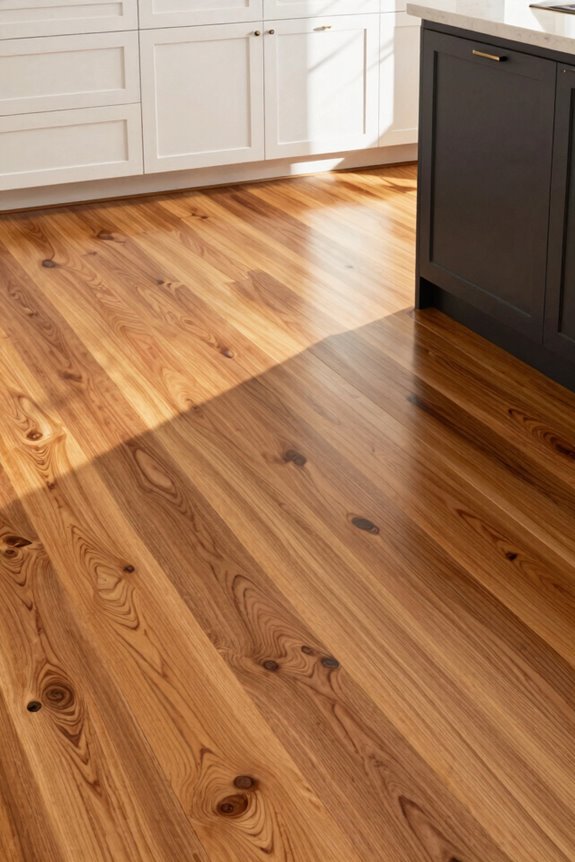
Why do homeowners continue choosing hardwood for kitchens despite modern alternatives? The answer lies in hardwood floors’ unmatched longevity and timeless appeal.
Hardwood offers exceptional long-term performance when properly maintained. You’ll appreciate that these floors are refinishable, meaning they can last for centuries. This durability significantly boosts your resale value through their natural beauty and enduring elegance.
You have two main options: solid hardwood or engineered hardwood. Engineered hardwood provides superior moisture resistance, making it better suited for kitchen environments where water exposure occurs regularly.
Budget approximately $4 to $12 per square foot depending on your chosen product type and finish. While hardwood requires consistent care and isn’t low-maintenance, floor refinishing capabilities keep your investment beautiful for generations. This combination of durability, aesthetic appeal, and refinishing potential makes hardwood a strategic choice for kitchen flooring.
Porcelain Tile: The Water-Resistant Workhorse for Kitchens
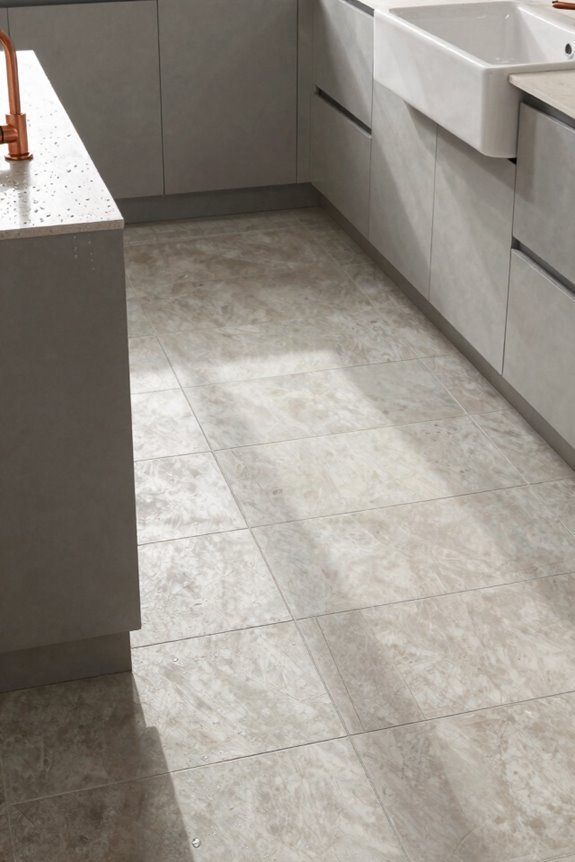
While hardwood brings classic appeal to kitchens, porcelain tile offers a completely different advantage: unbeatable water resistance. I’ve found that porcelain tile stands as the ideal kitchen flooring for households managing daily moisture and spills. Its moisture-resistant surface protects against water damage that could compromise other materials.
Porcelain tile offers unbeatable water resistance, protecting kitchens from daily moisture and spills that compromise other flooring materials.
The durability of porcelain tile impresses me most. It resists scratches and chipping, maintaining its appearance through years of kitchen activity. Large-format tiles minimize grout lines, creating seamless expanses that make smaller kitchens feel more spacious.
Design versatility seals the deal. Wood-look porcelain mimics hardwood’s warmth without water concerns. Stone-inspired patterns add sophistication. I maintain my porcelain tile through regular cleaning with appropriate cleaners and periodic sealing.
Your kitchen deserves flooring that handles real life while staying beautiful.
Travertine and Limestone: Natural Stone That Demands Care
How do you choose a flooring material that looks beautiful but requires commitment? Travertine and limestone offer timeless natural stone beauty that demands proper care. I’ll guide you through what makes these materials worth the effort.
These porous stones need sealing every 1–2 years to prevent staining and water damage. You’ll want stone-specific cleaners designed for natural surfaces. Tumbled travertine provides excellent slip resistance, making it safer for kitchens where spills happen.
The durability payoff is significant. Properly maintained travertine and limestone last for decades, becoming genuine long-term investments. While comparable in price to hardwood, their aesthetic range justifies the commitment.
Choose natural stone when you’re ready to join homeowners who embrace maintenance routines that preserve beauty and functionality for generations.