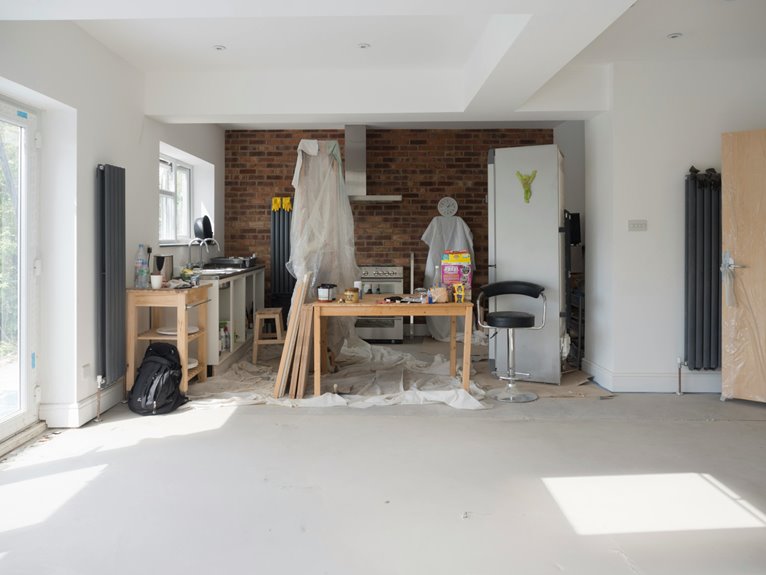
You’re considering a kitchen extension. You’re imagining new possibilities. You’re wondering where to start.
Modern kitchen design in 2026 prioritizes flexibility, blending social spaces with functional zones through smart layouts, natural light, and authentic materials.
The seven ideas ahead will show you how to remake your kitchen into a space that works harder and connects better.
Let’s explore what’s actually possible.
Open-Plan Islands: Your Kitchen’s Social Hub
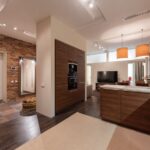
Why settle for a kitchen isolated from the rest of your home? An open-plan extension with a central island changes how your family connects. Your kitchen island becomes a social hub, simultaneously functioning as food prep, breakfast bar, and homework station.
This flexible space merges cooking, dining, and living areas seamlessly. Strategic sightlines across the open-plan kitchen let you supervise activities while preparing meals. Integrated lighting and services, including sinks, dishwashers, and power sockets, cluster around your central island for efficiency.
A continuous flooring material unifies your open-plan extension visually. This approach supports varied activities and informal gatherings throughout your dining living area. The result is a kitchen that adapts to your family’s needs while strengthening everyday connections.
Maximizing Light in Kitchen Extensions: Skylights and Glass Walls
How do you create a bright, welcoming kitchen extension instead of a dim, enclosed space? Strategic glazing and skylights are your answer. I recommend integrating these elements:
- Continuous strip skylights along your extension’s length flood the space with consistent natural light throughout the day
- Bi-fold or sliding glass doors maximize daylight penetration while creating seamless indoor-outdoor connections
- Glass walls paired with high-performance glazing and Low-E coatings control solar gain and maintain thermal comfort
- Roof lanterns complement skylights, adding architectural interest while brightening adjacent living zones
This integrated light strategy maintains visual continuity across your kitchen. The combination of overhead and vertical glazing ensures natural light reaches every corner. In conservation areas, carefully position these elements to balance modernization with external harmony.
Bi-Fold Doors: Seamless Indoor-Outdoor Connection
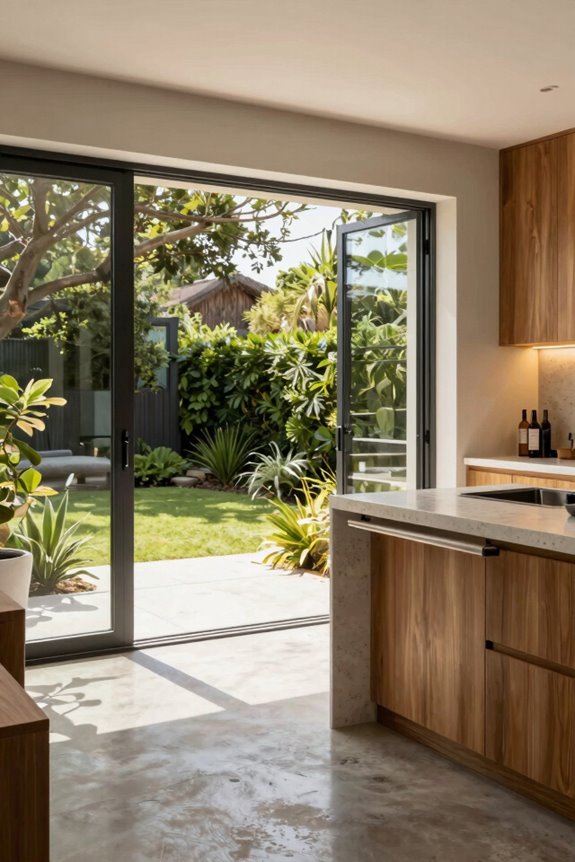
When you’re planning your kitchen extension, one element can greatly improve how your space feels and functions: bi-fold doors that dissolve the boundary between inside and outside.
| Door Type | Frame Material | Thermal Efficiency | Best Use |
|---|---|---|---|
| Bi-fold | Aluminum | High | Modern homes |
| Sliding Glass | Timber | Very High | Traditional spaces |
| Pocket Doors | Aluminum/Timber | High | Small patios |
| French Doors | Timber | Moderate | Cottage style |
| Multi-panel Glass | Aluminum | High | Large openings |
High-performance glazing systems with aluminum or timber frames maximize natural light while maintaining energy efficiency. Continuous flooring that extends from interior to exterior strengthens visual unity across your open-plan kitchen extension.
This seamless transition preserves sightlines between kitchen, dining, and living areas. Your bi-fold doors act as architectural bridges connecting your home to gardens, perfect for entertaining and everyday living experiences.
Industrial Aesthetics: Raw Materials and Authentic Character
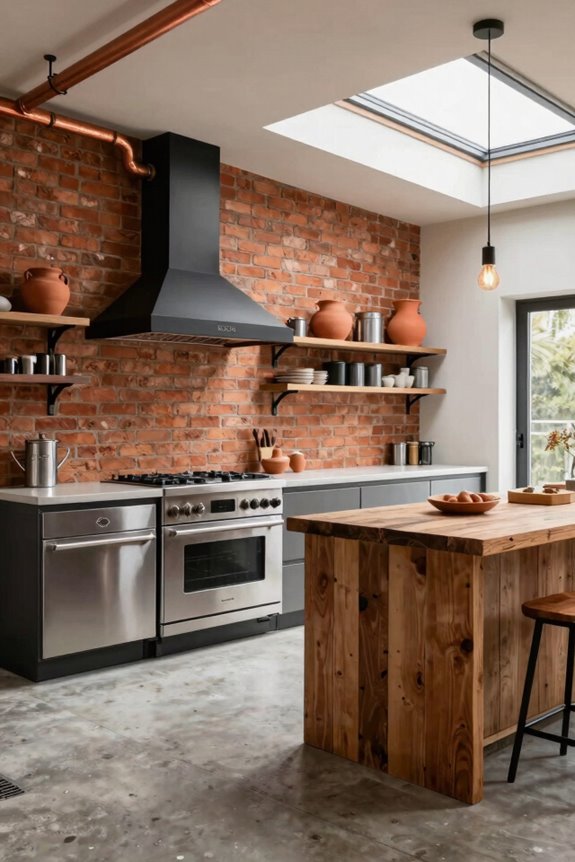
Perhaps the most striking way to improve your kitchen extension is embracing industrial design, letting exposed brick, steel beams, and polished concrete floors become your primary visual statement. I’d recommend showcasing raw materials honestly, rejecting unnecessary finishes that hide authentic textures.
This approach references urban heritage contexts while delivering genuine character:
- Exposed brickwork paired with steel beams creates robust structure and visual interest
- Polished concrete flooring grounds the space with durability and modern functionality
- Reclaimed materials strengthen sense of place and sustainability
- Material honesty celebrates weathering textures as design attributes rather than flaws
Balance these hard industrial elements with warmer touches, such as wood accents, textiles, and soft furnishings. This prevents coldness while improving acoustics.
Plan detailed junctions between materials carefully, considering long-term maintenance and how weathering enhances authenticity over time.
Smart Technology: Planning Wiring and Hidden Systems
While industrial design celebrates raw materials and authentic textures, smart technology operates invisibly behind those surfaces, supporting modern comfort and efficiency.
I recommend planning wiring during the first fix stage, before cabinetry installation. This strategic timing prevents costly renovations later. You’ll want to install Cat6a+ data cabling and robust power supply throughout your extension, accommodating both current appliances and future devices.
Hidden systems preserve your kitchen’s clean aesthetic. Consider sliding range hoods instead of wall-mounted models to maintain sleek sightlines. Conceal wiring within cabinetry integration and work surfaces for seamless integration.
Strong Wi-Fi capacity supports reliable smart home control: lighting, climate, and security all coordinated with ease. This foundational infrastructure positions your kitchen extension for evolving technology, creating a space that’s both beautiful and intelligent.
Natural Materials for Your Extension: Durability, Air Quality, and Aging Well
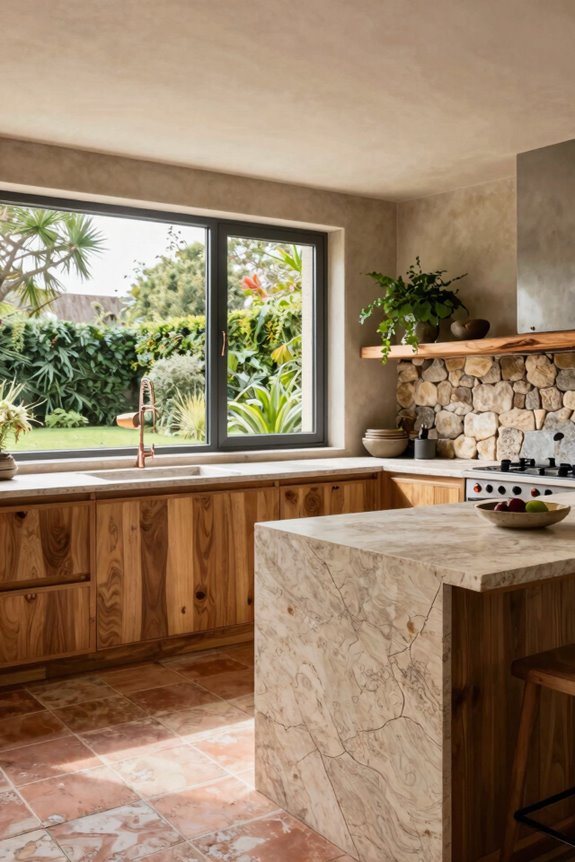
As your extension takes shape, the materials you choose will define how your space feels, performs, and weathers over time. Bio-sourced options like CLT and clay-based plasters regulate humidity and air quality naturally. I recommend prioritizing material authenticity through exposed textures: brick, timber, and metal, balanced with warm wood finishes to avoid cold atmospheres.
Consider these durable choices:
- Recycled composite worktops (Durat, PaperStone) offer low-maintenance surfaces with matte, tactile finishes
- Timber exteriors age gracefully while contributing contextual authenticity
- Clay-based plasters improve indoor air quality and regulate moisture
- Detailed junctions between glazing, brick, and timber cladding maintain weathering durability
Plan for long-term maintenance from the start. Proper detailing at material transitions prevents water infiltration and premature deterioration. This approach keeps your extension functional and beautiful for decades.
Open vs. Zoned: Choosing Your Kitchen Extension Layout
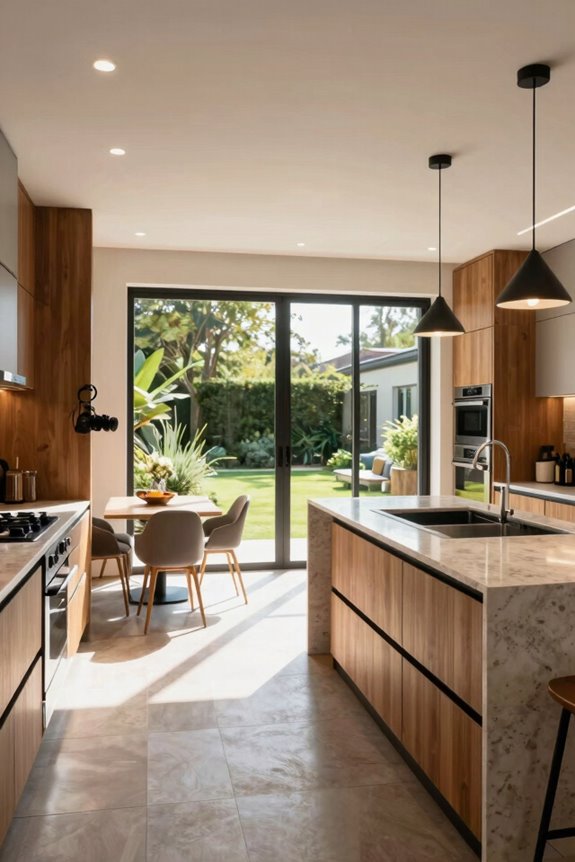
When you’re planning your kitchen extension, you’ll face a key decision: do you want one flowing open space or distinct zones that still connect visually?
Open-plan layouts merge your kitchen, dining, and living areas around a central island, creating a social hub that works for cooking, entertaining, and family life. Zoned layouts keep these areas defined with subtle separations, such as different flooring or low dividers, while maintaining sightlines so you’re never cut off from the action.
Open-Plan Social Hubs
How do you want your kitchen to function—as an open gathering space or a flexible blend of defined zones?
Open-plan social hubs merge your kitchen, dining, and living areas into one unified space. This layout strengthens family interaction and entertaining opportunities. Your kitchen island becomes the central anchor, integrating sinks, dishwashers, cooking surfaces, and power outlets for smooth operation across the space.
To maximize your open-plan kitchen extension, consider these design strategies:
- Install continuous flooring materials across all merged spaces for visual unity
- Establish clear sightlines from the island to dining and living zones
- Add bi-fold or sliding doors to create indoor-outdoor connection
- Use flexible zone planning to balance openness with defined cooking and relaxation areas
This approach creates an inviting environment where family members naturally gather while you prepare meals.
Zoned Functional Separation
While open-plan kitchens excel at fostering connection, zoned layouts—sometimes called broken-plan designs—offer a different advantage: they separate cooking, dining, and relaxation areas into distinct yet visually connected zones.
A side-return extension or rear extension creates the perfect opportunity for this functional separation. You can use glazed screens or partial walls to divide spaces without blocking sightlines, maintaining the open-plan transition feeling while defining separate functions.
| Design Element | Zoned Layout Benefit |
|---|---|
| Glazed screens | Visual connection with acoustic separation |
| Partial walls | Flexible cooking zone boundaries |
| Varying ceiling heights | Subtle area distinction without obstruction |
| Task lighting | Focused cooking illumination per zone |
| Integrated storage | Reduced clutter across functional areas |
Optimize your working triangle within each cooking zone. Layer task lighting over cooking areas and ambient lighting in dining spaces.
Integrated storage reduces clutter, supporting comfortable transitions between kitchen, dining, and relaxation zones throughout your kitchen extension.