Your coastal kitchen is a ship navigating salt air and humidity; it needs the right materials to stay afloat. I’ll show you why engineered wood outperforms solid options, which countertops truly resist stains, and how flooring choices affect durability.
You’re probably wondering what actually works in places like South Florida. Let’s explore the specific materials that deliver both authenticity and longevity.
Engineered Wood vs. Solid: Why Humidity Changes the Game
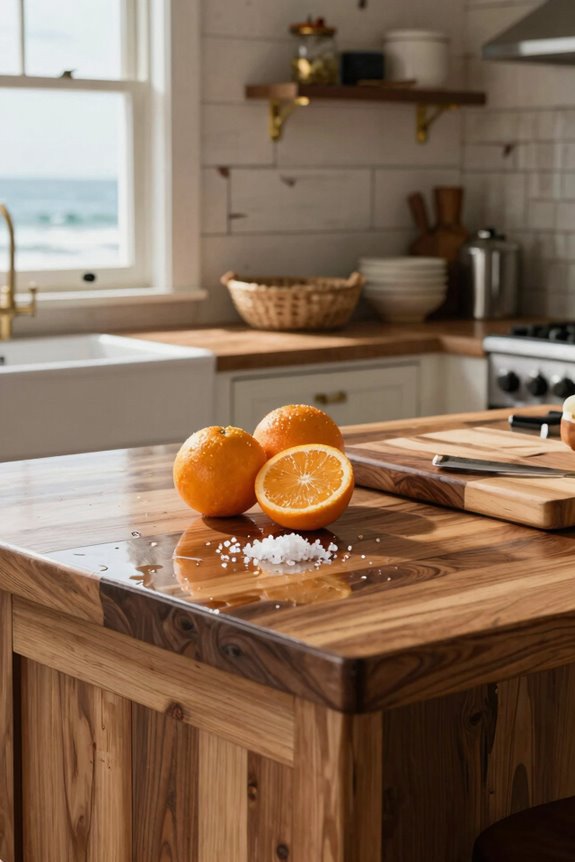
When you’re designing a coastal kitchen in South Florida, the materials you choose will significantly impact your investment. Solid wood expands and contracts with humidity changes, causing warping and cracking that compromise your kitchen’s beauty and function.
Engineered wood offers a better solution. High-density fiberboard with wood-grain finishes delivers the aesthetic you want without the moisture problems. These stable substrates resist humidity fluctuations and salt air exposure far better than traditional solid wood.
I recommend engineered options like Decora and Schrok finishes for coastal kitchens. They provide authentic wood-look appeal while maintaining superior moisture resistance. Painted HDF cabinetry with factory-applied finishes also performs well, providing consistent color stability.
Your coastal kitchen deserves materials that last. Choose engineered wood for both beauty and resilience.
Salt-Resistant Countertops: Quartz and Porcelain Over Marble
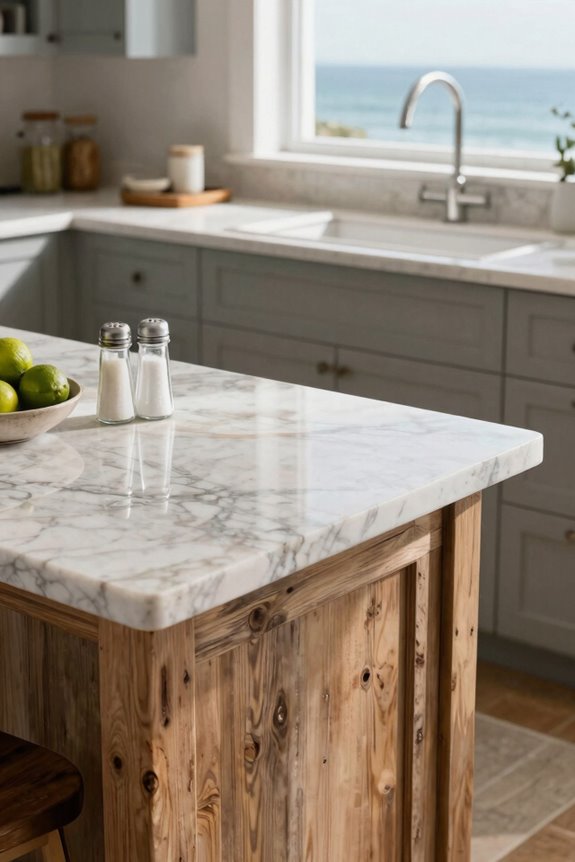
Your cabinet choice sets the foundation, but your countertops determine how well your kitchen withstands coastal living.
Quartz Over Marble
I’d recommend quartz countertops for salt-resistant durability. They’re non-porous, so they resist stains and moisture that corrode other materials. Unlike marble, quartz requires minimal maintenance and no sealant reapplication.
Porcelain’s Superior Performance
Porcelain offers 100% waterproof performance with exceptional UV stability. This engineered surface won’t fade under intense coastal sunlight or degrade from salt-air exposure.
Both quartz and porcelain come with factory-applied finishes designed specifically for humid environments.
Why Skip Marble
Marble’s porous nature makes it vulnerable to etching and staining. Salt spray accelerates deterioration, requiring constant sealant maintenance, which most coastal homeowners want to avoid.
Choose engineered surfaces that deliver the refined aesthetic you want without the upkeep burden.
Coastal Kitchen Flooring: Porcelain and LVP Compared
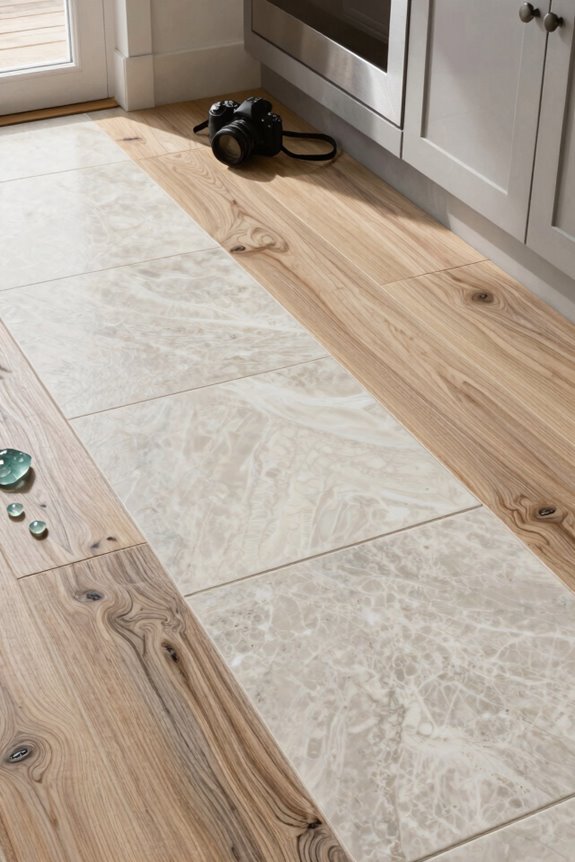
What flooring material can truly handle coastal kitchen demands without constant repair? I’ve found two exceptional options that deliver resilience and style for seaside homes.
Porcelain flooring excels in ultra-durability and water resistance. It’s 100% waterproof, heat-resistant, and UV-stable, which are essential qualities for humidity and salt exposure. Large-format wood-look planks offer authentic coastal aesthetics with minimal maintenance.
Luxury vinyl plank (LVP) provides budget-friendly performance. It’s equally waterproof and scratch-resistant while offering easier installation over existing substrates. The softer underfoot feel makes it comfortable for daily kitchen life.
Key advantages for your coastal kitchen:
- Superior water resistance prevents salt damage
- Low-maintenance surfaces save time and money
- Realistic wood finishes enhance coastal design
- Substrate compatibility simplifies installation projects
Both materials create resilient foundations. Choose porcelain for maximum durability or LVP for affordability and ease.
Shaker Doors and Brushed Brass: Hardware Built for Salt Air
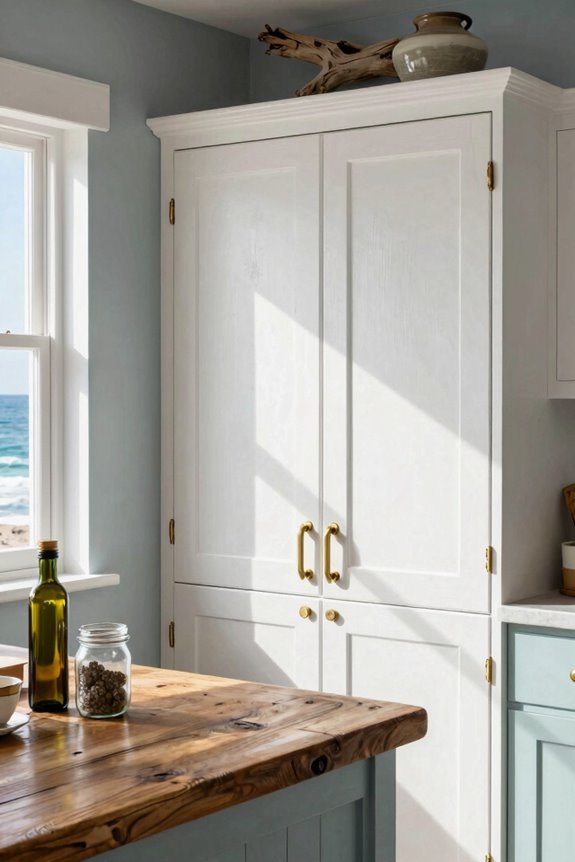
Once you’ve locked in durable flooring, cabinet doors and hardware become the next defining layer of your coastal kitchen’s character and longevity. I recommend Shaker doors for their clean lines and timeless appeal. They provide the fresh canvas that salt air environments demand.
Brushed brass hardware is your ideal partner here. This finish adds visual interest and sophistication while resisting harsh humidity when properly coated. Unlike standard brass, brushed brass complements both light and dark cabinet colors, steering your design toward classic sophistication.
Durability matters in coastal kitchens. Select high-quality brushed brass with corrosion-resistant finishes to combat salt air’s patina wear. Proper coating protects against humidity damage, so your hardware maintains its luxurious appearance for years. This combination of Shaker doors and brushed brass creates authentic coastal design built to last.
Building the Right Combination: Materials That Work Together in South Florida
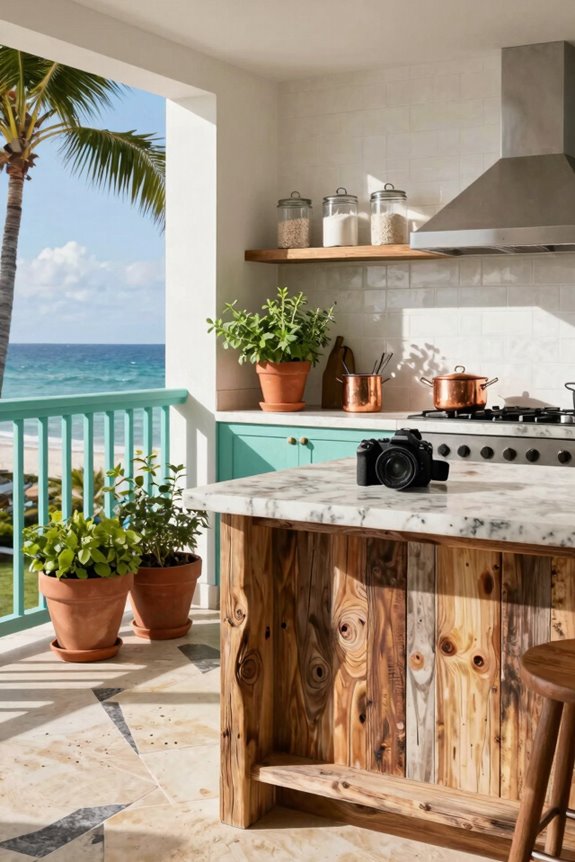
How do you build a coastal kitchen that actually survives South Florida’s humidity and salt air? You start by combining materials designed to work together harmoniously.
I’d recommend pairing engineered wood cabinets or HDF cabinetry with quartz countertops or porcelain slabs. Add Luxury Vinyl Plank or waterproof flooring to complete the foundation. These materials resist moisture and warping while creating visual harmony.
Your winning combination includes:
- Engineered wood cabinets paired with brushed brass or unlacquered brass hardware
- Quartz or porcelain countertops reflecting your coastal color palette
- Waterproof flooring in light, driftwood tones
- Salt-air durability throughout every element
This coordinated approach supports longevity. Each material choice supports the others, preventing the failure points that plague mismatched installations.
When cabinetry, counters, and flooring work together, your kitchen becomes both beautiful and resilient.