Your coffee table does more than hold your morning coffee: it anchors your entire living room. The right choice can define your space’s style, maximize functionality, and create visual balance you’ll appreciate daily.
Whether you’re working with a compact apartment or an open floor plan, the shape, materials, and styling of your table matter considerably. Strategic design choices can improve your space into something truly noteworthy.
Find the Right Coffee Table Shape for Your Space
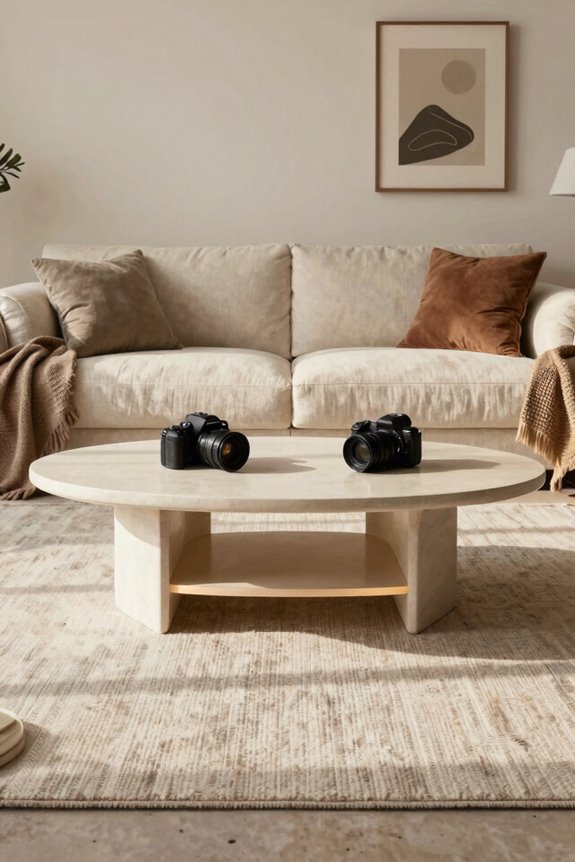
Why does your coffee table’s shape matter so much? Your table’s form directly impacts how your room functions and feels. Round coffee tables create flow and soften hard angles, especially when paired with square rugs. They’re ideal for space optimization in smaller living areas.
Consider a medium oak round coffee table for warmth and visual interest. Darker table tones contrast beautifully against light-colored sofas, adding dimension to your design.
Nesting tables offer flexible solutions when you need adaptability. These movable pieces let you customize your layout without permanent commitment. Stack them together for a unified appearance, or separate them for functional versatility.
West Elm offers quality round table options worth exploring. Larger round tables maximize space occupation while maintaining elegant proportions. Choose the shape that supports your lifestyle and design vision.
Size Your Table to Your Seating
How do you know if your coffee table fits your seating? The answer lies in matching your table’s dimensions to your seating arrangement. I recommend maintaining 14–18 inches of clearance space around all sides for comfortable legroom and movement.
Match your coffee table dimensions to your seating, maintaining 14–18 inches of clearance for comfortable legroom and movement.
A round table works exceptionally well with most configurations. Measure your table’s diameter against your sofa placement to verify proper proportions. Larger round tables occupy space efficiently while maintaining an open, inviting atmosphere.
When selecting dimensions, consider your room’s layout carefully. A table that’s too large overwhelms your seating; one that’s too small feels disconnected.
The right size creates balance and flow, allowing you to move freely around your living space while keeping conversations intimate and accessible.
Choose Your Materials: Mood and Durability
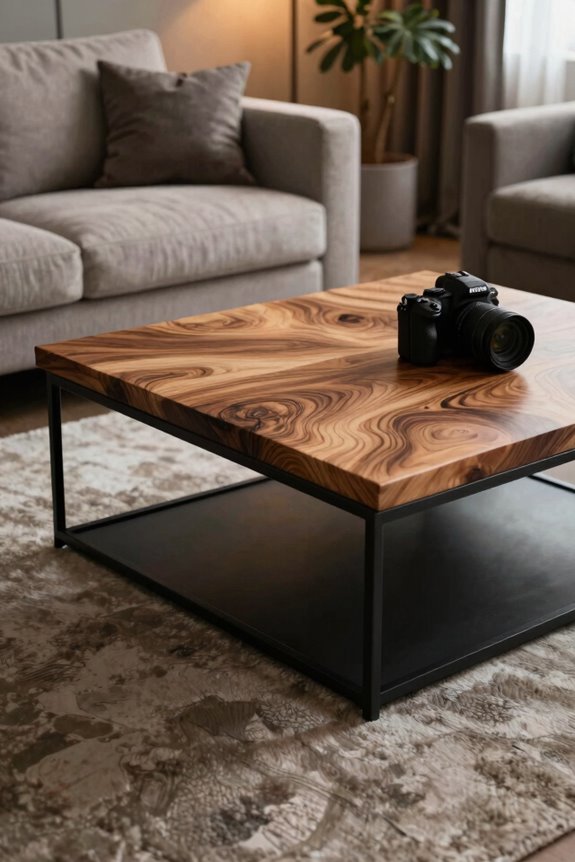
Once you’ve sized your table to fit your seating, selecting the right material becomes equally important. Your choice impacts both the mood you create and how well your table withstands daily life.
Natural Stone Options
Marble surfaces deliver timeless elegance and luxury appeal. They’re durable but require regular sealing to resist stains.
Wood with Modern Twists
Live-edge tables showcase natural wood contours paired with epoxy resin filling. This combination creates unique visual interest while protecting the wood from damage.
Epoxy Resin Features
You can customize epoxy resin tops with vibrant colors: blues, greens, golds. You can even embed 3D decorative elements. This material offers both durability and artistic expression.
Consider Your Lifestyle
Choose materials matching your home’s demands. High-traffic areas benefit from resilient options like epoxy resin, while formal spaces suit marble’s sophisticated presence.
Layer Books and Objects: Coffee Table Styling Ideas
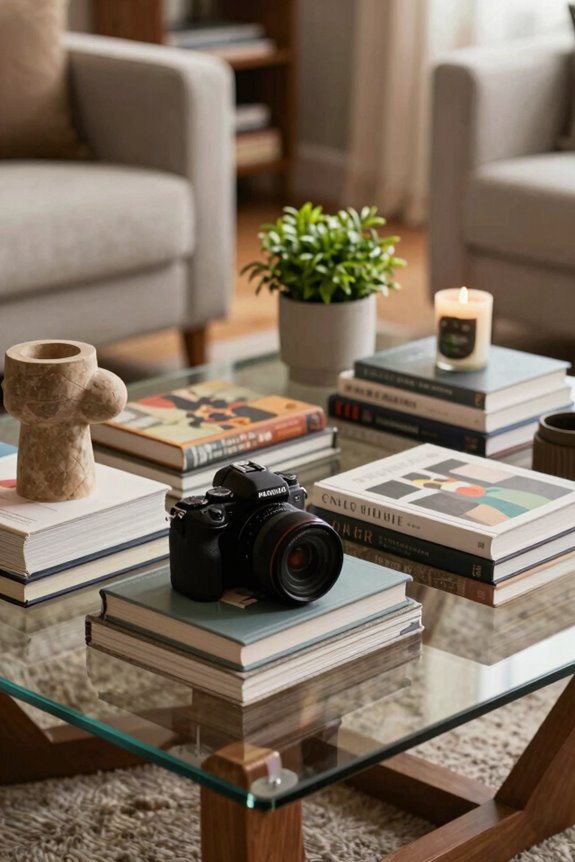
A coffee table gains personality and purpose when you stack three to four piles of books as your foundation. I arrange them at varying heights to create visual interest and provide flat surfaces for displaying curiosities, florals, and candles.
Layered books serve as conversation starters and intentional slow-down prompts. They establish a curated, lived-in aesthetic that reflects who you are.
Coffee table styling with decorative objects:
- Balance taller items with lower ones to maintain clear sightlines across seating areas
- Layer books first, then add trays, bowls, or sculptural pieces on top
- Use book bindings and covers to contribute color and texture to your display
This approach makes your coffee table a functional, inviting focal point that tells your story while keeping the space organized and accessible.
Mix Heights and Textures for Visual Depth
Why does a flat coffee table feel incomplete?
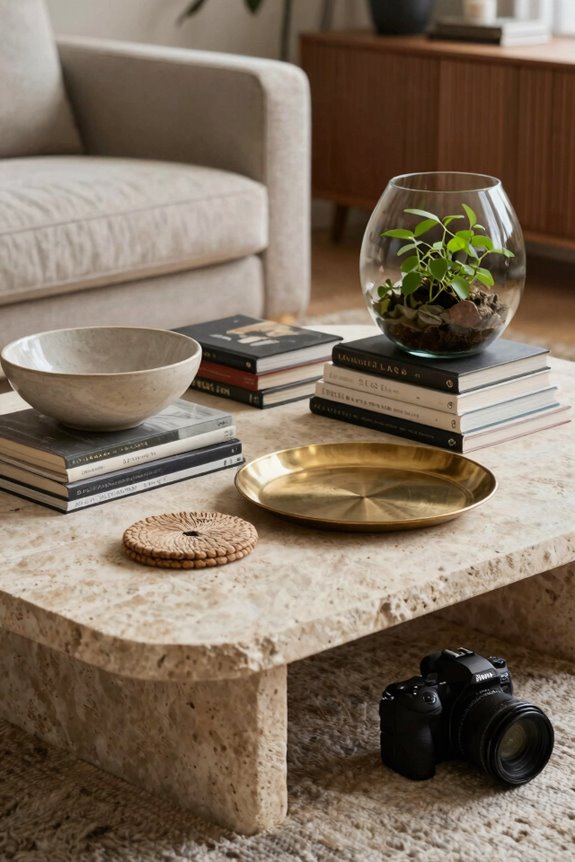
Layering creates dimension. I stack books, decorative boxes, and vases at different heights to build visual interest. This approach changes a surface from flat to dynamic.
Layering books, boxes, and vases at varying heights transforms a flat surface into dynamic visual interest.
Combining Materials for Richness
I pair wood, marble, and metallic accents to introduce varied textures. Each material catches light differently, adding depth and sophistication. These combinations make your table feel purposeful and well-chosen.
Creating Strategic Height Variation
Incorporate a single tall vase or greenery to establish vertical contrast. This prevents the arrangement from feeling cramped.
Books positioned vertically or at angles contribute additional texture while maintaining organization.
Balancing Shapes and Spacing
Round and rectangular pieces complement different table styles. I keep adequate empty space for sculptural focal points. This balance creates a collected look that feels both welcoming and well-designed.
Sparse or Styled: Pick Your Aesthetic
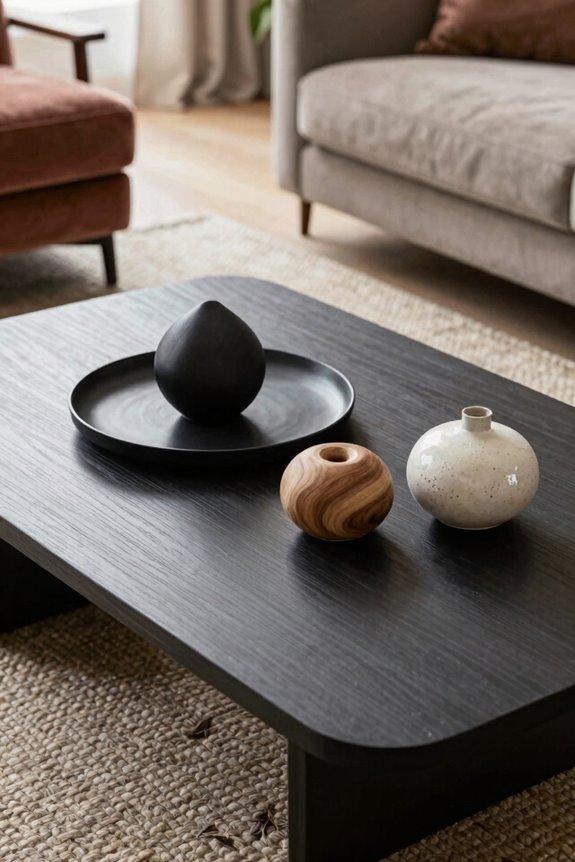
How you arrange your coffee table depends on the mood you want to create. I find that deciding between sparse and styled aesthetics shapes your entire living room’s personality.
A sparse approach pairs beautifully with round coffee tables. You’ll want minimal decor, allowing the table’s shape to contrast with your sofa and rug. Nesting tables work perfectly here, letting you tuck extras away when needed.
A styled aesthetic celebrates layered textures and thoughtful placement. Here’s how to approach each:
- Sparse: One key piece, clean surfaces, negative space
- Styled: Books, plants, candles, and decorative objects arranged thoughtfully
- Flexible: Nesting tables that adapt between both aesthetics
Choose what feels right for your space. Both approaches create visual interest when executed with intention and complementary furnishings.
Add Games and Function to Your Table
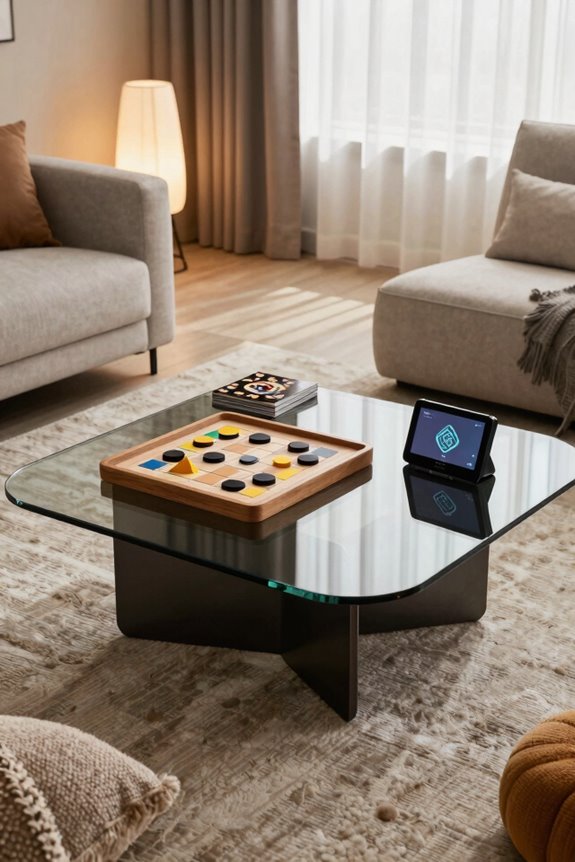
Your coffee table can do so much more than hold drinks and magazines. I’ve found that incorporating games creates an inviting functional hub that brings people together naturally.
| Game Type | Table Size | Best Setup |
|---|---|---|
| Card games | Small (36″) | Intimate seating |
| Board games | Large (48″) | Multiple players |
| Puzzles | Round | Flexible access |
| Strategy games | Nesting tables | Expandable space |
| Casual games | Medium (42″) | Conversation-friendly |
Consider nesting tables for flexible game night arrangements. A larger or round table improves flow and accommodates more players comfortably. Present game options as part of your styling to invite participation naturally.
This approach makes your table into a gathering place where conversation, games, and shared activities happen effortlessly. You’re creating a space where people genuinely want to spend time together.
Tie Everything Together With Color and Metallics
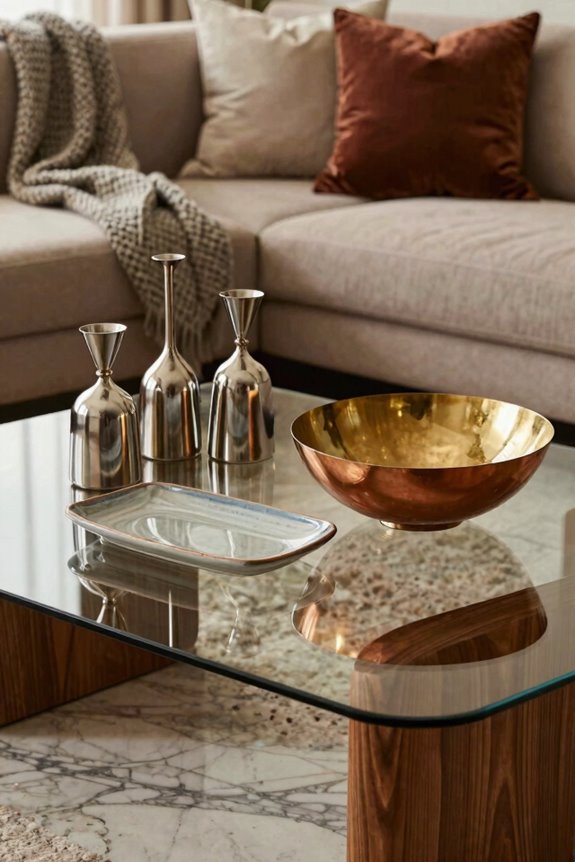
I’ve discovered that color coordination and metallic accents bring together separate tables into one unified design story. By selecting a consistent palette across your round, rectangular, or nesting tables and layering brass, nickel, or aged finishes into trays and hardware, you’ll create visual harmony throughout your seating area.
This approach grounds your space while allowing each table’s unique shape to contribute its own character to the room.
Color Coordination Strategies
Why does a living room feel cohesive or disjointed? The answer lies in intentional color coordination. I’ve found that strategic color choices affect how your space functions visually.
Consider these color coordination approaches:
- Contrast dark tables with light foundations: Pairing a darker coffee table against light sofas and rugs creates visual interest and defines your seating area effectively.
- Echo room accents through decor: Mirror existing color schemes by placing coordinated objects, like yellow flowers in a black vase, on your table surface.
- Balance round tables with varied textures: Round tables paired with books, florals, and candles integrate color while softening square rug lines.
Metallic accents serve as connective elements across wood, marble, or epoxy surfaces. These touches unify your coffee table decor with surrounding furnishings, establishing connection throughout your room without overwhelming the space.
Metallic Accent Layering
When you layer metallic accents across your coffee table, you’re creating visual bridges that connect different materials and colors throughout your living room. I’ve found that combining metallics with natural textures like oak, marble, or live-edge wood creates a modern-rustic style that feels planned and polished.
| Metallic Type | Best Paired With | Visual Effect | Living Room Impact |
|---|---|---|---|
| Brushed Brass | Epoxy Resin Tops | Warm, Unified | Cohesive Elegance |
| Bronze | Travertine | Rich, Grounded | Sophisticated Balance |
| Chrome | Glass Surfaces | Sleek, Modern | Contemporary Feel |
| Gold | Marble | Luxe, Refined | Elevated Aesthetic |
The key is balancing shine strategically. I recommend choosing one dominant metallic element, perhaps a lamp stem or sculptural object, then supporting it with fabric, wood, or glass textures.
This approach prevents overwhelming your table while creating the reflective focal point that connects your entire living room palette together beautifully.
Coffee Table Ideas for Small Spaces: Nesting and Live Edge
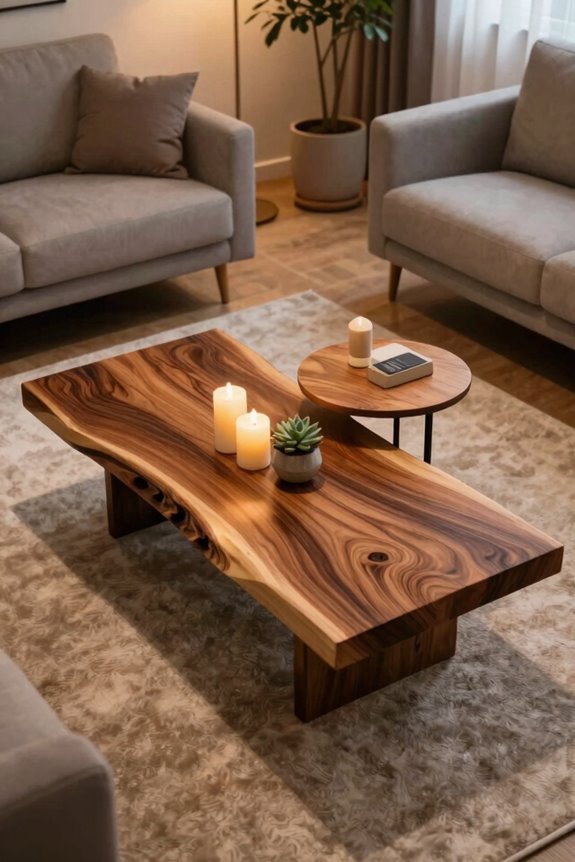
How do you furnish a small living room without sacrificing style or function? Nesting tables offer an intelligent solution for compact spaces. I recommend pairing two round coffee tables that separate when you need extra surface area or group together to conserve floor space.
Smart Small-Space Strategies:
- Select darker wood tones to create visual contrast against light sofas and rugs
- Choose nesting sets that adjust for different gathering sizes without crowding
- Explore live-edge designs from retailers like West Elm for organic appeal
Round coffee tables work particularly well in limited layouts because their curved edges feel less imposing than rectangular options. The flexibility of nesting furniture means you’re not locked into one arrangement.
You’ll gain practical functionality while maintaining the polished aesthetic your space deserves.
Make Your Table a Statement With Epoxy Wood
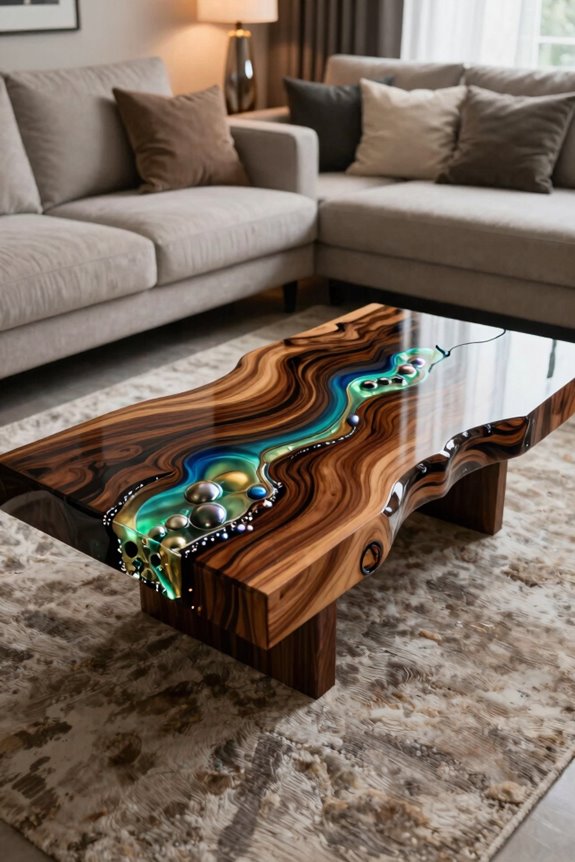
I can refresh my living room by choosing an epoxy wood coffee table that blends contemporary design with the organic beauty of natural wood grain. You’ll find that customizable resin colors, from deep blues and emerald greens to warm golds, let me create striking contrast with my existing furniture and décor.
This approach turns a functional piece into a sculptural centerpiece that reflects my personal style.
Contemporary Design With Natural Wood
Because natural wood and modern design don’t always go hand-in-hand, epoxy resin offers you a creative bridge between the two. I’ve found that combining epoxy wood with live edge designs creates eye-catching focal points that blend organic beauty with contemporary style.
The natural wood grain becomes the foundation while resin makes it distinctly your own. Here’s what you can achieve:
- Preserve irregular live edge contours for authentic, organic appeal
- Customize epoxy colors from crystal-clear to bold jewel tones
- Incorporate 3D elements like flowers or moss for dimensional interest
These tables work seamlessly in modern and rustic interiors alike. The epoxy protects your investment while the natural wood maintains warmth and character. You’re joining a community of design enthusiasts who value both authenticity and innovation.
This approach gives you a durable piece that reflects your personal aesthetic.
Customizable Resin Color Options
What makes epoxy resin tables truly personal is their endless color palette. You can choose from blue, green, gold, silver, yellow, red, turquoise, and violet to match your living room’s aesthetic. These color options let you create a bold statement piece that reflects your style.
The resin itself offers three finishes: crystal-clear, opaque, or pearlescent. Each creates different visual effects when paired with live edge wood bases. You might embed 3D elements like fish, flowers, or seashells directly into the epoxy for added texture and dimension.
Whether you prefer epoxy-filled designs or non-epoxy variants, combining resin with natural wood produces distinctive conversation starters. Your customized epoxy resin table becomes a functional art piece that blends contemporary design with natural elements, giving your living space something completely original.