You want a breakfast nook that’s beautiful and functional, stylish and practical, inviting and efficient.
I’ll show you how to design your kitchen with layouts, seating options, and storage solutions that actually work.
Whether you’re working with a corner space or a bay window, you’ll discover specific design choices that fit your needs.
The right nook becomes the heart of your home; finding it requires knowing what matters most.
Why a Breakfast Nook Deserves a Place in Your Kitchen
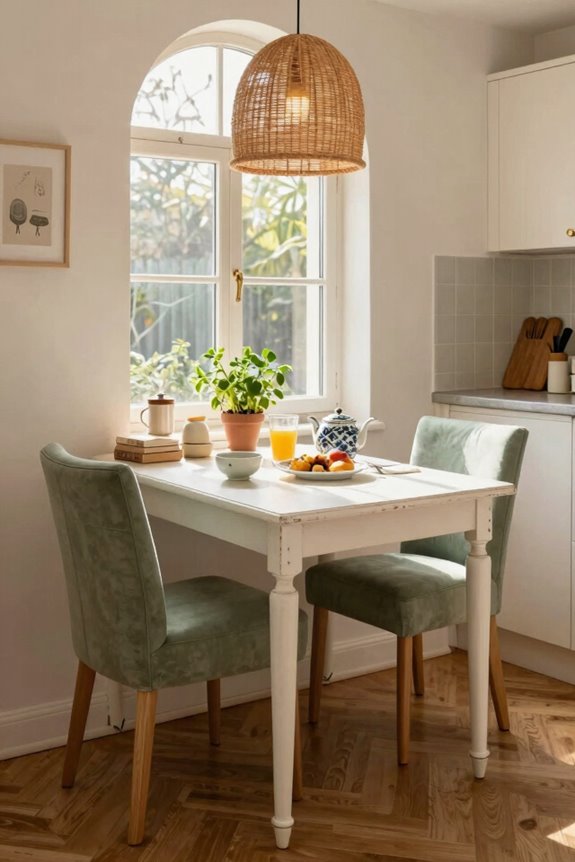
Have you considered how a breakfast nook could improve your daily kitchen experience? A breakfast nook creates an inviting space where you and your family gather for morning meals and casual conversations. This dedicated area makes your kitchen feel more purposeful and welcoming.
A built-in banquette maximizes your kitchen’s available space while maintaining clean sightlines. The bench seating tucks neatly into corners or along windows, freeing up floor space. Hidden storage beneath seat cushions keeps dishes, linens, and kitchen items organized and out of sight.
Natural light amplifies a nook’s appeal. Positioning your setup near a window creates a bright, cheerful eating area. This placement encourages lingering over breakfast and enjoying quiet morning moments.
The combination of functional design and comfortable atmosphere makes a breakfast nook a practical investment in your home’s everyday living experience.
Choose Between Corner, Bay Window, and Freestanding Layouts
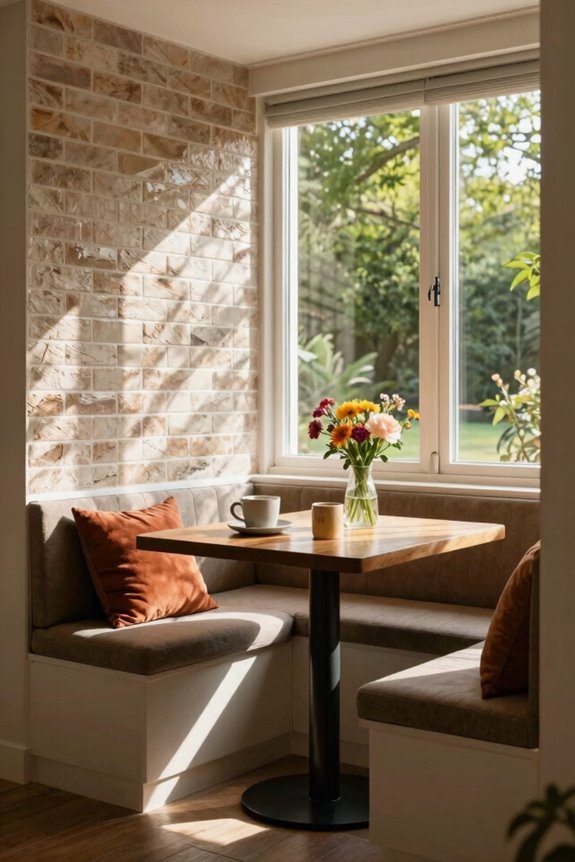
I’ll guide you through three distinct nook styles, each offering unique advantages for how you’ll actually use and move through your kitchen space. Your choice between corner, bay window, and freestanding layouts fundamentally shapes both storage capacity and how easily you can adjust your setup as your needs change.
Understanding these practical differences helps you select the design that truly fits your kitchen’s footprint and your family’s daily routine.
Space Utilization Strategies
Three distinct layouts form the foundation of breakfast nook design, each offering unique advantages for different kitchen configurations.
| Layout Type | Best For | Key Feature |
|---|---|---|
| Corner Nook | Compact kitchens | L-shaped banquette with hidden storage |
| Bay Window | Natural light lovers | Custom bench contoured to window recess |
| Freestanding | Open-concept spaces | Lightweight round table with movable chairs |
Corner nooks maximize tight spaces through strategic banquette placement. The L-shaped design fits snugly against walls, creating an intimate cafe-style atmosphere. You’ll appreciate the built-in storage underneath benches for linens, cookbooks, or serving pieces.
Bay window nooks prioritize daylight and views as your main attraction. Custom bench seating contours perfectly to window recesses, enhancing both comfort and storage efficiency.
Freestanding nooks offer flexibility in smaller kitchens. A round table paired with movable chairs maintains easy circulation around your space. Consider leg clearance and accessible storage when selecting your layout.
Layout Flexibility And Flow
When you’re planning a breakfast nook, the layout you choose directly shapes how your kitchen functions every day. I recommend evaluating three primary options based on your space and lifestyle.
Corner layouts use L-shaped banquette seating to maximize compact areas while freeing central floor space. This approach works well for smaller kitchens where traffic flow matters.
Bay window nooks leverage natural light and views with custom built-in benches that fit alcove spaces. These layouts combine seating with storage efficiency.
Freestanding designs offer maximum layout flexibility through modular tables and lightweight chairs, ideal for open-concept kitchens requiring easy reconfiguration.
Regardless of your choice, prioritize clear access between your kitchen, island, and dining area. This supports comfortable traffic flow and makes your nook feel integrated rather than cramped.
Pick Your Seating: Benches, Chairs, or a Mix
How you arrange your breakfast nook’s seating shapes both its look and function. I recommend considering three primary options: built-in benches, freestanding chairs, or a strategic seating mix.
Built-in benches maximize your space efficiently. They offer hidden under-bench storage and create a cozy, integrated feel. Upholstered benches with cushions provide comfort to your nook.
Built-in benches maximize space with hidden storage while creating a cozy, comfortable nook that feels integrated into your kitchen.
Freestanding chairs provide flexibility for irregular layouts. You can easily rearrange them around your table as your needs change. This adaptability suits households with varying group sizes.
A seating mix combines benches and chairs for optimal versatility. This approach accommodates different activities and guest counts throughout your week. Corner L-shape banquettes paired with complementary chairs deliver both charm and practicality, establishing an inviting café-like atmosphere in your kitchen space.
Select a Table Size That Fits Your Breakfast Nook
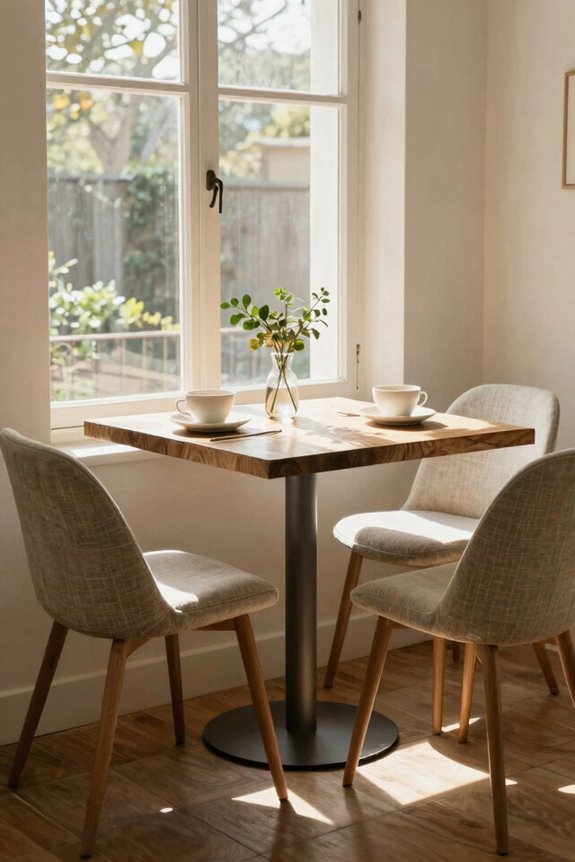
Your table choice determines whether your nook feels cramped or perfectly proportioned to your space.
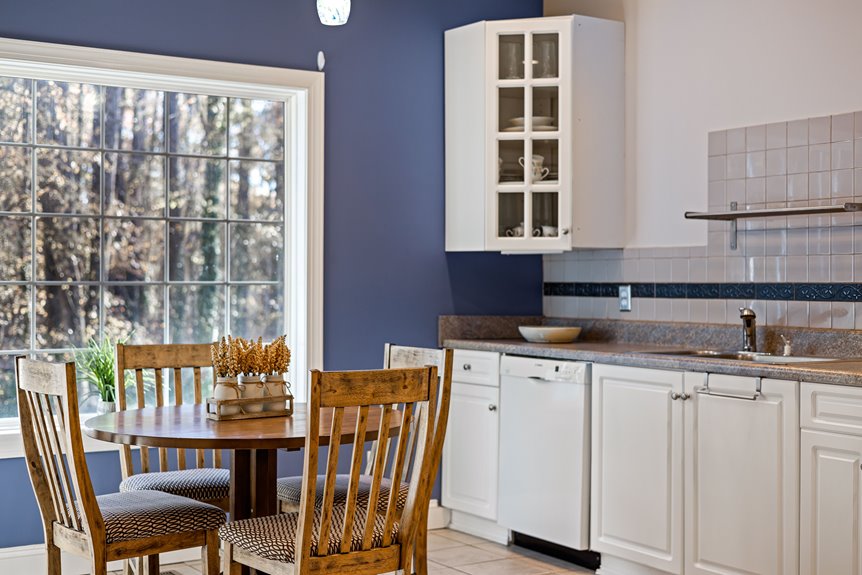
I recommend measuring your nook’s floor area first. This step helps your table size match your seating capacity without blocking movement. Round tables work beautifully in tight corners, while rectangular options suit longer walls.
Consider drop-leaf tables if you want flexibility. They expand when you’re entertaining and collapse when you need extra room. This versatility lets you accommodate varying seating capacity without permanent bulk.
Table height matters significantly too. I suggest 30 inches from floor to tabletop for comfortable leg clearance. This standard dimension prevents stubbed toes and allows people to move freely around your nook.
Your table selection shapes how your breakfast nook functions daily. Choose wisely, and you’ll create an inviting space that welcomes family gatherings and morning routines alike.
Build Hidden Storage Into Your Breakfast Nook
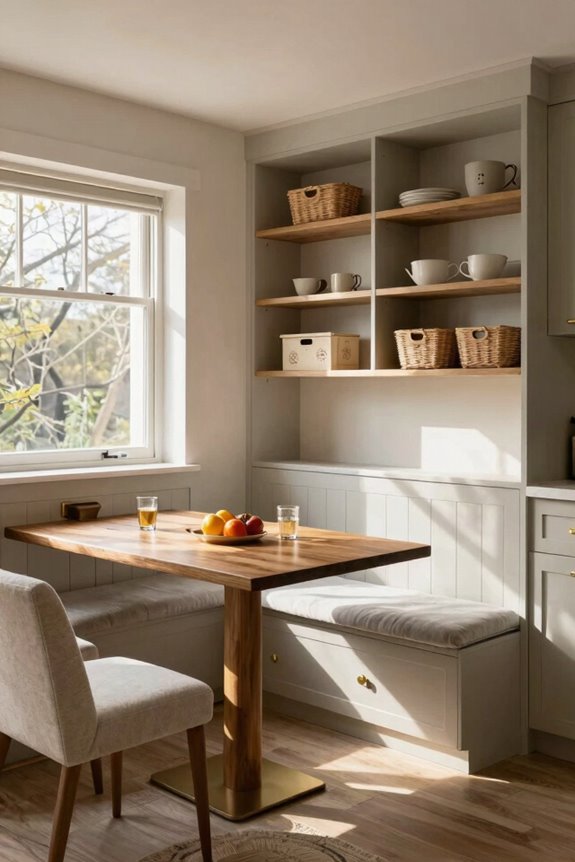
I’ve found that smart storage solutions create a more organized and peaceful breakfast nook. You can hide place settings and napkins beneath your bench with under-bench drawers or lift-up systems that keep everything accessible yet out of sight.
Pairing these with floating shelves and a slim sideboard gives you organized storage that maintains your nook’s clean, comfortable feel.
Under-Bench Drawer Systems
When space matters most, hidden storage built directly into your breakfast nook seating solves the clutter problem gracefully. Under-bench storage keeps your seating functional, maintaining clear and organized tabletops. This space-saving approach integrates smoothly with your design while offering practical organization.
Consider these advantages of under-bench drawer systems:
- Quick access to everyday items without bending or reaching awkwardly
- Lift-up bench designs that open easier than traditional pull-out drawers
- Hidden compartments maintaining your nook’s clean, uncluttered appearance
- Durable storage solutions supporting daily family use and wear
Seating integration works best when drawers slide smoothly on quality hardware. Install shallow compartments for placemats and napkins, deeper sections for serving dishes.
This balanced approach preserves your nook’s cozy feel while maximizing functionality. You’ll find yourself reaching for items effortlessly during meal preparation and daily routines.
Lift-Up Bench Accessibility
Lift-up benches create dual-purpose spaces in breakfast nooks where seating and storage coexist effortlessly. Gas-assisted or hinged mechanisms allow you to access the hidden storage cavity easily from a seated or standing position.
These benches offer several practical advantages. First, they provide larger storage capacity than traditional under-bench drawers. Second, you’ll appreciate how they maintain clean sightlines by concealing napkins, placemats, and pantry items discreetly.
For your kitchen nook, lift-up benches maximize space efficiency while enhancing daily usability. The simple access mechanism means you’re not struggling with drawer slides or awkward reaches. This design choice works particularly well in small kitchens where every square inch matters.
Floating Shelf Organization
Three strategic placements make floating shelves both functional storage and visual anchors for your breakfast nook.
I recommend positioning shelves above counters and seating areas for easy access. This arrangement keeps your sightlines open while displaying everyday essentials. You’ll appreciate having bowls, mugs, and cookbooks within arm’s reach during morning routines.
Consider these storage solutions:
- Slim brackets that complement your cabinetry and textiles
- Pairing shelves with under-bench or lift-up seating for concealed storage
- LED strip lighting or wall sconces to illuminate displayed items
- Organized arrangement that reflects your family’s daily needs
The key to successful floating shelf organization involves balancing visibility with restraint. Don’t overcrowd your shelves. Instead, choose items that you genuinely use and that matter to your household. This approach creates a welcoming space that feels well-considered and accessible for everyone who gathers there.
Light Your Breakfast Nook for Morning Ambiance

How do you create a breakfast space that feels inviting at dawn yet functional throughout the day? Strategic breakfast nook lighting makes your kitchen a welcoming gathering spot.
1. Maximize Natural Light
Position your nook near windows and install light-filtering shades. This approach reduces glare while brightening your space naturally during morning hours.
2. Layer Your Lighting
Combine multiple light sources for flexibility. Pendant lights or small chandeliers (sized two-thirds your table width) provide focused illumination overhead. Wall sconces add symmetry and efficiency in corner spaces.
3. Add Dimming Capability
Install dimmer switches to adjust brightness for morning coffee, midday meals, and evening gatherings. Layered lighting lets you control ambiance throughout the day while maintaining readability when needed.
This thoughtful approach creates your ideal breakfast sanctuary.
Pick Cushions and Fabrics That Look Good and Last
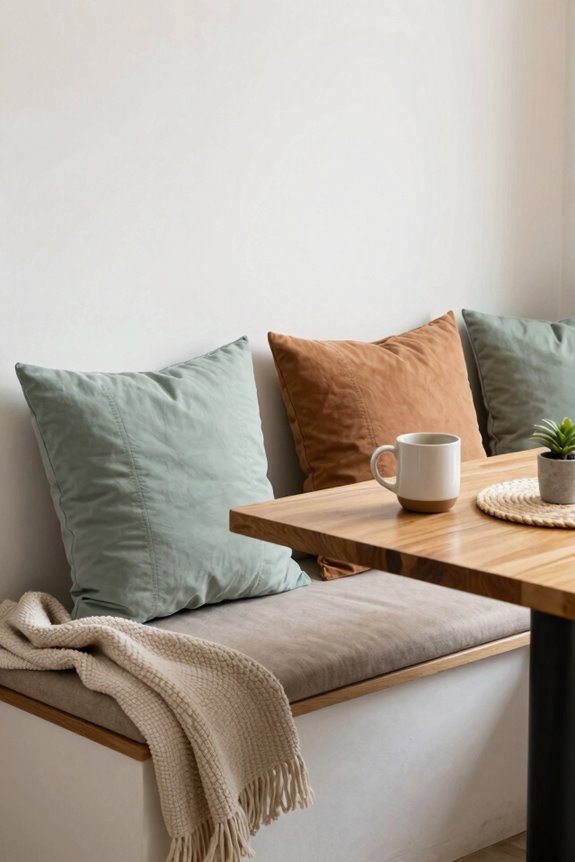
When you’re furnishing your breakfast nook, cushions and fabrics make a basic bench into an inviting retreat. I recommend selecting materials that balance comfort with practicality for your family’s everyday use.
Consider these essential choices:
- Performance blends resist stains and wear, protecting your investment through years of morning meals
- Soft, welcoming textures create warmth that invites family members to linger longer
- Coordinated colors work together with bench upholstery, cushions, and drapery for visual harmony
- Layered textiles, cushions, rugs, and curtains, define your nook space while softening sound
Tightly woven fabrics offer superior durability without sacrificing comfort. I’d suggest choosing cushions in colors that complement your kitchen’s overall palette.
This thoughtful approach keeps your breakfast nook both beautiful and functional for years ahead.
Match Colors and Materials Across Your Breakfast Nook
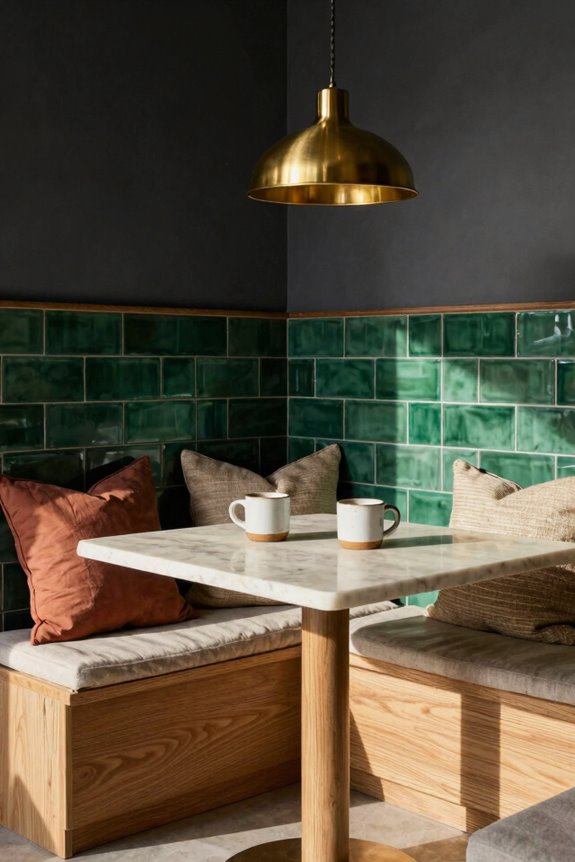
I find that matching colors and materials throughout your breakfast nook creates a polished, well-designed space. By selecting cohesive finishes, soft neutrals for upholstery, coordinating wood tones, and unified textiles, you’ll establish visual harmony that ties your seating, dining surfaces, and storage together seamlessly.
This unified approach turns a simple eating area into a thoughtfully coordinated room that reflects your design vision.
Cohesive Material Selection
Why do some breakfast nooks feel inherently welcoming while others seem disconnected from the kitchen? The answer lies in cohesive materials and a unified color palette that create smooth integration throughout your space.
I recommend these four strategies for material harmony:
- Match wood finishes between your nook table and kitchen cabinetry for visual continuity
- Coordinate metal accents; choose matte or polished consistently across hardware and seating frames
- Select cushion fabrics that echo your countertop colors and textures
- Extend flooring or rugs beneath the nook to ground the entire area
Color Palette Coordination
Most breakfast nooks succeed when their colors and materials mirror the kitchen’s existing design language. I recommend starting with color coordination that connects your seating upholstery to surrounding cabinetry and countertops. This creates visual continuity throughout your space.
Consider using a two-tone scheme, like navy and white with soft pink accents, to add personality while maintaining harmony. Balance dark and light hues strategically. Pair ebony tile or dark wood with light-washed cabinetry and pale textiles to avoid heaviness.
Introduce a unifying color story across your textiles, cushions, rugs, and window treatments. This reinforces mood and connection. Use consistent materials like neutral fabric benches paired with wood or metal accents that echo your table legs and light fixtures.
These coordinated choices make your breakfast nook a welcoming extension of your kitchen design.
Connect Your Nook to Your Kitchen Island or Patio
When you position your breakfast nook near a kitchen island or patio doorway, you’re creating a unified dining and gathering zone.
This strategic placement improves how you move between cooking, eating, and outdoor spaces. I recommend using cohesive materials, matching wood tones or similar textiles, to connect these areas visually.
Consider these four key elements:
- Allow clear pathways around your kitchen island for smooth traffic flow
- Position nook seating within arm’s reach of both table and counters
- Coordinate lighting with matching pendant fixtures above the island and nook
- Align indoor-outdoor dining by orienting your nook toward patio access
When your breakfast nook integrates thoughtfully with your kitchen island and patio, you’re designing a space where your family naturally gathers. This intentional layout brings separate zones together into one unified hub for cooking, dining, and connection.
Design Your Nook to Work as a Dining Space and More
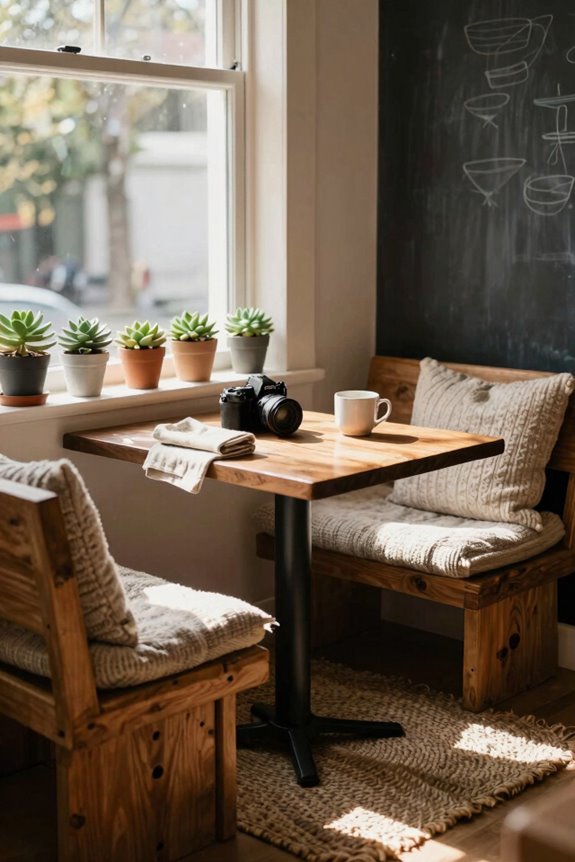
Your breakfast nook serves double duty as both a dining destination and a practical hub for daily routines. I recommend selecting a built-in banquette with hidden storage underneath to maximize functionality in your space. This approach keeps clutter contained while providing comfortable seating for meals and morning coffee.
Versatile seating options strengthen your nook’s adaptability. Pair your banquette with freestanding chairs or stools that you can move as needed. This flexibility accommodates irregular layouts and lets you adjust for different activities throughout the day.
Enhance comfort with coordinating cushions and decorative pillows that define your breakfast nook’s character. Add a defining rug beneath the table to ground the space visually. These textiles create an inviting area that serves both practical needs and relaxation purposes.