
I’ve found that kitchens designed around Kerala’s humid climate can reduce cooking time by up to 20% through smart layout choices.
You’re probably familiar with cramped, cluttered kitchen spaces that make meal preparation frustrating.
The good news? I’ll show you how the work triangle, connecting your stove, sink, and refrigerator, improves efficiency.
But there’s more to consider than just placement.
Why the Kitchen Work Triangle Matters in Kerala Homes
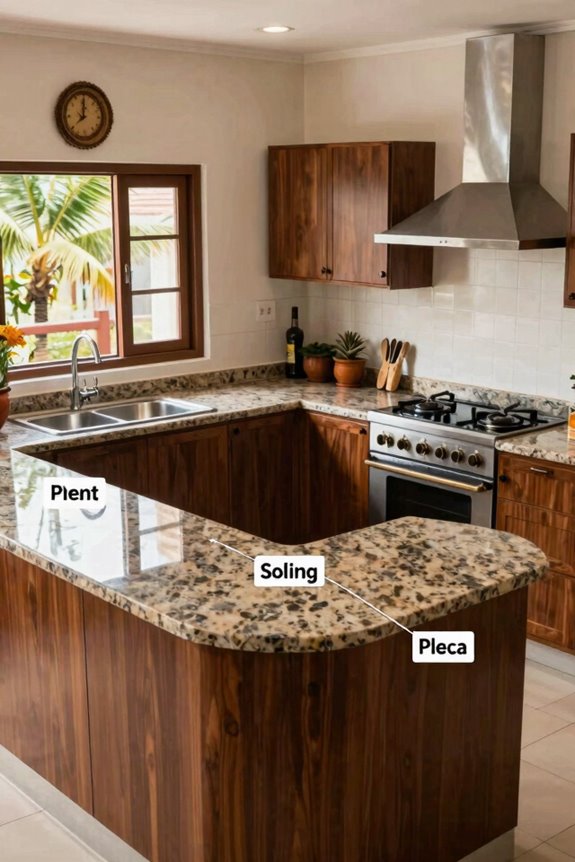
When you’re preparing Kerala’s signature dishes, stirring sambhar, steaming appams, and managing multiple pots simultaneously, every step counts.
When preparing Kerala’s signature dishes, every step in the kitchen counts—from stirring sambhar to steaming appams.
I’ve found that the kitchen work triangle significantly improves how efficiently you cook. This concept connects your stove, sink, and refrigerator in an unobstructed path, minimizing unnecessary movement during meal preparation.
In Kerala kitchens, where frequent stirring and steaming demand constant attention, this layout becomes necessary. You’ll reduce fatigue and accidents by positioning these three focal points strategically within your space.
The work triangle isn’t merely about convenience; it’s about creating a functional cooking environment that supports your daily needs. When you arrange these elements thoughtfully, you’ll spend less time walking and more time perfecting those complex spice combinations Kerala cuisine requires.
L-Shaped and U-Shaped Layouts: Maximizing Limited Kitchen Spaces
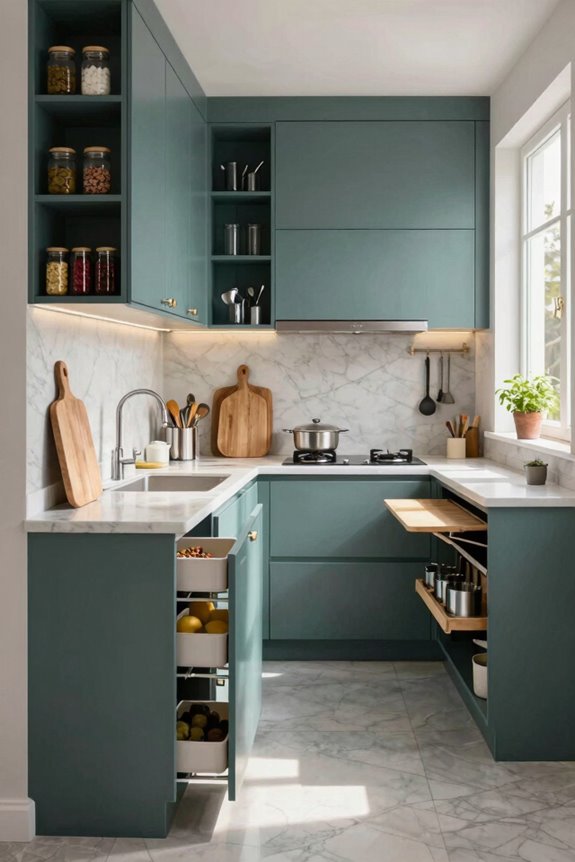
When you’re planning your Kerala kitchen, I’d like you to consider how L-shaped and U-shaped layouts work together to create an efficient work triangle while maximizing your limited space. You’ll find that these designs minimize wasted movement between your stove, sink, and refrigerator, the three essential cooking zones, while corner storage solutions make awkward angles into functional prep areas.
Work Triangle Efficiency
How’d you like to cut your cooking time in half?
The work triangle—connecting your stove, sink, and refrigerator—forms the backbone of efficient Kerala kitchens. When these three points sit within 4 to 9 feet of each other, you’ll minimize unnecessary steps during meal prep.
L-shaped layouts anchor your stove and sink on adjacent walls, creating a natural cooking corridor that keeps everything accessible. U-shaped designs expand this concept further, positioning appliances around three walls to maximize both storage and counter space.
Proper ventilation above your hob maintains comfort while cooking. Unobstructed sightlines between triangle points improve airflow and maintain visibility throughout your workspace.
This strategic arrangement creates an efficient prep-and-cook zone. You’ll work smarter, not harder, achieving the functional space Kerala homes genuinely need.
Corner Storage Solutions
Your kitchen’s corner spaces represent untapped real estate that you can use effectively into functional storage zones. In L-shaped layouts, corner pull-outs maximize those hard-to-reach areas by utilizing vertical storage efficiently. You’ll free up valuable counter space while keeping frequently used items accessible.
U-shaped kitchens offer even greater potential with three-wall access. Install corner lazy Susans or pull-out baskets to store spices, vessels, and ingredients without blocking movement through your workspace. Tall corner units rise vertically, keeping seldom-used large pots and appliances organized and out of sight.
A dedicated corner pantry solution reduces clutter significantly. Multi-tier drawer organizers improve workflow around your sink, hob, and refrigerator. These strategic placements create smooth movement patterns while maintaining accessibility, which is important for efficient Kerala-style kitchen functioning.
Traffic Flow Optimization
Since Kerala kitchens often operate within compact footprints, strategic layout choices become essential for smooth daily functioning. I’ve found that L-shaped and U-shaped designs create distinct work zones while maintaining efficient traffic flow around the work triangle: your stove, sink, and refrigerator.
Key Traffic Flow Benefits:
- Eliminates unnecessary movement between cooking, prep, and washing stations
- Keeps foot traffic away from active cooking areas for safety
- Allows multiple family members to work simultaneously without collision
- Supports natural movement patterns during meal preparation
L-shaped layouts work wonderfully when you position your island adjacent to open corridors, promoting both accessibility and ventilation. U-shaped designs maximize counter space while establishing clear pathways.
Both configurations respect your kitchen’s dimensions while helping you move confidently through daily cooking tasks. Thoughtful placement prevents bottlenecks and creates the functional space your family deserves.
Materials That Survive Kerala’s Humidity and Spice-Heavy Cooking
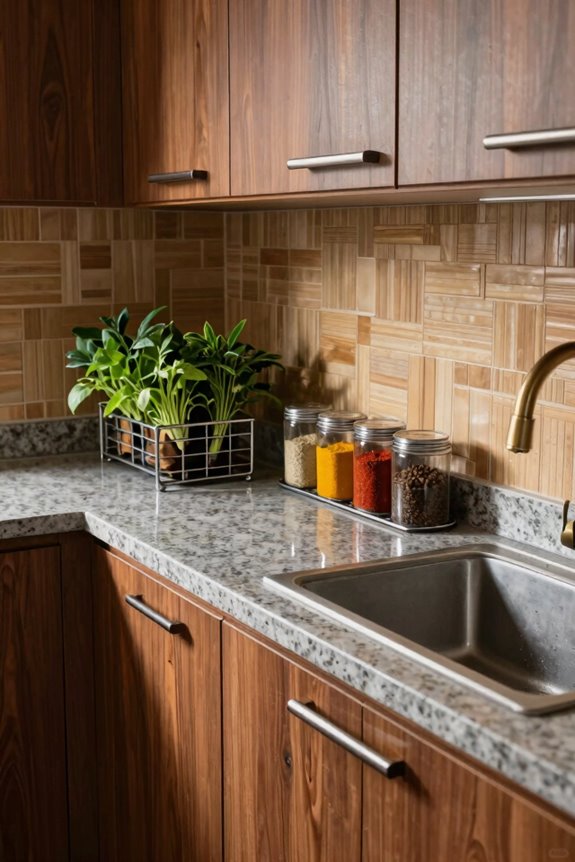
What makes a Kerala kitchen cabinet last decades instead of deteriorating within years? I’ll tell you: choosing the right materials from the start.
Marine plywood resists moisture and termites effectively, making it your foundation for durable cabinetry. I’d pair this with water-resistant laminates in neutral tones that hide spice stains and oil splashes.
For countertops, granite handles heat well and cleans easily after cooking. Quartz offers stain resistance that suits humid kitchens perfectly.
Your finishes matter too. Select coatings that withstand steam around cooking zones and washing areas. These materials work together, protecting your investment against Kerala’s challenging climate while supporting your daily cooking needs reliably.
Granite vs. Quartz Countertops: Durability and Value for Kerala Kitchens
When you’re deciding between granite and quartz for your Kerala kitchen, you’re really choosing between two proven materials that handle heat, humidity, and daily cooking demands differently.
Granite offers affordability and impressive heat resistance, making it ideal for your spice-heavy cooking. However, it needs periodic sealing to maintain moisture protection in Kerala’s humid climate. Quartz provides engineered durability without sealing requirements, giving you a non-porous surface that resists staining from oils and spices consistently.
Granite’s heat resistance suits Kerala kitchens affordably, though quartz’s non-porous durability eliminates maintenance sealing needs.
Consider these key differences:
- Granite costs less per square foot than premium quartz options
- Quartz requires zero maintenance sealing throughout its lifetime
- Both materials withstand Kerala’s humidity exceptionally well
- Quartz resists staining more reliably during intense cooking sessions
Your choice depends on whether you prefer lower initial investment or minimal long-term maintenance. Both materials deliver the functional workspace you need.
Smart Storage Strategies That Cut Clutter and Save Time
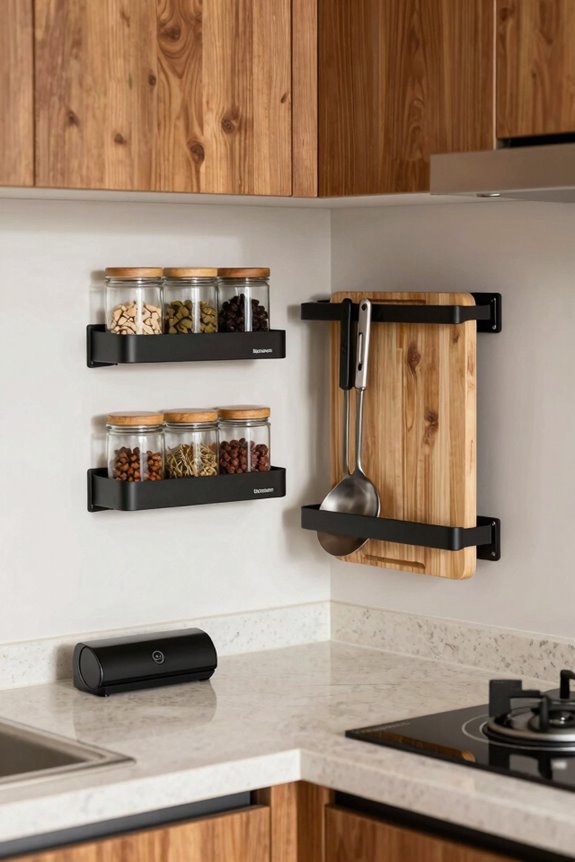
How you organize your kitchen storage directly determines how efficiently you cook and how quickly you find what you need. Smart organization starts with modular storage solutions designed specifically for Kerala’s humid climate. Choose moisture-resistant materials and durable finishes that withstand constant moisture exposure.
Implement drawer organizers to keep cutlery, spices, and utensils accessible and orderly. This reduces search time during meal preparation. Tall cabinets maximize vertical space for seldom-used items, while corner pull-outs efficiently use hard-to-reach areas.
Position open shelving near your prep zones for quick access to daily essentials. Place frequently used items within arm’s reach of your stove and sink. This strategic workflow integration minimizes unnecessary movement and boosts your cooking efficiency significantly.
You’ll spend less time searching and more time cooking.
Choosing the Right Chimney Size for Oil-Heavy Cooking
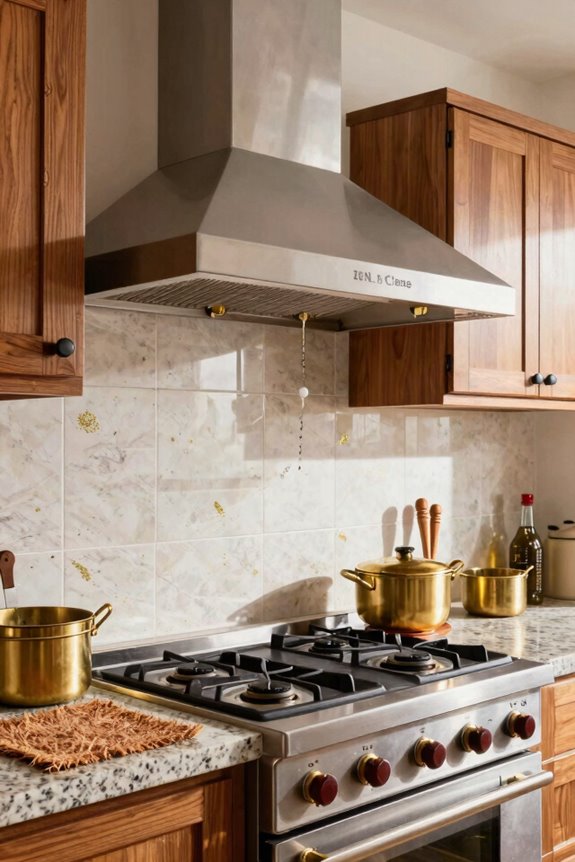
Now that you’ve organized your storage for daily cooking needs, you’ll want to address the smoke and oil vapors that Kerala’s cooking style produces. The right chimney size directly impacts your kitchen’s comfort and cleanliness.
Key Considerations for Your Chimney Selection:
- Extraction rate: Choose 1000–1400 m³/h for average kitchens to efficiently remove heavy smoke and odors
- Duct diameter: Select 150 mm or larger to reduce back pressure and improve suction in oil-laden environments
- Installation height: Position your chimney 65–75 cm above the hob for optimal smoke capture
- Filtration system: Invest in metal mesh plus activated carbon filters to trap oil droplets effectively
Regular maintenance every 1–2 months keeps your chimney performing reliably. This investment protects your kitchen surfaces and prevents grease buildup, creating a healthier cooking space for your family.
Layered Lighting: Task, Ambient, and Accent for Maximum Visibility
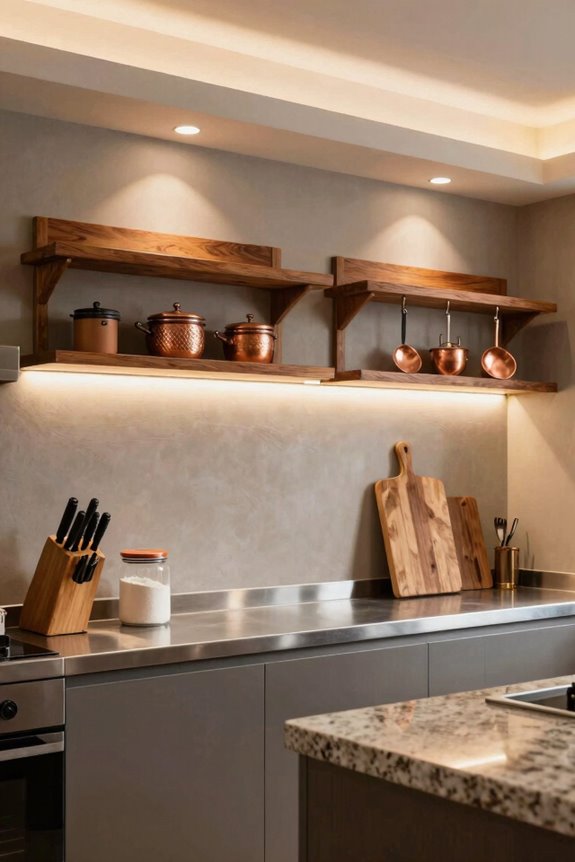
I’ll layer three essential lighting types in your Kerala kitchen that work together seamlessly. You’ll install task lighting under cabinets for focused prep work, ambient ceiling lights for overall brightness, and accent lights like pendants over islands for both visibility and style.
This strategic approach lets you cook safely and efficiently while managing steam and ventilation without shadows or glare.
Task Lighting For Cooking Zones
Why does your kitchen feel dim even when lights are on? Task lighting directly addresses this challenge by illuminating your cooking zones precisely where you need it most.
Under-cabinet LEDs function as your primary task light, delivering focused brightness for prep work and cooking. Position these fixtures directly over your stove and preparation areas to eliminate shadows during food cutting and plating.
Consider these essential task lighting strategies:
- Install dimmable LED strips under cabinets to adjust brightness during different cooking stages
- Choose anti-glare fixtures that reduce eye strain and surface reflections
- Position lights 12-18 inches from counter edges for optimal coverage
- Select warm white (3000K) bulbs that enhance food visibility without harsh shadows
Dimmable options give you control over intensity, creating functional, well-lit workspaces in your cooking zones. This targeted approach helps you see clearly while preparing meals with confidence.
Ambient And Accent Layering
While task lighting solves the problem of shadowy work zones, you’ll discover that a complete lighting strategy requires building layers that work together. Ambient lighting establishes your kitchen’s foundational brightness, creating comfort throughout the entire space. Energy-efficient ceiling fixtures distribute even illumination, essential in Kerala’s humid climate where consistent visibility matters.
Accent lighting then makes your kitchen more inviting beyond its functional purpose. Pendant lights suspended above islands create focal points that draw the eye upward. Consider highlighting glass-front cabinets or textured backsplashes with directional fixtures that showcase architectural details.
This three-part approach—task, ambient, and accent—works synergistically. You’re not simply adding more light; you’re creating intentional layers that enhance both usability and aesthetics. Damp-rated luminaires resist moisture damage, so your investment endures Kerala’s challenging environmental conditions.
Designing Modular Kitchens for Traditional Kerala Cookware
How do you create a modern kitchen that honors Kerala’s cooking traditions? Modular kitchens aren’t one-size-fits-all solutions. You’ll need thoughtful planning to accommodate traditional Kerala cookware like chattis, pressure cookers, and idli makers alongside contemporary appliances.
Modular kitchens demand thoughtful planning to merge traditional Kerala cookware with contemporary appliances seamlessly.
Your cabinet dimensions and clearances must reflect actual cooking needs. Consider these essential design elements:
- Deeper cabinets (24-30 inches) to store large traditional vessels safely
- Tall storage units utilizing vertical space for cookware organization
- Specialized drawers with dividers for utensil sorting and accessibility
- Corner pull-out solutions maximizing awkward spaces efficiently
Marine plywood or WPC boards resist Kerala’s humidity while protecting your investment. Granite or quartz countertops withstand steam exposure from daily cooking practices.
This thoughtful approach merges tradition with modern functionality, creating kitchens that work well for your family’s lifestyle and cultural cooking methods.
Planning Modular Kitchen Power Points and Appliance Placement
I’ve learned that smart power point placement makes or breaks kitchen functionality, especially when you’re working with Kerala’s humid climate and traditional cooking styles. You’ll want to position outlets strategically along your work triangle: sink, stove, and refrigerator, ensuring every appliance and countertop tool has dedicated, accessible power without creating safety hazards.
Let me show you how to plan these electrical points so your modular kitchen runs smoothly while keeping moisture and accessibility in proper balance.
Power Point Strategic Placement
Where should your kitchen’s electrical outlets actually go? Strategic layout planning helps your power points serve your workflow efficiently. I’ve found that positioning outlets within arm’s reach of your sink, stove, and refrigerator creates a functional work triangle. This approach eliminates extension cords and safety hazards.
Consider these placement essentials:
- Position outlets behind islands and tall cabinets at elevated heights for clean aesthetics
- Dedicate high-amp circuits for heavy appliances like induction stoves and refrigerators
- Install protected outlets near water sources with surge protection for Kerala’s humid climate
- Allocate separate power points for built-in appliances to support seamless integration
Multiple circuits prevent overloading and tripping during peak usage. Wall-mounted outlets maintain your kitchen’s sleek design while providing convenient access. Childproof covers add essential safety.
Thoughtful power point placement makes your modular kitchen more functional and practical.
Appliance Layout Workflow Efficiency
Three essential appliances—your stove, sink, and refrigerator—form the foundation of an efficient kitchen layout. I recommend positioning them in a work triangle that minimizes travel distance and improves your daily workflow. This strategic arrangement reduces unnecessary movement between tasks.
| Appliance | Ideal Height | Distance | Benefit |
|---|---|---|---|
| Stove | Counter level | 4-6 feet | Heat management |
| Sink | Counter level | 4-6 feet | Water access |
| Refrigerator | Eye level | 4-6 feet | Frequency of use |
| Microwave | Eye level | 2-3 feet | Accessibility |
You’ll want electrical outlets positioned near each appliance to support seamless installation and future upgrades. I suggest creating distinct zones for prepping, cooking, and cleaning.
Each zone needs dedicated outlets nearby, reducing clutter and improving safety. This thoughtful arrangement makes your kitchen a functional, connected space where everything works together seamlessly.
Electrical Safety and Accessibility
An efficient work triangle means nothing if your electrical system can’t support it. I’ve learned that smart power point planning prevents costly rewiring later. You’ll want to map appliance locations first, then position outlets accordingly.
Here’s what I prioritize for electrical safety and accessibility:
- Dedicated circuits for high-demand appliances like stoves, hoods, and dishwashers to prevent breaker trips
- Moisture-resistant outlet boxes with gasketed covers, which are important for Kerala’s humid climate
- Counter-height outlets positioned 12-18 inches above surfaces for small appliances and island convenience
- Centralized zones away from sinks and steam areas, grouping electrical points logically
This approach gives you flexibility for future upgrades while keeping your workspace safe. You’re building a kitchen that grows with your needs, not one that demands emergency electrician calls.
Bright Colours and Durable Finishes for High-Moisture Kitchens
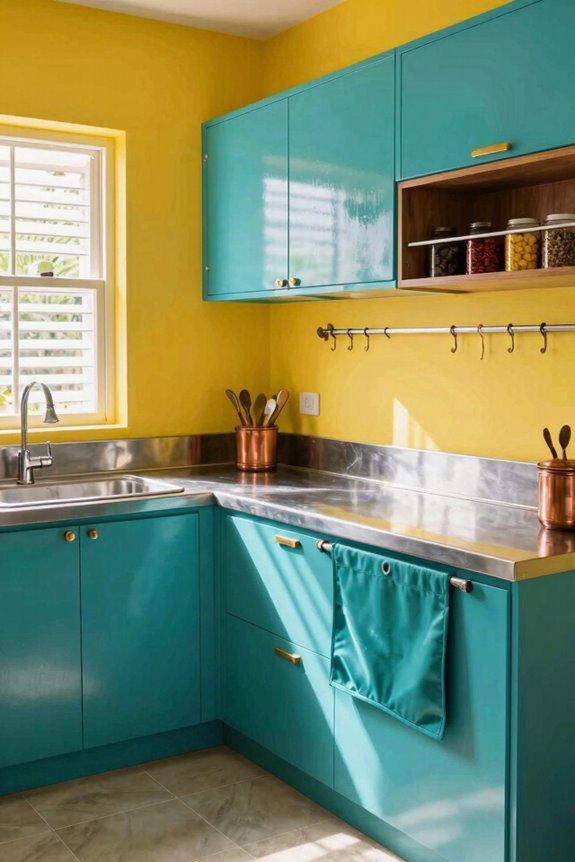
Because Kerala’s kitchens battle persistent humidity and steam daily, you’ll want to select bright colours and durable finishes that won’t deteriorate or trap moisture. Light shades like white, cream, soft grey, and pastel blue brighten your space while visually expanding it under humid conditions.
Light colours and durable finishes combat Kerala’s humidity while brightening and expanding your kitchen space.
Gloss finishes are your practical ally here. They reflect light effectively, making smaller kitchens feel more spacious and offering easy wipe-down surfaces for daily cleaning. This moisture resistance matters tremendously in Kerala’s climate.
Consider ceramic tiles, glass panels, or patterned backsplashes to balance functionality with style. These materials withstand steam exposure without warping or staining.
Add character through strategic accent colours using handles, backsplashes, or bar stools. This approach maintains durability while personalizing your workspace without compromising performance in high-moisture environments.