Did you know that Filipino kitchens traditionally prioritize gathering spaces over counter real estate? You’re probably thinking of your kitchen as just a cooking zone, but in Filipino homes, it’s where family stories unfold daily.
The right layout, materials, and design choices can create a functional hub that honors both modern living and local traditions. Let’s explore how.
Kitchen Layouts for Filipino Homes
Kitchen Layouts for Filipino Homes
How can you design a kitchen that works hard in a small space? I’ll guide you through kitchen layouts perfect for Filipino homes.
1. L-Shaped Design
This layout maximizes small areas by using two adjacent walls. You’ll integrate your workspace with dining or living spaces efficiently. Corner space becomes functional storage or prep zones.
2. U-Shaped Configuration
I recommend this for smaller houses with workspaces spanning three walls. A two-seat breakfast bar adds dining functionality without requiring separate space. This space-saving design promotes excellent workflow.
3. G-Shaped Layout
This variation adds an extra leg to close your kitchen space. You’ll gain additional bar seating or storage while maintaining easy movement patterns.
4. Linear Kitchen
For studios or very tight quarters, I suggest placing everything along one wall. This frees corridor space and allows open flow throughout your home.
Durable Materials for Tropical Climates
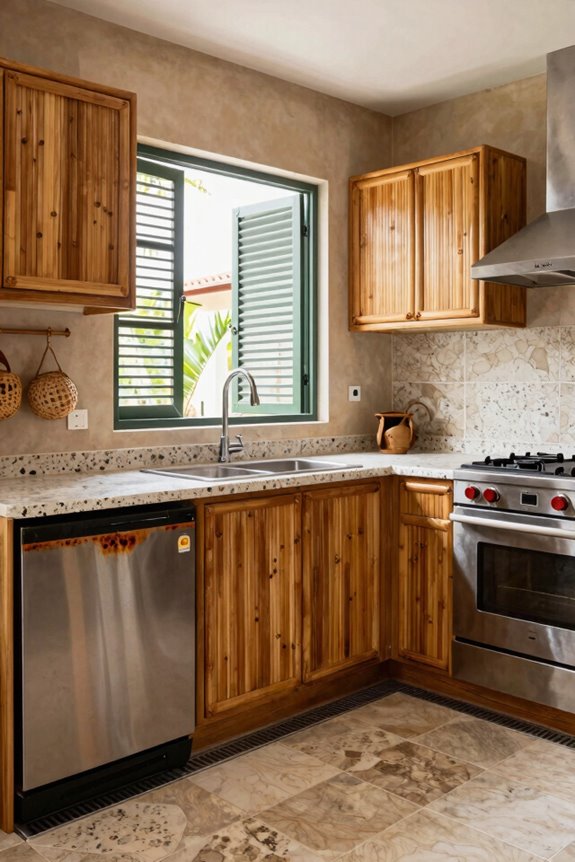
When designing a kitchen for your Filipino home, I recommend selecting materials built to withstand intense heat and humidity year-round. You’ll want to explore weather-resistant wood options like acacia, stainless steel fixtures that resist corrosion, and sealed concrete countertops that won’t absorb moisture or stain.
These durable choices work together to create a kitchen that stays beautiful and functional despite tropical climate challenges.
Weather-Resistant Wood Options
Because tropical humidity and frequent rainfall challenge standard wood finishes, you’ll want to choose materials specifically suited to Filipino climate conditions. I recommend acacia and mahogany as your best kitchen wood options for durability and weather resistance.
| Wood Type | Key Benefits | Best Use |
|---|---|---|
| Acacia | Naturally rot-resistant, affordable | Countertops, shelving |
| Mahogany | Dense, long-lasting, elegant | Cabinetry, doors |
| Bamboo | Sustainable, breathable, renewable | Trays, accent pieces |
Pair these woods with moisture-resistant sealants to protect against humidity. Light, breathable finishes prevent heat buildup on surfaces exposed to tropical sun.
For your kitchen design ideas, combine weather-resistant wood with matte metal or neutral tones. Add bamboo trays or rattan baskets for natural storage that complements durable wood while maintaining contemporary aesthetics and functionality in your best kitchen space.
Stainless Steel For Humidity
Why doesn’t stainless steel rust in your humid Filipino kitchen? I’ll explain how this material becomes your best defense against tropical moisture.
Stainless steel resists corrosion because its special composition prevents rust formation. You’re choosing a surface that maintains its integrity despite constant humidity exposure. The material won’t warp, stain, or deteriorate like standard options.
Here’s what makes stainless steel ideal for your kitchen:
- Non-porous surface that supports easier cleaning and superior hygiene standards
- Polished or brushed finishes that hide fingerprints and watermarks effectively
- Structural durability that reduces maintenance costs over time
I recommend pairing stainless steel surfaces with proper ventilation systems. Dehumidifiers and exhaust fans further protect your investment from condensation buildup. You’re building a kitchen designed for long-term performance in tropical conditions.
Sealed Concrete Countertops
Sealed concrete countertops offer another practical solution for Filipino kitchens battling tropical humidity. I’ve found that these surfaces resist moisture effectively, protecting against water damage at seams and edges. You can customize them with textures and colorants to mimic stone or wood while keeping costs reasonable.
| Maintenance Task | Frequency |
|---|---|
| Initial penetrating sealant | Once during installation |
| Top coat application | Every 1–3 years |
| Stain prevention from oils | Depends on use |
| Heat protection with trivets | Always recommended |
| Humidity resistance check | Annually |
These countertops handle tropical pantry staples like coconut oil, curry, and turmeric without staining. They’re also heat-resistant, though you’ll want trivets under hot pots to extend seal longevity.
Proper sealing maintains their durability and appearance for years.
Storage and Display for Daily Ceramics
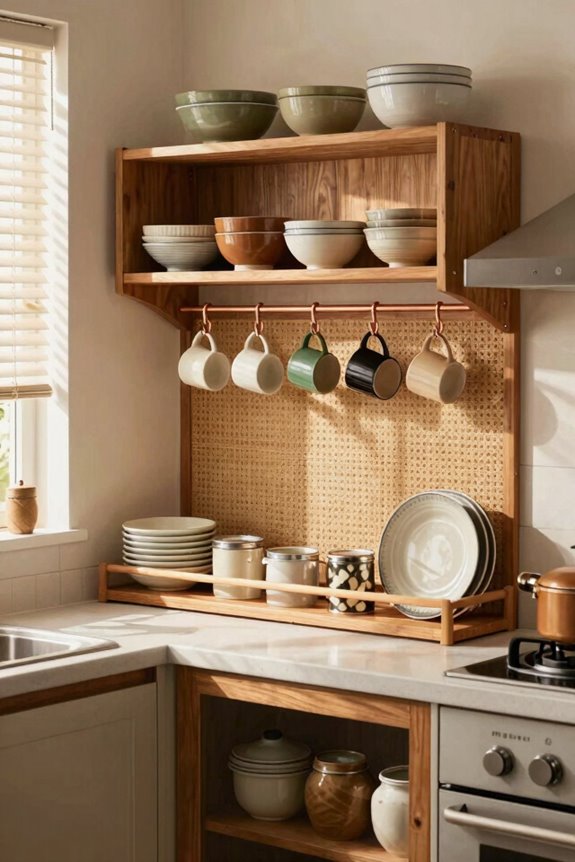
How might your kitchen change when everyday ceramics become curated displays rather than hidden away?
Your favorite mugs and vintage pieces deserve visibility. I arrange daily ceramics on open shelves where natural light highlights their textures and colors. This approach turns functional items into deliberate décor.
Consider these display strategies:
- Combine storytelling with function: Feature family heirloom plates alongside everyday pieces to create personal narratives
- Layer textures purposefully: Add woven placemats and capiz-inspired lighting that softens the overall aesthetic
- Balance storage with style: Mix practical jars with decorative elements to maintain both organization and visual interest
Position shelves where daylight naturally falls. This placement showcases ceramic details while keeping pieces accessible for daily use. Your kitchen becomes both beautifully organized and distinctly yours.
Natural Light and Ventilation for Year-Round Comfort
I’ve found that maximizing daylight exposure improves how my kitchen feels throughout the day, especially in the warm Filipino climate. Strategic window placement, positioning windows to capture morning and afternoon light, lets me reduce artificial lighting while creating that bright, welcoming “maaliwalas” atmosphere.
You can achieve this by orienting windows toward natural light sources and using light-diffusing curtains that soften harsh rays without blocking the glow.
Maximizing Daylight Exposure
Why settle for artificial lighting when your Filipino kitchen can harness abundant natural daylight throughout the day?
Strategic window placement creates a bright, welcoming space. I recommend keeping windows open with light curtains to diffuse sunshine evenly across work surfaces. This approach reduces daytime energy costs while creating the maaliwaas (bright) atmosphere Filipinos value.
Design strategies for optimal daylight:
- Install neutral color schemes on walls and cabinetry to reflect and amplify incoming light
- Maintain open sightlines by avoiding heavy drapes that block consistent brightness penetration
- Position prep areas near windows to maximize task visibility and natural illumination
The result is a kitchen that feels cooler and more spacious year-round. Natural light exposure supports energy efficiency while establishing functional work zones without relying on artificial sources during daylight hours.
Strategic Window Placement Design
Beyond maximizing daylight indoors, strategic window placement creates dual benefits: it brightens your kitchen while establishing consistent airflow throughout the year. I recommend positioning windows on opposite walls to enable cross-ventilation, which naturally cools your space and improves air quality.
| Window Feature | Placement Strategy | Material Choice | Expected Benefit |
|---|---|---|---|
| Primary Windows | North/South walls | Light curtains | Balanced natural light |
| Secondary Windows | East/West walls | Sheer fabric | Glare reduction |
| Openings | Upper cabinets | Louvered vents | Enhanced airflow |
| Frames | Corner positions | Wood trim | Filipino aesthetic |
Light curtains diffuse harsh sunlight while maintaining visibility and privacy. I suggest keeping windows operational rather than decorative; this encourages airflow without compromising security.
Neutral wall colors amplify natural light’s effect, complementing warm wood elements throughout your kitchen design.
Outdoor Kitchens for Family Gatherings
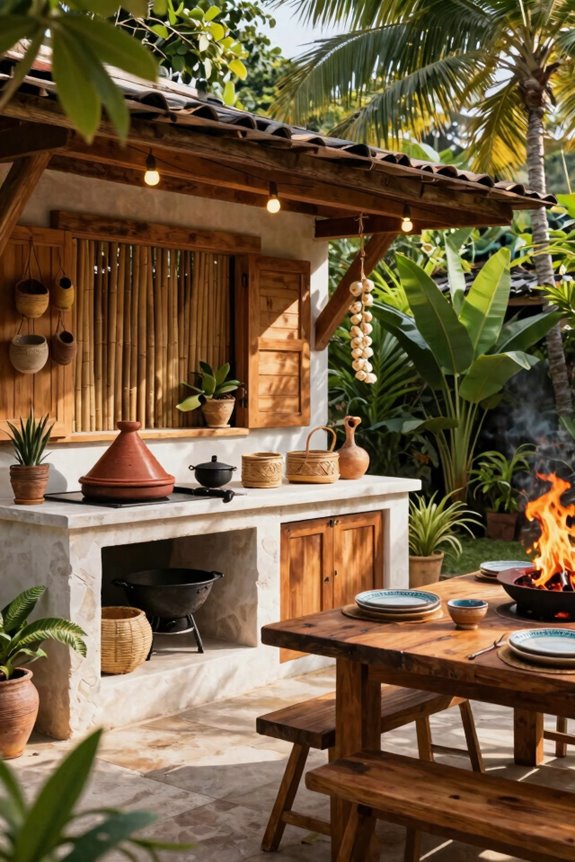
How can you design an outdoor kitchen that truly brings your family together?
I’d create a space reflecting warmth and connection through thoughtful layout choices. Your outdoor kitchen becomes the heart of gatherings when you consider your family’s needs and available space.
Essential Design Elements:
- Open shelves displaying ceramic jars, vintage mugs, and family heirlooms that tell your story
- Neutral color palettes with warm wood tones creating an inviting, airy atmosphere
- Capiz-inspired lighting and woven placemats blending practicality with decorative appeal
Select a layout matching your space: kitchen islands work best with room to spare, while G-shaped, U-shaped, or L-shaped configurations optimize workflow. Linear setups and kitchen bars suit compact areas effectively.
Natural light flowing through strategic window placement enhances the breezy feel. Your design supports quick meals, extended family gatherings, and meaningful social interaction with ease.
Modern Appliances, Filipino Style
When you’re ready to upgrade your kitchen, choosing appliances that blend modern efficiency with Filipino design sensibilities creates a cooking space that feels cohesive and personal. I recommend selecting stainless steel refrigerators and ranges that complement warm wood tones like acacia or mahogany.
These sleek metal finishes create visual balance while maintaining the functionality you need daily.
| Appliance | Filipino Style Pairing |
|---|---|
| Refrigerator | Stainless steel with wood panel accents |
| Range | Modern gas with warm bronze handles |
| Lighting | Capiz-inspired fixtures above workspace |
| Storage | Open shelving with metal frames |
Pairing contemporary appliances with traditional design elements honors your heritage. Modern efficiency doesn’t require sacrificing cultural identity. Your kitchen becomes both practical and personally meaningful.
Open Shelving That Tells Your Family’s Story
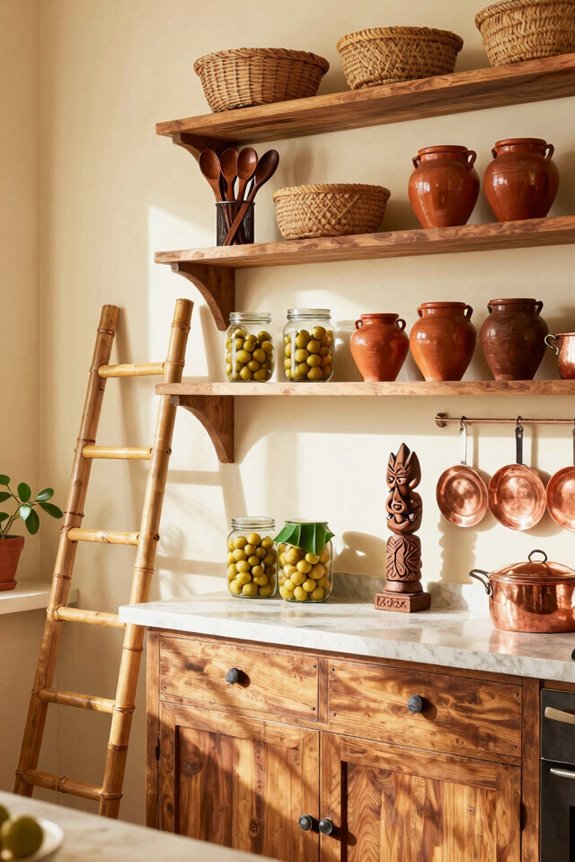
Once your appliances establish the kitchen’s modern foundation, your shelving becomes the space where personality truly emerges. I’m inviting you to arrange open shelves as meaningful displays that honor your family’s story.
Display your favorite items strategically to create visual interest and connection:
Display your favorite items strategically to create visual interest and meaningful connection throughout your kitchen space.
- Heirloom plates and vintage ceramics showcase family history while remaining functional and accessible
- Favorite mugs mixed with woven baskets balance practicality with warmth through varied textures
- Family photos or small wooden pieces reinforce personal narratives within your kitchen space
Your shelving arrangement reflects what matters most to you. Combine different materials: ceramics, wood, and woven elements to achieve authentic charm. Keep items within arm’s reach so daily use feels natural.
This approach turns your kitchen into a living gallery that celebrates your heritage while serving your household’s practical needs.
Small-Space Solutions for Compact Kitchens
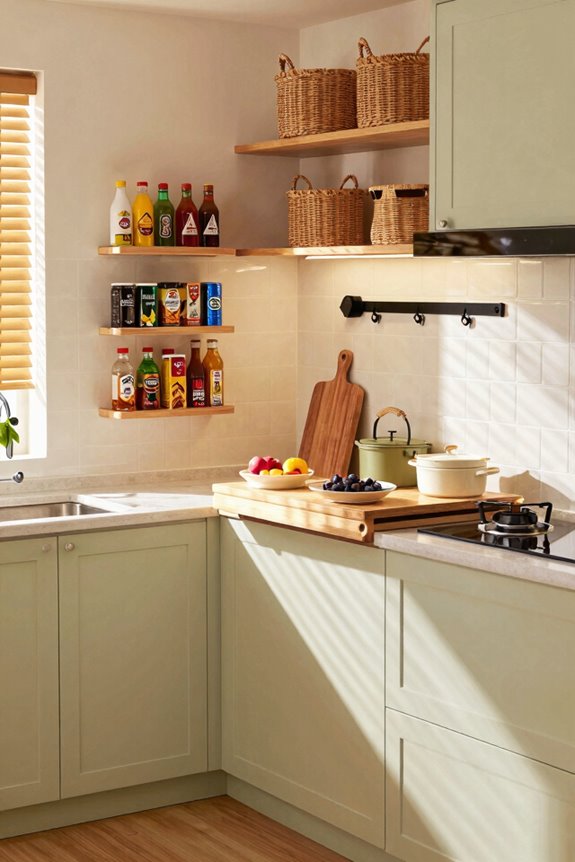
Why should limited square footage force you to compromise on functionality? I’ve found that smart layout choices create efficient cooking areas in tight spaces.
1. Linear Kitchens for Studios and Condos
A linear kitchen places all utilities on one wall, freeing up corridor flow. This arrangement works perfectly for studios and compact condos where space is precious.
2. U-Shaped Designs for Better Movement
U-shaped layouts enhance the working triangle in smaller homes. They typically feature a two-seat breakfast bar and central space that improves movement around cooking zones.
3. Kitchen Bars as Multi-Purpose Features
A kitchen bar functions like an island with added storage and seating. It supports casual dining and homework near the cooking area without requiring extra floor space.