You’re ready to design a kitchen that feels both calm and efficient. Japandi style combines Japanese minimalism with Scandinavian warmth, creating spaces that work as hard as they look beautiful.
The right layout, whether U-shaped or L-shaped, sets your foundation. But here’s where most designers miss the mark: they forget how materials, proportions, and flow create a functional kitchen with character and appeal. Let’s explore how.
Choose Your Layout: U-Shaped vs. L-Shaped for Japandi Flow?
How do you decide between a U-shaped and L-shaped kitchen when building your Japandi space?
A U-shaped Japandi layout creates a closed work triangle with three distinct zones: prep, cook, and cleanup. This design maximizes storage solutions by incorporating hidden cabinetry along all three walls. You’ll maintain efficient workflow while preserving calm, straight lines that define the aesthetic.
An L-shaped layout offers an open, airy feel that complements Japandi principles. This single continuous line pairs light cabinetry with dark natural-wood accents for balanced contrast.
For either configuration, position your sink on the central run and stove opposite to optimize movement. Choose handleless cabinets and soft, natural materials like walnut or oak to unify your design. Both layouts honor Japandi’s commitment to functional simplicity and visual harmony.
Balance Dark Cabinets With Light, Airy Seating
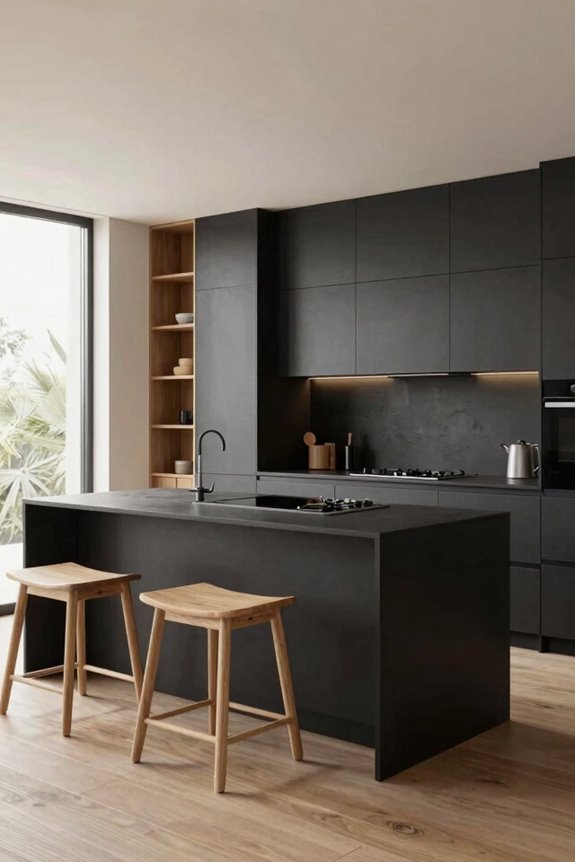
Once you’ve settled on your layout, the real impact comes when you balance dark wood cabinetry with lighter seating elements. This contrast prevents your kitchen from feeling heavy or cramped, creating the breathing room that defines Japandi design.
Balance dark cabinetry with lighter seating to create the breathing room that defines Japandi design.
- Pair dark cabinets with light seating: Choose pale wicker chairs or a light wood dining table to offset charcoal or espresso cabinetry, reducing visual weight.
- Maximize openness with strategic choices: Incorporate glass-front cabinet doors and open shelving near dark wood surfaces to create depth and prevent blocked sightlines.
- Amplify light and reflection: Install light countertops and glass backsplashes to counterbalance dark cabinetry’s heaviness while enhancing natural brightness.
Select seating with slim profiles and straight lines in neutral tones. Anchor your dining area with a lighter rug and minimal accessories, establishing harmonious balance between dark and airy elements throughout your space.
Size Your Island Small to Protect Spacious Flow
Why does an oversized island sabotage the very openness that makes Japandi design work? A bulky island layout disrupts the flow that defines this aesthetic. Instead, I recommend keeping your island between 2 to 3 meters long; this sizing works perfectly for typical 8–12 foot wide kitchens.
A compact island features handleless cabinetry and integrated storage, eliminating visual clutter. Add a slim 12–16 cm overhang for seating without blocking movement paths. Position it to create a clear traffic triangle between sink, stove, and fridge, maintaining at least 90 cm clearance around it.
Select light wood tones like oak or ash paired with neutral countertops. This keeps your island unobtrusive while providing warmth. Hidden power outlets and minimal accessories preserve the Japandi emphasis on simplicity, supporting your vision of serene kitchen functionality.
Finish With a Tile Backsplash for Clean Cohesion
A tile backsplash is your opportunity to unify your kitchen’s materials while reinforcing Japandi’s signature balance between texture and minimalism. I recommend selecting large-format, matte-finish tiles in beige, taupe, or stone tones that create a calm, visually continuous surface without overwhelming the space.
Backsplash Material Selection
How you finish your backsplash can enhance your entire Japandi kitchen’s visual harmony. I recommend selecting materials that reinforce your neutral palette while adding intentional depth.
Consider these three essential options:
- Ceramic or porcelain tiles in matte finishes echo natural stone and timber, creating visual continuity throughout your space.
- Large-format tiles minimize grout lines, enhancing the sense of openness that defines Japandi design principles.
- Muted stone tones or indigo accents provide subtle contrast without overwhelming your serene environment.
I’d suggest prioritizing flush-mounted transitions and hidden edges. These details preserve your handleless cabinetry’s clean lines and maintain uninterrupted surfaces.
Your tile backsplash becomes the foundation for balanced, cohesive kitchen design. The right material selection improves both functionality and aesthetic appeal, creating the calm sanctuary you’re building.
Visual Cohesion And Balance
Your tile backsplash serves as the visual anchor that unifies your entire Japandi kitchen into one harmonious composition. I recommend selecting neutral-toned tiles in stone, beige, or taupe with subtle texture to maintain the calm, minimalist aesthetic you’re seeking.
Large-format tiles laid in straight patterns minimize grout lines, preserving that uncluttered, spacious feeling essential to Japandi design. Matte finishes work beautifully here, especially when paired with soft dark accents like indigo or charcoal that echo your dark-wood cabinetry.
Extending your tile backsplash toward the upper cabinets creates visual balance and reinforces a continuous vertical rhythm throughout the space. This deliberate design choice ties your countertop, cabinetry, and wall color into one unified plane, establishing the balanced, intentional aesthetic that defines true Japandi kitchens.
Add Warmth Through Natural Wood and Layered Textures
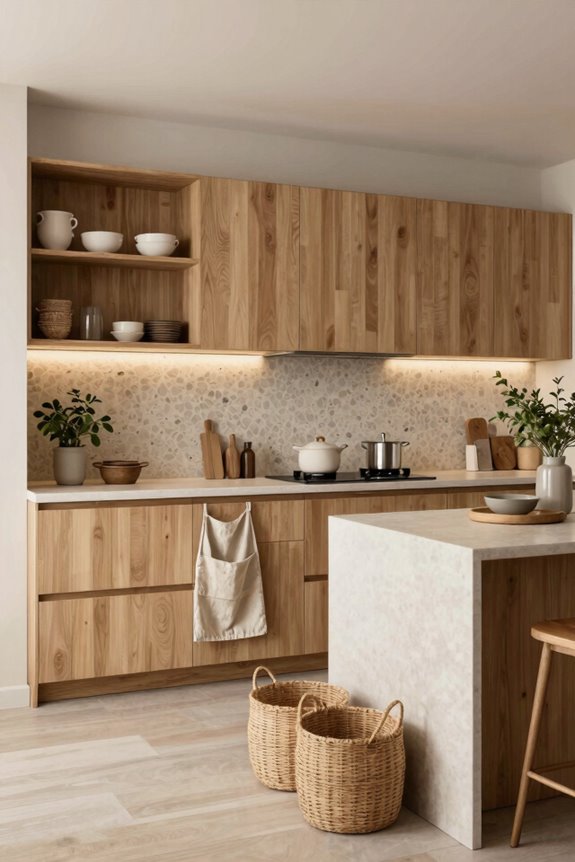
When does minimalism feel cold rather than calm? When it lacks the warmth that natural materials and layered textures bring to your kitchen.
I’ve found that introducing these elements creates an inviting space from a sparse one. Consider these approaches:
- Natural wood selections – Walnut or oak cabinetry showcases visible grain patterns, creating tactile appeal that minimalist design needs.
- Textured layering – Stone countertops, wool textiles, and rattan seating add visual depth without overwhelming your kitchen’s clean aesthetic.
- Handmade accessories – Ceramic pieces and live plants introduce organic warmth while honoring wabi-sabi principles subtly.
Pair warm neutral bases (beige, cream, sand) with these natural materials. This combination maintains your minimalist vision while establishing the comfortable atmosphere that makes kitchens feel like genuine gathering spaces.
You’re creating balance between restraint and comfort.
Soften the Space With Rounded Bar Stools and Dining Chairs
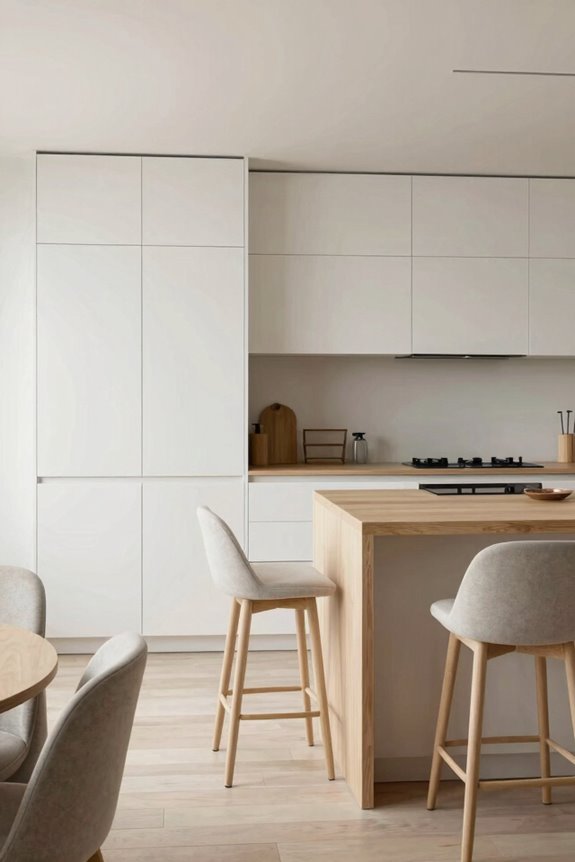
While natural materials create warmth, the furniture you choose determines whether your kitchen feels open or cramped. Rounded seating introduces curved lines that counteract heavy dark wood cabinetry, embodying Japandi aesthetics perfectly.
I recommend selecting bar stools and dining chairs with gentle curves and light woven seating in neutral tones like beige, cream, or sand. Backless or low-back designs preserve sightlines, keeping your kitchen airy and inviting.
| Feature | Benefit |
|---|---|
| Curved lines | Softens dark cabinetry |
| Light upholstery | Brightens the space |
| Neutral palette | Creates visual harmony |
| Proper heights | Maintains comfort and flow |
Pair your rounded seating with subtle warm accents in pale pink or soft grey. Align stool heights with countertops to maintain ergonomic flow. This approach creates the balanced, open kitchen you’re seeking while honoring Japandi design principles.