I’ve designed three outdoor kitchen layouts that work well for different entertaining needs. Each layout solves a different challenge: keeping conversations flowing, fitting tight spaces, or hosting larger groups.
The right design depends on your backyard’s size and how you actually use it. Let’s explore which layout matches your entertaining style and what materials make each one work best.
The Island: Keep the Cook in Conversation
How can you make outdoor cooking a social experience instead of isolating the cook? An outdoor kitchen island centralizes your prep area while surrounding bar seating keeps guests engaged throughout meal preparation. This layout promotes mingling and eliminates the cook’s isolation.
A kitchen peninsula extends your island design, facilitating quick plate passing to an integrated dining area. Bar seating faces the cook area, enabling natural conversation across the prep space. This arrangement enhances social flow without requiring trips inside.
Built-in banquette seating maximizes space efficiency in smaller outdoor entertaining setups, creating ample gathering spots around your island. Neutral palettes with texture variations and durable outdoor finishes help your island blend seamlessly with indoor kitchen design, improving overall cohesion and comfort throughout your space.
The Linear: Maximize Compact Spaces
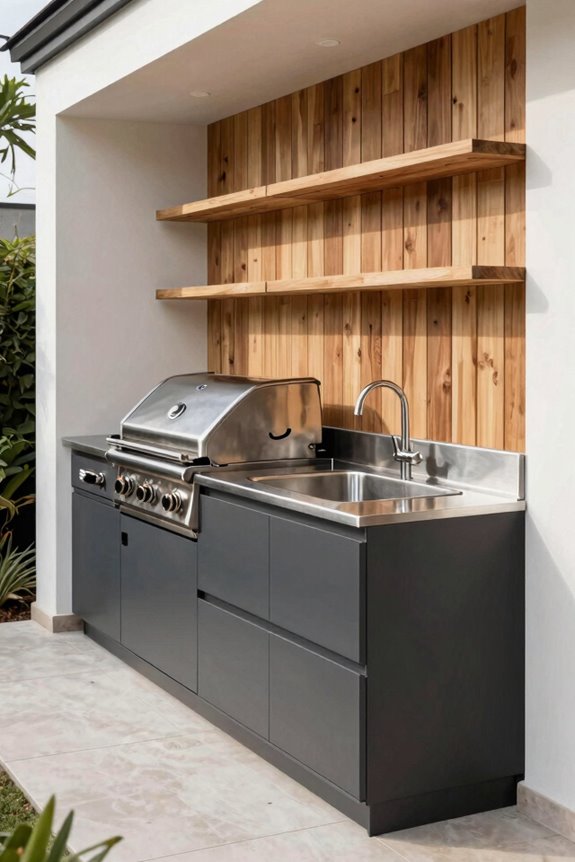
While island layouts excel at hosting gatherings, smaller outdoor spaces call for a different strategy. I’ve found that linear outdoor kitchen design creates functional, welcoming zones in tight areas. This layout arranges appliances and countertops in a single line, creating efficient workflow without wasting precious space.
A well-planned linear layout includes these essential elements:
- Built-in seating (banquette) along one side for compact outdoor spaces
- Kitchen peninsula extending from the main counter for quick plate passing
- Weather-resistant cabinetry and compact storage for durability
- Mini fridge positioned nearby for seamless service during outdoor dining
I recommend using neutral palettes with varied textures to enhance perception of space. Built-in appliances and durable countertops help your kitchen last longer in exposed environments. Position your dedicated dining area adjacent to the cooking zone, maximizing both functionality and comfort within your compact outdoor spaces.
The Multi-Zone: Host Crowds Across Separate Stations
When you’re planning to entertain larger groups, spreading your outdoor kitchen across multiple distinct zones creates a functional social hub. I recommend separating functions into a grilling area, beverage station, dining zone, and lounge area to encourage fluid flow and guest interaction.
Bar seating around your cook area keeps visitors engaged while you prepare food. An integrated beverage station reduces trips inside, allowing your guests to mingle outdoors continuously.
Position these separate stations near dining and living spaces for natural transitions between cooking, eating, and relaxing. Weatherproof countertops and integrated lighting enable year-round use across each zone.
Achieve visual cohesion by matching materials, color palettes, and furniture throughout your multi-zone concept. This connected design language creates one unified outdoor kitchen that feels purposefully planned rather than scattered.